-
Androgyny is Marketable
There are so very few ideas that I haven’t grabbed from someone or somewhere else. I’ve had this idea for many years and have had numerous conversations about it. I’m gonna roll through a slew of ideas and topics here, so just bear with me. I thought about it again today when discussing current events when I mentioned that the polarization of political ideologies is a reflection of pressure on resources. I was referencing the criticism of the rolling black outs happening in California1 and the Joe Biden interview with Cardi B2. I’m bending the term Androgyny to to my own whims here. I’m not just talking about sexual orientation or gender roles. I’m using it as a metaphor for anything blended – race, religious beliefs, political orientation, economic status, age, ethnicity etc…
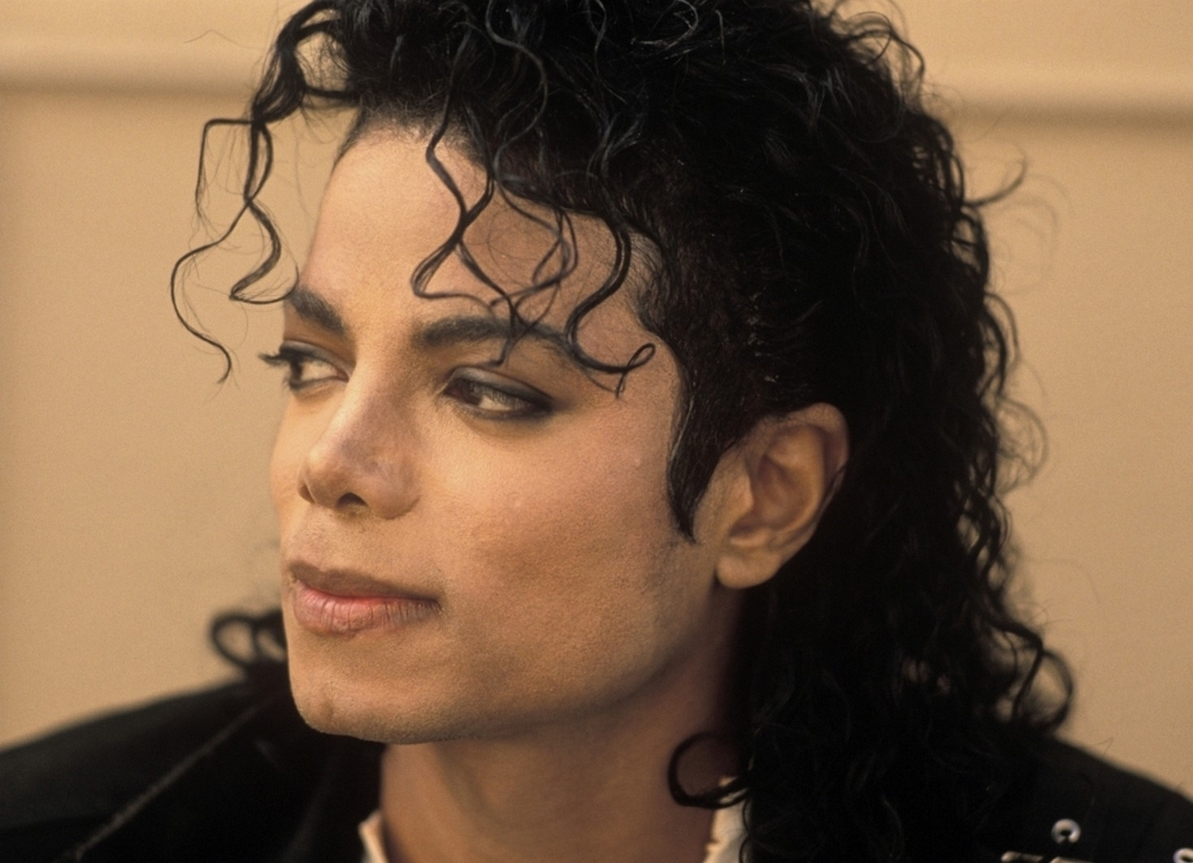
My first thought about this revolved around music and Micheal Jackson in particular. I remember vividly a disconnect I had to popular music sometime in the 1980s. Something just didn’t gel with me about what was happening in popular music. Maybe it was my coming of age too cool for thou attitude. Regardless, I started thinking about why things are popular and what makes them that way. Sure, there is talent and other influences too. I’ve also said that it helps to be on the wavelength of the collective consciousness. There is also something else almost as important as talent or artistic merit and that’s marketability. The wider the audience, the wider the impact and spread. We’re all predisposed to relate to things that are similar to our own experience. Micheal Jackson was whitening his skin and shortening his nose somewhat regularly. I started thinking he’s not white or black, he’s not female or male, he’s not a child or a man. This was several years before he would release his single Black or White3 which pretty much solidified my theory that androgyny is marketable. Being a bit of everything is a simple way to appeal to the largest number of consumers. Perhaps Micheal became the ultimate product of this effect. The filmmaker John Landis said in 2017 that the Thriller video was simply a vanity project because Micheal wanted to become a monster4. His death and subsequent documentary films illustrated that evolution as a tragic monster of a figure in great detail.
By the late 80s, I just wasn’t buying into it any popular music it. This was also about this time that hip hop began to take off. I remember listened to Easy-E every mowing the lawn. Here I was in white bread land just having had my braces removed digging on some of the the dirtiest west coast rap music. Apart from my distaste, it seamed that popular music was having a bit of a crisis of identity. The Karens were ramping up the complaints about rap music and the overly suggestive overtones in the music videos even though they had been there for years. It seemed that radio formats started to break into niches. The airwaves started to segregate away from top 40 into classic rock, country, urban, christian, oldies, and talk radio6. The airwaves landscape was becoming further and further niched. And although nothing is new about that programming, the internet has gone further down that rabbit hole to satisfy the most niche of any interest imaginable. Try to find the middle of a chart now. The current Billboard Artist100 has The Beatles at number 37 right between Blake Sheldon and Young Thug5. Look close though and you’ll see those androgyny crossovers sprinkled throughout because they’re marketable.
I started applying my androgyny theory to everything. David Letterman and Johnny Carson are both mid-westerners. I’ve always ascribed that part of their popularity is related to a kind of androgyny of regionalism. Age can be androgynous too. Look what happened to the Justin Bieber when he suddenly appeared with a mustache. Why are we always using the term ‘at their age’ like we’re comparing to some sort of ‘ideal’ age. Isn’t the ‘OK Boomer’ thing just another way to distinguish yourself by age? It works for social economic classes too. I recently watched all of the commercials for the 1976 political campaigns and they were using that same marketability trying to hit that middle ground just like they’re doing this go round7. Nothing reminds me of this more than the current economic gap trend and when the Donald requested a Van Gogh for the Whitehouse and was offered a gold toilet instead8. Pandering to women, the poor, and ethnic groups has become a quadrennial tradition in an effort to remain marketable. Where is our middle now? In the midwest, it’s white to the tune of 85% with an average of income of about $60,0000 but overall, Caucasians make up a 61% majority that is shrinking alongside of their compensation as a percent of gross domestic product. This explains the whole protectionism mindset phenomenon even though it’s been happing since the 80s9. Reaching the middle seems to be much more of an electoral goal instead of an ideological or policy making because androgyny is marketable.
I think that a crucial aspect of this cultural aesthetic is its relationship with ideology, which signifies it’s relationship to socio-economic class. We see this all around us where ‘good taste’ and ‘high culture’ represent privilege and symbolic violence and neglect represent the working classes. My point here is that aesthetic judgement is not universal, but rather a learned structure subjective to the cultural, socio-economic, and racial backgrounds. I’m always joking with my better half about folks trying so desperately to wear their class like a badge. It’s become so atrocious here in the southeast to the extent that the majority of folks might as well just wear an arm badge signifying their ‘group’. Although I’ve heard in business over and over about finding a niche, it’s become apparent to me that’s just a way to find making moderate success easier because the widest appeal lies within the androgynous approach of not identifying with any particular class, race, or socio-economic group.
There is an ancient history of the use of androgyny in myth, philosophy, and theology that ascribes the notion of normalcy before the ‘fall of man’10. It’s no coincidence that the snake and staff symbol, the caduceus which is used medical organizations, is an androgynous symbol used to represent hermaphrodites11. I’d even go so far as to assume that the title of one the highest selling nonfiction books of the 90s, the ‘Mars Venus’ series was related to the symbol for Mercury and Plato’s Symposium implying that folks are still mythologizing gender roles. This is also evident in the current religious, policy, and cultural debates surrounding the sensitivity towards gender neutralism.
International communications, and in return cultural norms, have been somewhat revolutionized by the internet. Cross cultural success is a bit more normal now. If they aren’t searching for the wealthiest niche audience, online publishing tends to fish for the largest audience and that happens to fall right in line with my theory of with being blandly androgynous. Perhaps the creators don’t attribute it to androgyny, but I’d be willing to bet that they do know exactly what is marketable. The ultimate recent use of androgyny online is the virtual character ‘Lil Maquela’ and her 2.6 million Instagram followers12.
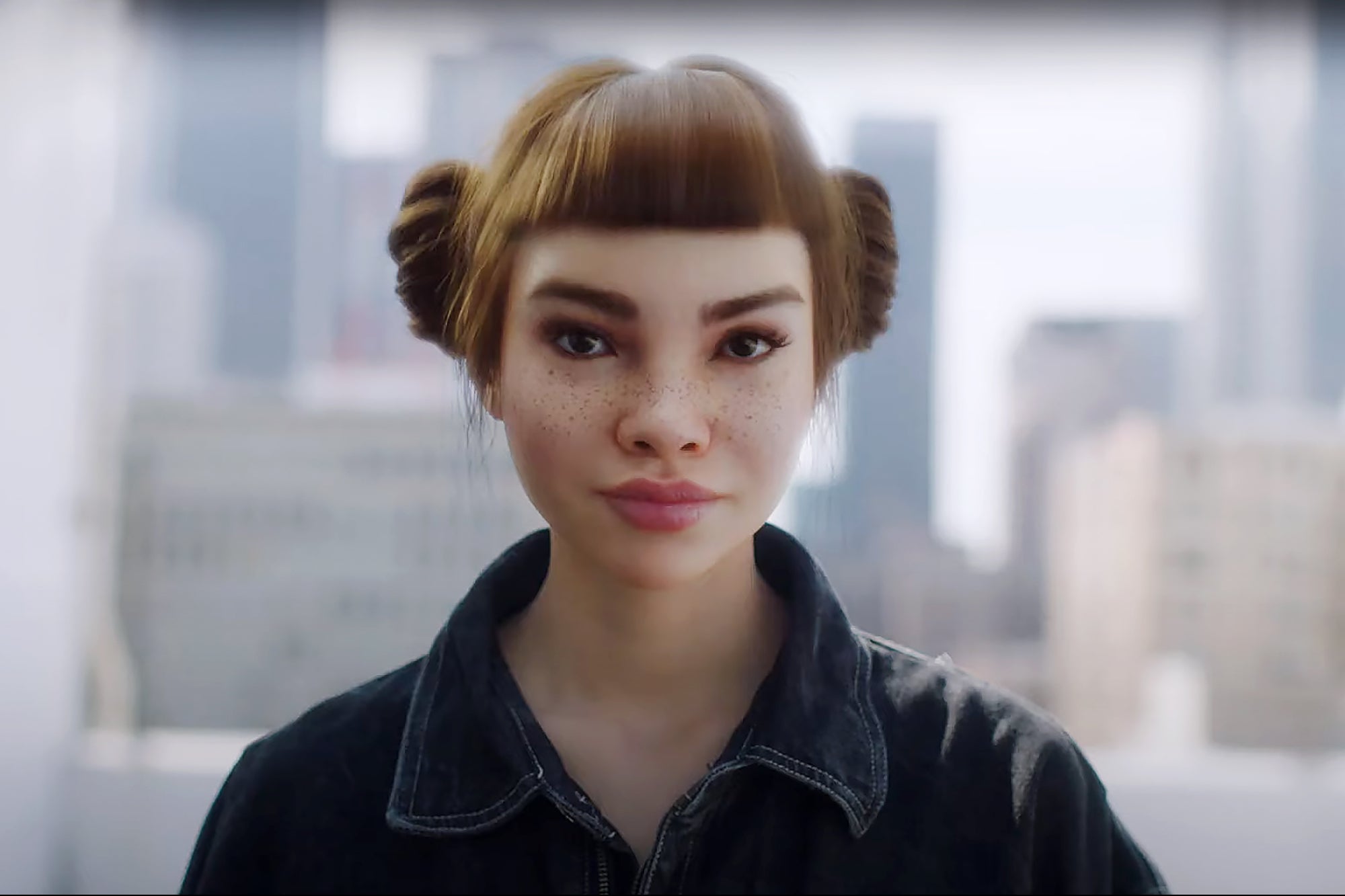
She is class neutral, gender neutral, and her face is a blended mesh of Asian, African, South American, Caucasian, and other ethnicities. Lil Maquela been around since 2016 and was named one of Time’s Most Influential People on the Internet in 2018. She has a couple virtual friends who are both androgynous too. Trevor McFedries13 and Sara Decou14 created these characters in a studio. They’ve managed to raise millions in funding15 and start a worldwide trend. Just like any other pop phenom, Lil Maquela is being capitalized any way possible and she’s a now recording artist too. Virtual models, musicians, artists, and influences have been taking off. I suppose my first inclination to this artificial trend was when I retweeted “Hologram Tupac Keeping it Real” back in 201216. Aside from the fact that these characters are easy to manage, cheap, never age, and won’t put ridiculous requests in their rider contracts, it’s really all about the marketability. I look for human authenticity in art. I would like to hope that eventually other folks will lose interest for the exactly the same reason I lost interest in the popular music of the 80s. Don’t get me wrong though… It doesn’t mean that I think this trend won’t continue to be commercially viable for the foreseeable future. There is one good thing about this…. the fact that there’s no risk she’ll become a monster. She won’t require an obscene amount of plastic surgery trying to modify her ethnicity or preserve her age. She won’t become drug addled or acquire any other crazy maladaptive human behaviors. She and the others like her are products that will remain perfectly androgynous because they are marketable.
20/09/03 – Update: Right in tune with my hypothesis here…. This week saw South Korean act to have a No. 1 single on the Billboard Hot 100: BTS’s ‘Dynamite’ Could Upend the Music Industry in The Atlantic – https://www.theatlantic.com/culture/archive/2020/09/bts-dynamite-international-pop-k-sensation-sunshine-rainbow/615928/
- California Draws Closer to Rolling Blackouts Again as Stage 2 Emergency is Declared – https://www.sfchronicle.com/business/article/PG-E-warns-of-more-rolling-blackouts-creates-15493105.php
- Cardi B In Conversation with Joe Biden – https://www.elle.com/culture/career-politics/a33549416/cardi-b-joe-biden-interview/
- Black or White – https://en.wikipedia.org/wiki/Black_or_White
- Thriller was made because Micheal Jackson wanted to be a Monster – https://www.reuters.com/article/us-filmfestival-venice-michaeljackson/thriller-was-made-because-michael-jackson-wanted-to-be-a-monster-idUSKCN1BF2GY
- Billboard Charts – https://www.billboard.com/charts/artist-100
- Meanings of Radio to Teenagers in a Niche – Programming Era – https://www.tandfonline.com/doi/pdf/10.1080/08838159309364213
- Presidential Campaign Commercials 1976 – https://www.c-span.org/video/?153447-1/presidential-campaign-commercials-1976
- Architecture Digest – Donald Trumps Request for Van Gogh – https://www.architecturaldigest.com/story/donald-trumps-request-for-a-white-house-van-gogh-was-swiftly-rejected-by-the-guggenheim
- Household Income in US – https://en.wikipedia.org/wiki/Household_income_in_the_United_States
- Androgyny (history) – https://en.wikipedia.org/wiki/Androgyny#History
- Caduceus – https://en.wikipedia.org/wiki/Caduceus
- Lil Miquela – https://en.wikipedia.org/wiki/Lil_Miquela
- Trevor McFedries (Yung Skeeter) – https://en.wikipedia.org/wiki/Yung_Skeeter
- Brud Company website – http://brud.fyi/
- Brud – Craft Ventures – https://www.craftventures.com/portfolio/brud
- Hologram Tupac Twitter – https://twitter.com/HologramTupac/status/191801856203300864
-
Illiberalism
Online Platforms and Market Power
I watched the entire House Judiciary Subcommittee on Antitrust because I was curious as what the heads of Apple, Facebook, Amazon, & Google would have to say regarding some of their practices. I read some of the accompanying documentation from the House1. It is fascinating watching folks like that operate under the microscope while trying to be gracious to one another. If anything, the some of the members of the subcommittee appeared to be idiots with questions about why their campaign emails landed in spam. My primary takeaway was that it was only slightly more productive than blindly scrolling Reddit and a decent way to entertain myself. If you want the lowdown, here’s the summary from Politico2.
Personally, I’m a bit skeptical of the big four. It started when a project I was working on received a cease and desist letter from Facebook for using the term ‘friend’ as a way to describe a relationship between two user accounts. Ever since then, I’ve just kinda laughed to myself about some of their more aggressive tactics. The term ‘it’s just business’ has always had an odd ring to it, especially since it’s origins are in the mob3. I’m not big brother skeptical, but I can see some obvious faults. I don’t entirely blame them though, part of the blame lies with the consumers. Every time a question was asked about tactics to compete like copying apps, watching the data on competitors, or changing pricing schemes the response I had in my mind was just ‘duh’!

Aside from the typical GOP volleys about why various fringe conservative publications being censored, I think the biggest gaff of the afternoon was Bezos calling ‘social media a nuance destruction machine’. Easy for him to say, even though everyone knows the reviews on Amazon could easily qualify with the same sort of disinformation campaigns lobbied more commonly at the other ‘social media platforms’. He was responding to a question about the idea of cancel culture4. Again, I prefer to see this as a human behavioral fault that’s only been exemplified by modern communications. Instead of the lobbied accusation of electioneering, I see it more akin to manufacturing consent5 and the inherit ‘distractioneering’6 techniques commonly involved in online platforms. I found most of this dialogue relatively normative.
The one quote that really stood out with me was from Mark Zuckerberg. He said “I am very worried about some of the forces of illiberalism I see in this country that are pushing against free expression.” I’m writing this essay because I had to do a deep dive on the word illiberalism this morning. The definition is pretty straight forward meaning the opposition to or lack of liberalism, narrow-minded , intolerant, unenlightened, or bigoted. As much as it’s easy to assume the meaning, I’m not that well educated on how it’s being used in politics and government7. I did find the word illiberalism tossed about in a bunch of various headlines recently8,9 mainly revolving around the idea of free speech. One Congressman tossed out a reference during the hearings directly citing the resignation letter of former writer for the New York Times10.
I put a bit of though into it this morning and I’m leaning towards my prior decrees in that the primary issue surrounding this is our new communication methodologies and our social psychology. Only the most passionate opinions surfaced when you had to actually compile more than 40 characters into an editorial letter to a regional publisher to even have the slight possibility to have your opinion heard by a much wider audience. These platforms give voices to the most obscure and make it very easy to silo and amplify opinion which would otherwise be disregarded. Somehow the idea that it’s been published online is giving these platforms credence. Ironically, some of the most vocal folks I know are conservative in their views. My former roommate has a good bit of social pull because he runs an online website. I like to call it a smut rag, because it’s essentially preying on the same sort of psychological weaknesses that make folks gossip about one another at the water cooler just on a regional scale. This is akin to the ‘shock jock’11 radio effect of tune in even if you don’t agree or the crass ‘your suburbs are going to be destroyed’ emotional wedge issues12 in clickbait headlines which just highlight our own psychological weakness towards shockvertising13.
Are we sliding towards illiberalism? Did ole’ Zuck have a legitimate worry? I’d agree, but I wouldn’t pin the blame on Facebook, Google, or Twitter. I’d pin in on the fact that the most vocal folks online tend to be the most opinionated and crass. The one’s who’ve managed to gain the largest audiences did so by being exactly this way. It’s a media cult of personality sort of thing. In my opinion, it’s very much the same type of personality that become politicians. Other’s have said it, but I’ll refer to Douglas Adams on that topic. “It is a well-known fact that those people who must want to rule people are, ipso facto, those least suited to do it… anyone who is capable of getting themselves made President should on no account be allowed to do the job.”14 And there they were complaining to some of the most powerful CEOs in the world that their campaign emails aren’t being delivered to their relatives.
I believe that the solution lies in the fact that moderate voices, the meek, the humble-minded, and bland opinions don’t stand out online. They’re just not as largely represented because of the basic formulations of follow, friend, share, tweet counts, search engine ranking, etc in the attention economy15. It’s not the fault of big tech if you get shot down by a mob trying to promote an unpopular opinion. If you’re in politics, you signed up for just that game. Although the internet has proven a boon for fringe minded extremist views because of its relative anonymity, cancel culture has been around much longer and our tech titans have just become the target of ire in a tinderbox situation. I do however, believe that the technology ‘platforms’ should have the same legal responsibility towards slander, copyright, threats of violence, assault, fraud, deceit, and our protected free speech. I was in the publishing business when Section 23016 first granted online publications the legal shield of user generated content and I expect to see it in the headlines for years to come. I support that section and I think that it’s directly responsible for the very existence of social networks. A bunch of politicians wagging fingers at a bunch of technology CEOs isn’t going to help anything. There are behemoths because we made them so. You have the freedom to not use them and I have been a big proponent of not doing so. Although some of the consequences have been very real and distressing, I’m guessing that we’ll look back on this in twenty years and cringe at how much it took our attention.
If you don’t like seeing other folks opinions online, then just don’t participate. That’s the ultimate form of cancel culture. It’s pretty easy to cancel any of these technologies, publishers, and politicians from your life. I told me wife recently that my goal is to have a life where my only real concern is the weather. However, It should be pretty obvious I’m not there yet given the hour I just spent publishing another opinion into the internet void while I could have been making something, getting some work done, or mowing the lawn.
- Online Platforms and Market Power – https://judiciary.house.gov/online-platforms-and-market-power/
- Theft, Censorship, and the Emperors of the Online Economy – https://www.politico.com/news/2020/07/29/tech-antitrust-hearing-live-highlights-and-updates-380487
- Nothing personal, it’s just business – https://en.wikipedia.org/wiki/Otto_Berman
- Cancel culture – https://en.wikipedia.org/wiki/Cancel_culture
- Manufacturing Consent – https://en.wikipedia.org/wiki/Manufacturing_Consent
- Attention marketing – https://en.wikipedia.org/wiki/Attention_marketing
- Illiberal democracy – https://en.wikipedia.org/wiki/Illiberal_democracy
- Tom Cotton and the Elite Media’s Dalliance With Illiberalism – https://newrepublic.com/article/158081/tom-cotton-totalitarian-chic
- Illiberalism Isn’t to Blame for the Death of Good-Faith Debate – https://slate.com/news-and-politics/2020/07/illiberalism-cancel-culture-free-speech-internet-ugh.html
- The Illiberal Liberal Media – https://www.city-journal.org/bari-weiss-new-york-times
- Shock jock – https://en.wikipedia.org/wiki/Shock_jock
- Wedge issues – https://en.wikipedia.org/wiki/Wedge_issue
- Shockvertising – https://en.wikipedia.org/wiki/Shock_value
- Douglas Adams The Restaurant at the End of the Universe – https://en.wikipedia.org/wiki/The_Restaurant_at_the_End_of_the_Universe
- Attention economy – https://en.wikipedia.org/wiki/Attention_economy
- Section 230 of the Communications Decency Act – https://en.wikipedia.org/wiki/Section_230_of_the_Communications_Decency_Act
-
Architecture
The image below is a rendering I’ve been working on. It’s done in Illustrator because I don’t have enough experience with other CAD software yet. I’m using a peculiar scale of 1/9.6 so that I can more easily make it pixel perfect. You can click through to see a better scaled image. I’ve always had a fascination with building things. As a kid, I used to talk my mom into buying graph paper at the grocery store because I liked to imagine building things. I think everyone really digs this… don’t they? I think the majority of my early sketches were imaginings of Rube Goldberg1 like things. I remember having a set of strings and pulleys attached in my room which acted like an alarm system if my door was opened. I used to take deconstruct everything including our electronics. I would save the parts like I was going to reuse them for some elaborate machine. I kept that stack of graph paper with me all the time. I would doodle away constantly on random things. I likely made hundreds of home designs. I was particularly fond of when I learned to make perspective drawings and I’m still pretty keen on the using the perspective tools in illustrator and photoshop.
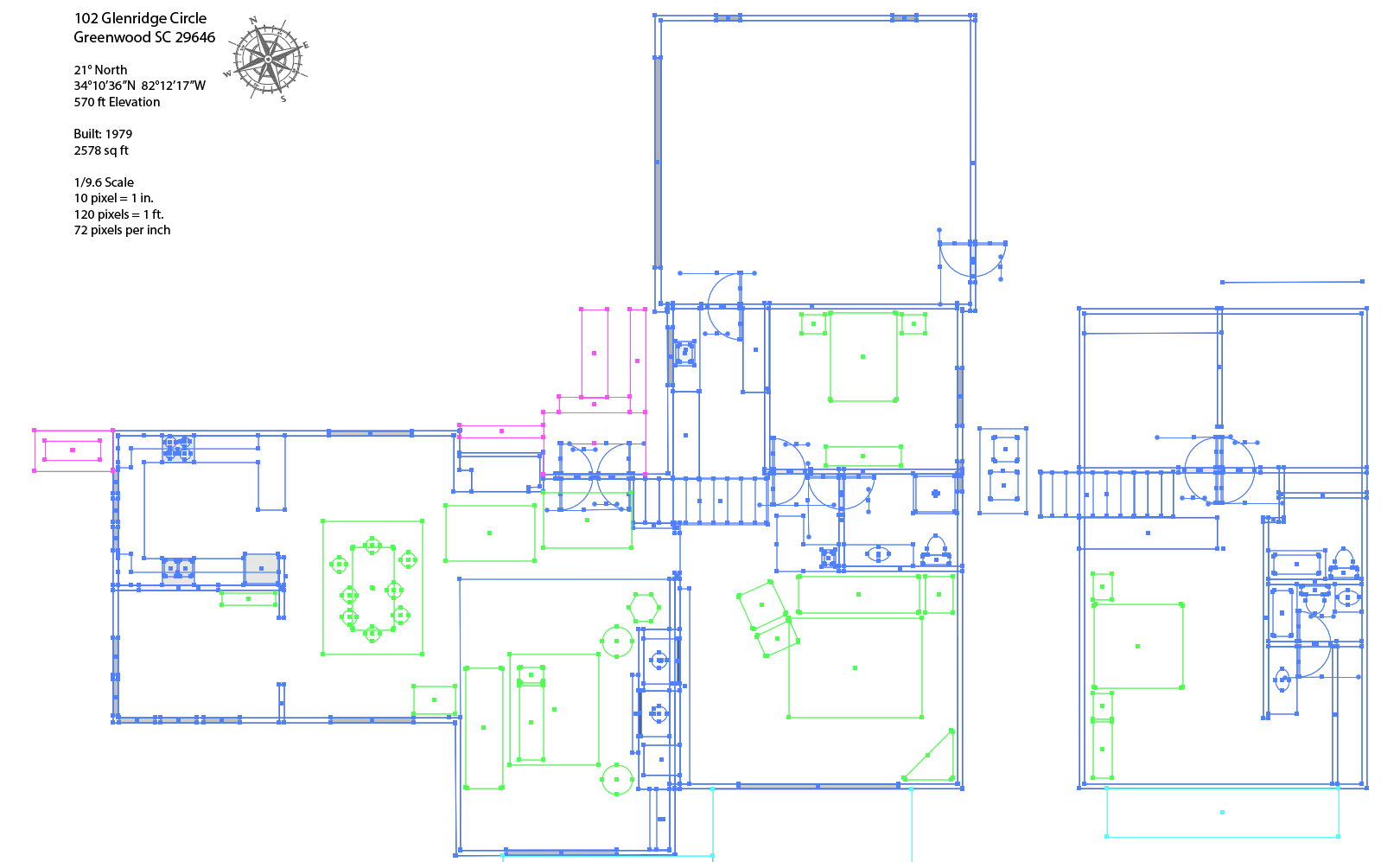
I made this in illustrator for my house notes page @ https://davidwindham.com/wha/glenridge Aside from elaborate ‘forts’ in the woods, I remember the first thing I really set out to construct. It was a 4 foot high skate and bike quarter pipe around 4th grade or so. This wasn’t your average two by twelve and cinder block bike ramp. I spent countless hours designing every detail of the construction. It was tricky too, because the plywood has to curve on a quarter pipe design. My folks insisted that I save the money to buy the materials, so I cut a lot of grass that summer. It turned out pretty nice and it was a hit in the neighborhood. A year later, I bumped that up to an eight foot design mainly for bicycles, but It had a major structural issue. I took the very first run at it on my bike and when nearing the top of the ramp it tipped backward sending me eight feet down to the concrete. I had designed the ramp to go exactly to vertical because the intent was that I want air, but I had failed to provide any stabilization on the back of the ramp. I rigged up some back-stops with two by fours and that ramp was a danger to the neighborhood kids for years to come. I’ve had similar failings like when I built a zip line but used a $4 harness clip and fell about 20 feet out of the trees. I count those as relatively inexpensive learning experiences since I’ve never broke a bone and mostly just minor bruises and stitches.
I briefly considered architecture as a possible major when I first left for college, but I was bit more consumed at the time with art. I was probably more enthusiastic about the idea of being an artist. Likely, just anything to rebel against and find my own way. I started college at an art school who happened to have a decent architectural program but I never pursued it. At the time, I was really into photography, drawing, and painting. I switched colleges and changed my major to mathematics. I switched it back to art because I really got along well with the dean and enjoyed his dixieland jazz band. I apprenticed furniture making for several years during that time and I really enjoyed it. I’ve gradually been building up my tool chest and I keep threatening to my wife that I’m building her next desk or the cabinetry in the walk in closet. I’ve explained to her that I helped build a custom birds-eye maple desk and office cabinetry set for Harriot3 and James Rigney, who is better known as the fantasy author Robert Jordon4. I was just the apprentice and I’m pretty sure any work I might do now would be quite a process of relearning and failing.
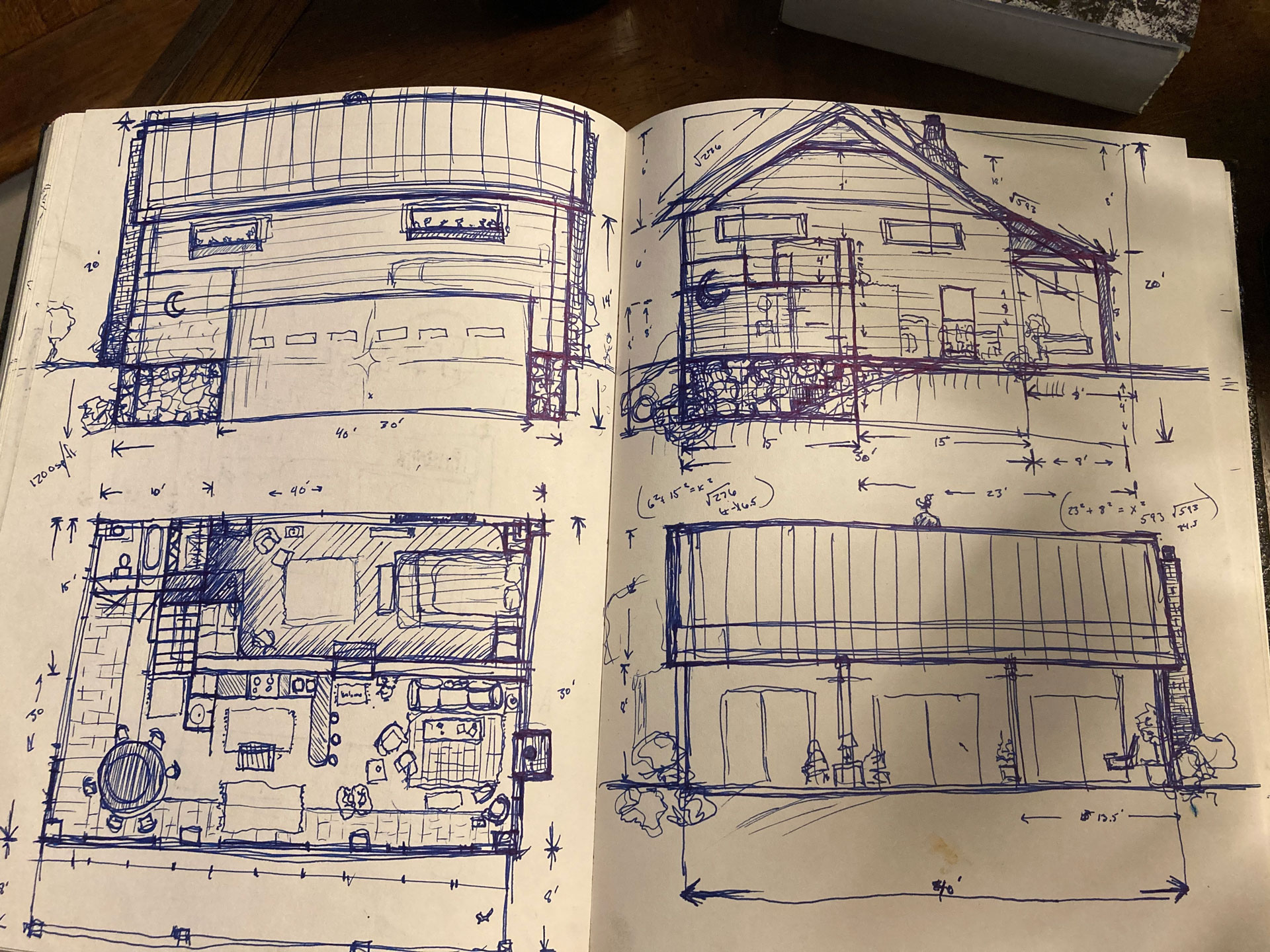
Here’s an image I found while revisiting this post likely drawn around 2010 or so…
The dimensions are too small but it’d make a great garage house or cottage.
And I still like the moon shaped bathroom window looking like an outhouse.It’s just something I enjoy about the process of creation. I used to use the term Demiurgic5 Design when I first got started. I dropped the moniker some time ago because I think it sounded snotty and erudite. In some ways, my career now is exactly the same, it’s just that the medium is different… computer languages and databases6. I still like to think of projects in the same architectural terms. I like to draft it all out on paper before I start a project. I like to draft out the database schema and information architecture. I remember standing in front of a whiteboard one time explaining a bit of software to a team for a project and imagining the graph paper up on the board. Software and web development are very much like architecture, and engineering. They just lack the tactile results. I’ve found that if I’m struggling with a project in front of the computers, the best thing to do is take a break with something physical where I can see tactile results… like mowing the yard. I think the key to really good programming and database design is in the structure and underlying architecture just like physical structures.
Anyway, I’ve been consuming all of the architecture and home building materials I can get my hands on over the last couple years. I actually sent an email out not too long ago volunteering my time to an architect as a trade-out for learning. I’ve spent a pretty good deal of time studying real estate and was licensed for about six years in multiple regional associations for a related business I owned. I still regularly bookmark properties and homes7. I’ve got a new dream now that, in many ways, is the same childish dream of building forts and bike ramps except this time, it is full scale, costs a lot of money, and takes a lot of time. I’ve had four houses now. The first of which was built by and architect and historic preservationist. It was tiny and had eighteen foot barrel vaulted ceilings. It had geothermal heating and cooling. It was a piece of work. I lived in a small farm cottage built at the turn of the century that had original hand sewn floors, joist, and siding for several years. The next house was a generic brick ranch design in suburban neighborhood and the current home is a modern craftsman8. It’s the rendering up above. It was built in 1979 and the builder is unable to locate the original renderings, so I’ve just been recreating them as I’ve been documenting the other work to the house9. Living in multiple houses is a good way to determine what you like and what you don’t. We’ve taken on gradually bigger projects for each home. I’ve done a bit of work on each of these homes and my confidence is now building beyond my means.
It was only a matter of time before I started designing a couple concept homes. I’d now like to build one. I think it’ll likely take me about ten years to complete. I’m not so foolish to think I could physically built every part of it, but I’ll go so far as to get my general contractors license so that I can sub the work. It’ll be fun studying to pass that test. And although my recent contractors might have labeled me a ‘know it all’, I do want to get my hands dirty because I understand the value of experience. Aside from the design, perhaps I’ll do some of the cabinetry and interior woodwork. I know enough to know when I need help. I’d like to be on site for every step of the process. I’m pretty fixed on the operation of the home and I want a central mechanical room10 to house the heat/air, water/filtration, and electrical. I had watched this episode of This Old House11 where they were touring mechanical rooms in Germany. I do not want a build on grade with a crawlspace or basement and I think the site prep will end up costing a pretty penny to level it out appropriately. I want to custom mill the trees removed from the property and save any rock for landscaping. I want the garden and greenhouse closely integrated into the house. Site selection is tricky because we want several acres close to town and we want an unencumbered south facing layout to maximize the solar collection. I do not want a large landscape to take care of and I want to home to appear modest and visually disappear into the landscape. I’d like to use very standardized sized components so that they are relatively cost efficient and can be replaced. I think I got that from the concept of Shinto shrines12 in an art history class and my furniture maker instructor had built Shinto Torris in his studio. I’ll go high tech, but not in the cameras and automation everywhere sort of way. I’ve designed it so the solar panels track the sun position and I’d like to put in an underground water tank to collect rain water to integrate with an aquaponics13 setup. I don’t want any unused space… two bed, two bath, and an office. My preliminary designs are focused on the build process being a timber frame pole construction14, the location, simplicity, sustainability, energy efficiency, universal design (age in place)15, minimalism, and modernism. Here’s a rendering of one of the concepts:
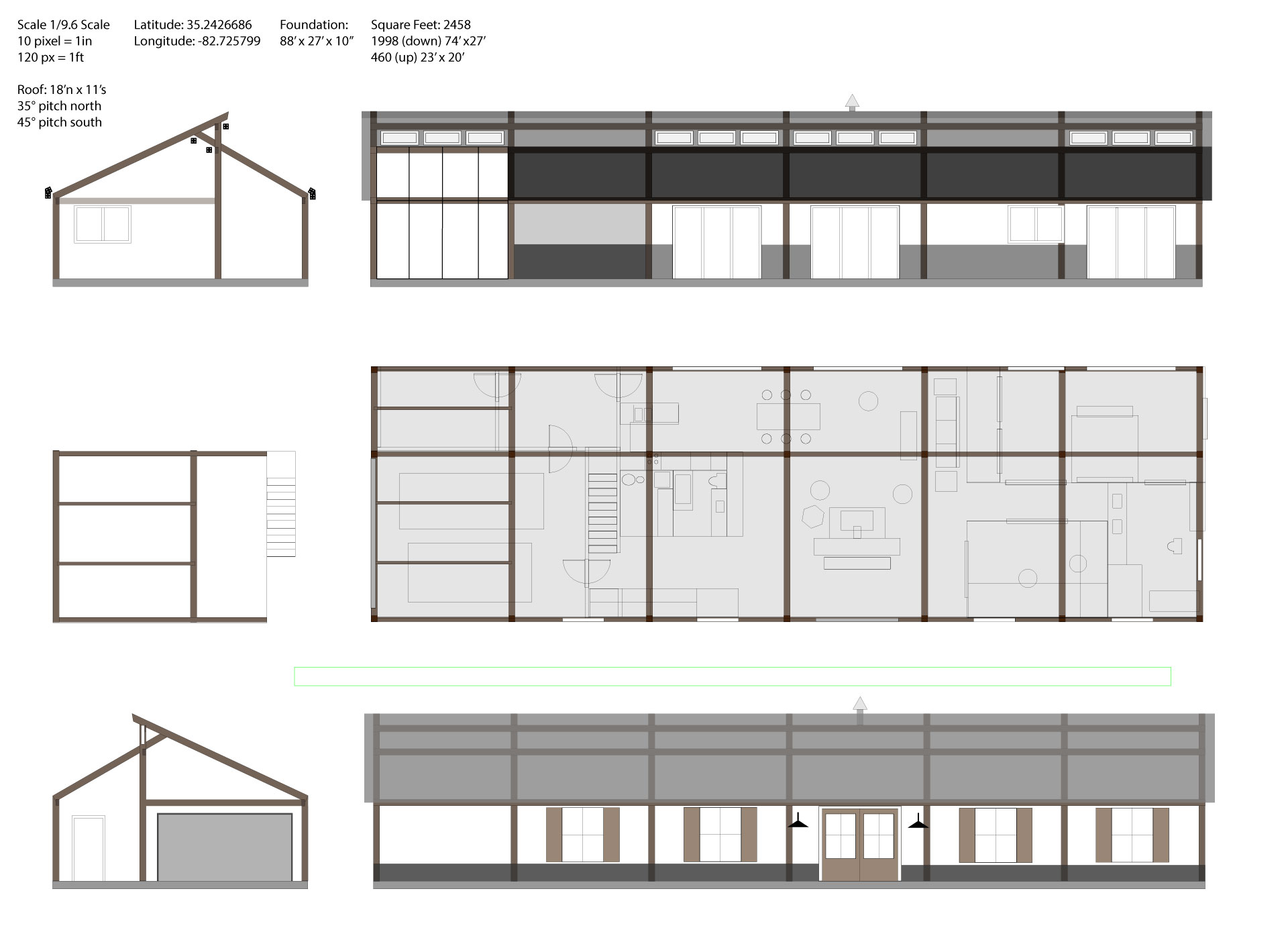
A draft I’ve been working on for a future build I’ll eventually start a project page for it. I’m sure lots of folks have this same sort of dream. I remember going to visit a former neighbor of mine who was living in a basement of an unconstructed house in a rural location. At the time it seemed a bit rough, but they now have a multi-million dollar home fifteen years later and he managed to do so as in a relatively blue collar gig working for the forestry commission. I’d imagine that the foremost obstacle to most is money, careers, life balance, etc. I’ve got a plan there too regarding a method to reduce the associated risks by creating a company to do the construction and then selling the house to ourselves when it’s complete. Of course I’m still several hundred thousand shy of where I need to be financially, but aren’t we all. I really don’t think that will stop me and I’ll find a way to make that happen. I really don’t want to pay an exorbitant amount of property taxes either so I want downplay the typical square footage appraisal in lieu of high quality construction, mechanical, and finishes. All kinds of tricky territory and lots of stuff to learn. I’m up for it and I think I’ve about convinced my better half to get on board for the challenge. I suppose you could say that we all are the architects of our own lives in that regard.
- Rube Goldberg – https://en.wikipedia.org/wiki/Rube_Goldberg
- Quarter Pipe – https://en.wikipedia.org/wiki/Half-pipe
- Harriot Rigney – https://en.wikipedia.org/wiki/Harriet_McDougal
- Robert Jordan – https://en.wikipedia.org/wiki/Robert_Jordan
- Demiurge – https://en.wikipedia.org/wiki/Demiurge
- Software Architecture – https://en.wikipedia.org/wiki/Software_architecture
- Bookmarks – https://davidwindham.com/bookmarks/
- American Craftsman – https://en.wikipedia.org/wiki/American_Craftsman
- Glenridge – https://davidwindham.com/wha/glenridge/
- Mechanical Room – https://en.wikipedia.org/wiki/Mechanical_room
- What Germany Can Teach Us About Home Energy | Ask This Old House – https://www.youtube.com/watch?v=wtDbfV5dsNs
- Shinto Shrines – https://en.wikipedia.org/wiki/Shinto_shrine
- Aquaponics – https://en.wikipedia.org/wiki/Aquaponics
- Timber Frame – https://en.wikipedia.org/wiki/Timber_framing
- Universal Design – https://en.wikipedia.org/wiki/Universal_design
23/08/20 – Update – I finally started a dedicated project page @ https://davidwindham.com/til/notes/house/build/ and while doing so I found an early draft image I added to this post. The reason I’m revisiting it is because we’re going to be looking at some property in a couple weeks which got me to thinking about it.
-
We’re All Guilty
My wife and I have a tendency to point out interesting tidbits to one another over coffee in the morning while perusing our intraweb devices. She has an approach that is a bit more empathetic than mine. I tend to want to humiliate folks for their stupidity, whereas she’s always trying to emphasize in an attempt to careen them towards more understanding. Our recent discussions have been revolving around our state’s attempt to reopen schools during the Coronavirus pandemic. The numbers here have been a bit out of control and we are a bit more cautious than most. Although I’m not as sympathetic as my better half, I do tend to try to make the best of any situation with my outlook. It’s mostly cynical and I tend to use humor. She was downstairs in a meeting when I sent her this message: “Oh, I see what’s going on now” :
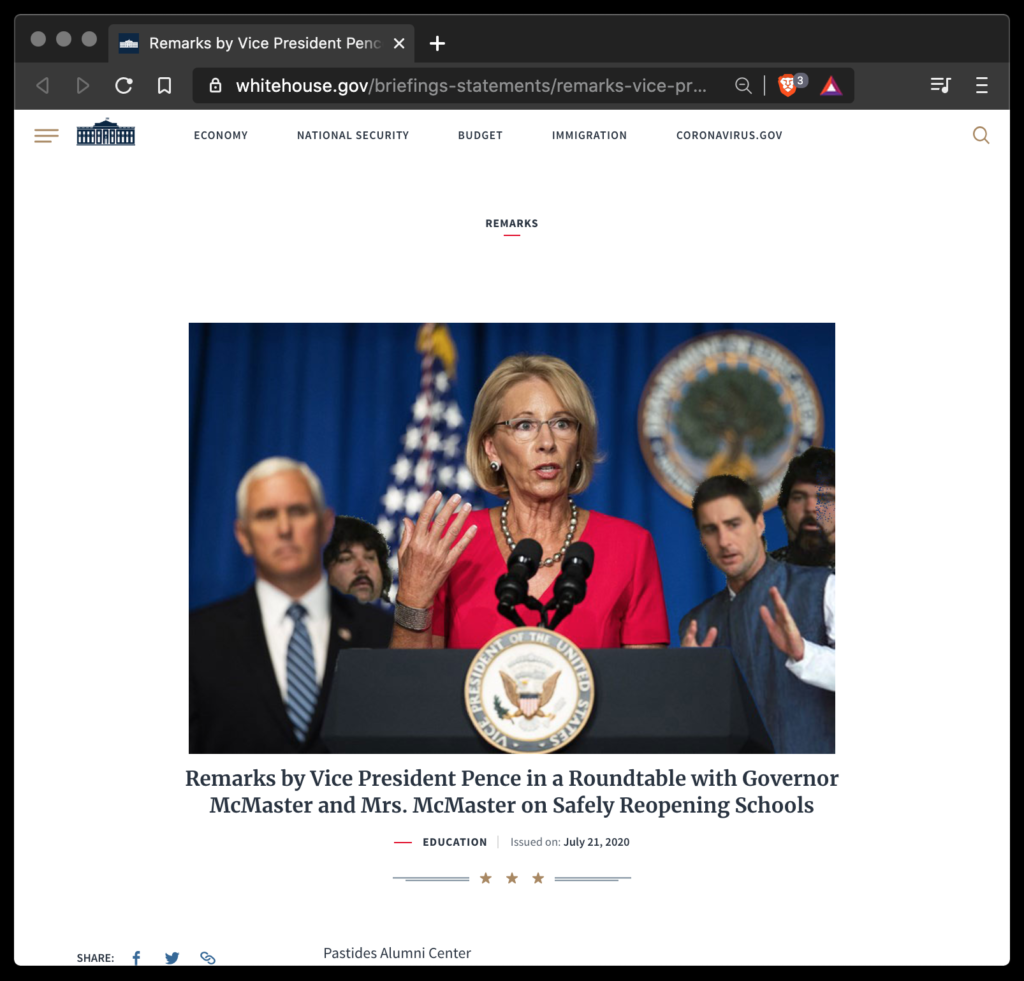
Granted the photoshop job was a bit rushed, I think I made my point. For those of you unaware who those folks are in the background, it’s from the movie Idiocracy1. The U.S. Secretary of Education and the Vice President were in South Carolina to push for schools to reopen and my wife was in a meeting discussing those plans.
This essay is not about that though, because as I previously said, I’m trying to stay clear of that mess. What hit me this morning is something a bit more profound about why I’m so critical while my wife is so empathetic. It’s about acknowledging our own guilt. Hence the title… We’re All Guilty. It hit me right after I read the news tidbit regarding throwing a pitches at baseball games. I immediately understood the childish nature of the lie. What I’ve been really having a hard time digesting is the relationship between our supposed morals and our behavior. The best I can do is try to understand my own failings.
Broadchurch2 was a British crime drama from 2017 that I really enjoyed. When I recommend it to other folks, I like to emphasize the writing and, in particular, the idea that the show tends to imply a bit of guilt amongst the entire small town. It’s a subtle point, but has a powerful meaning. It’s something I’ve been considering regarding our current climate and events. Our behavior is directly correlated to the ability to control the spread of Covid-19. We elect our officials. It’s our behavior and beliefs that got us here. What is it about us? I’ve read about and quoted recently that our selfish behavior has implications related to the spread of Coronavirus even though I understand the difficult decisions having to be made.
I’ve got a decent sense that the long term outcome of our current political climate and the pandemic is going to be good. Yes, it’s not doom and gloom… I’m very much optimistic about the long term implications. There will be some really good outcomes from this. Let me preface this next section with my own personal religious beliefs. I attend an Episcopal church on occasion although I’d likely be better suited for a Unitarian one if one was available in my town. In reality, my beliefs tend to lean a bit more towards a blend of Pantheism3, Transtheism4, and some sort of odd combination of mysticism I’ve compiled over the years. It works for me… I remember taking some sort of career assessment in our high school library which determined I would make a good man of the cloth or an artist. Back to my point about our guilt. I found myself reviewing the origins of the seven deadly sins5 and seven virtues6 this morning after a brief discussion on the current events.
Vice Latin Italian Virtue Latin Italian Lust Luxuria “Lussuria” Chastity Castitas “Castità” Gluttony Gula “Gola” Temperance Moderatio “Temperanza” Greed Avaritia “Avarizia” Generosity Caritas “Generosità” Sloth Acedia “Accidia” Diligence Industria “Diligenza” Wrath Ira “Ira” Patience Patientia “Pazienza” Envy Invidia “Invidia” Gratitude Gratia “Gratitudine” Pride Superbia “Superbia” Humility Humilitas “Umiltà” I should point out that although mostly attributed to Christendom, these have their origins in the ancient Greek philosophers7. Point is, I find it very difficult to reconcile some of the behavior recently regarding our administration, the social conflict, and the response to Covid-19. I could easily write an essay comparing each of these to the current events. We finally watched Parasite8 last weekend. That movie touches on some of the same themes. I really liked that the line “buy me drugs” line while they were getting it on. It implied the same sort of guilt she had accused the driver of. It was spot on for the writer to previously associate the vice of drugs with her own lust. I think the violent ending was appropriate and I certainly understand why the film won so many awards. I think we’ll have a bumpy road ahead until we smooth out some of the conflicts of our modern world. Although I hope that we won’t see continuing struggles, I’m realistic in the sense that in order to grow, we’ve got to overcome those obstacles. I see it like this… our world is very much just righting itself, not in a religious sense, but more in just an aesthetic case. And like my previous essay on exceptionalism9, where I insisted that “let’s just admit where we are and get on with it”, I would say here that let’s admit our own guilt first.
Although I’m only speaking for myself, I’m fairly confident that we’re all guilty. I’m going to try and take the hint from my better half and be a bit more empathetic to those I disagree with in an attempt to free myself from a bit of that guilt. And for the time being, I’ll consider my chocolate/caffeine addictions a virtue and not a vice, my confidence is not arrogance, my apathy isn’t sloth, and my cynicism is a positive personality trait. Sins-5, David-0 if you’re keeping score. I prefer to focus on my virtues anyhow. What happened to philosophy? Where did it go? Do we still value Wisdom or only that which is attributed to a religious text? I heard an acquaintance on the tennis court say “only God can determine when my life is over” in reply to a citywide mask ordinance. Oh yeah, that’s right, it was impiety10 that killed Socrates. Who can question that sort of authority? Is “the unexamined life not worth living”?11 Are the vices of modern life subtly killing us? I would argue yes indeed. I might also remind folks that willful-ignorance has caused countless suffering throughout history and try to remember that I am also sometimes guilty.
- Idiocracy – https://en.wikipedia.org/wiki/Idiocracy
- Broadchurch – https://en.wikipedia.org/wiki/Broadchurch
- Pantheism – https://en.wikipedia.org/wiki/Pantheism
- Transtheism – https://en.wikipedia.org/wiki/Transtheism
- Seven Deadly Sins – https://en.wikipedia.org/wiki/Seven_deadly_sins
- Seven Virtues – https://en.wikipedia.org/wiki/Seven_virtues
- Virtue Ethics – https://en.wikipedia.org/wiki/Virtue_ethics
- Parasite – https://en.wikipedia.org/wiki/Parasite_(2019_film)
- Good News Everyone! – https://davidwindham.com/good-news-everyone/
- Impiety – https://en.wikipedia.org/wiki/Impiety
- Socrates – https://en.wikipedia.org/wiki/The_unexamined_life_is_not_worth_living
-
Dirty Algorithm

I logged into the Twitter for the first time in about six years this last week. I’ve been using it to keep tabs on the Covid-19 numbers from DHEC and I’ve really appreciate the folks making charts. After about a week of tracking, I saw that one of the fellas was getting down on himself over the fact that he’d been so absorbed with charting the results. It was also likely that it is depressing watching the uncontrolled spread in real time, so I made my first post in about five years with a little pep-em-up response. I’m not a fan of the social medias and although I’ve posted about here on several occasions, I’m going to do another quick follow up about one point that I think is really important right now.
When I read the news, of which I have an on again off again relationship with, I will not sign into any single source or aggregator. I do this because I do not want my results sorted in any personalized way. I mainly use an old school RSS reader with a list of trusted sources for the majority of my news reading. And when I’m using a third party aggregator I’d like to the results as they would be shown to any anonymous reader. I do realize that my IP is consistently being used and I make an effort to flop that around on occasion too. As I’m reading, I will purposely click through articles with headlines I don’t find interesting simply to keep those sources in my feed. I do all of this in an effort to keep the algorithms of the internet from having an effect on the content I’m presented.
I also logged into Facebook this week. I logged off about five years ago, but left my account in place. I wanted to read the teacher responses to a local newspaper article about the reopening of our schools. Unfortunately, our local newspaper and the majority of our local citizens use Facebook regularly to communicate with one another. I don’t fault them for it, but I don’t think they entirely understand how it works. Namely the sorting algorithms that are put in place to encourage engagement and usage. So, if I respond to a particular person’s post then algorithm is determines that I should receive a more of that persons postings in my home feed. Although seemingly innocuous and with the general intent of increasing engagement, the overall effect of which is a siloing of information. I work my way through Facebook for a year or two and soon my feed has been so customized that I don’t even realize that what has been removed and even the adverts are tailored to my interest. So about year three or four of my usage, I started purposely engaging in random users postings in an effort to confuse the algorithmic sorting. It sort of worked, but then I started to really dislike what I was seeing from other folks. It worked, I was now disengaged and I deleted a bunch of them. Wash-repeat and within a year I was completely disinterested and quit. So my effort to confuse the algorithms led to me quitting.
My point gets a bit darker. It’s not all boring dystopia and I’m not going to rehash my previous posts about how extremism is cultivated or political systems are manipulated1,2,3, but I would like to emphasize that when Henry Ford put the combustion engine automobile into mass production, he didn’t anticipate the effects of automotive emissions. When Albert Einstein set the state for the invention of the atomic bomb, he later wrote that “The unleashed power of the atom has changed everything save our modes of thinking and we thus drift toward unparalleled catastrophe.”4 Likewise I don’t believe that the engineers at Google are going against their oft cited and now abandoned slogan of “Don’t Be Evil”5. I do, however, believe that there has been unfortunate unintended consequences of their algorithmic searches. If I, the user, don’t make a concerted effort to avoid the tools they’ve designed to keep me engage and improve my search results, I’m handed a list of information I already tend to agree with. I’m certainly not looking for that. I’m looking for information that challenges my belief system and broadens my perspective. It’s what continual learning is all about and at the core of every education system. I guess that I’m likely in the minority on this, but I think it’s something that could really help a lot of folks.
-
Confederate Monuments
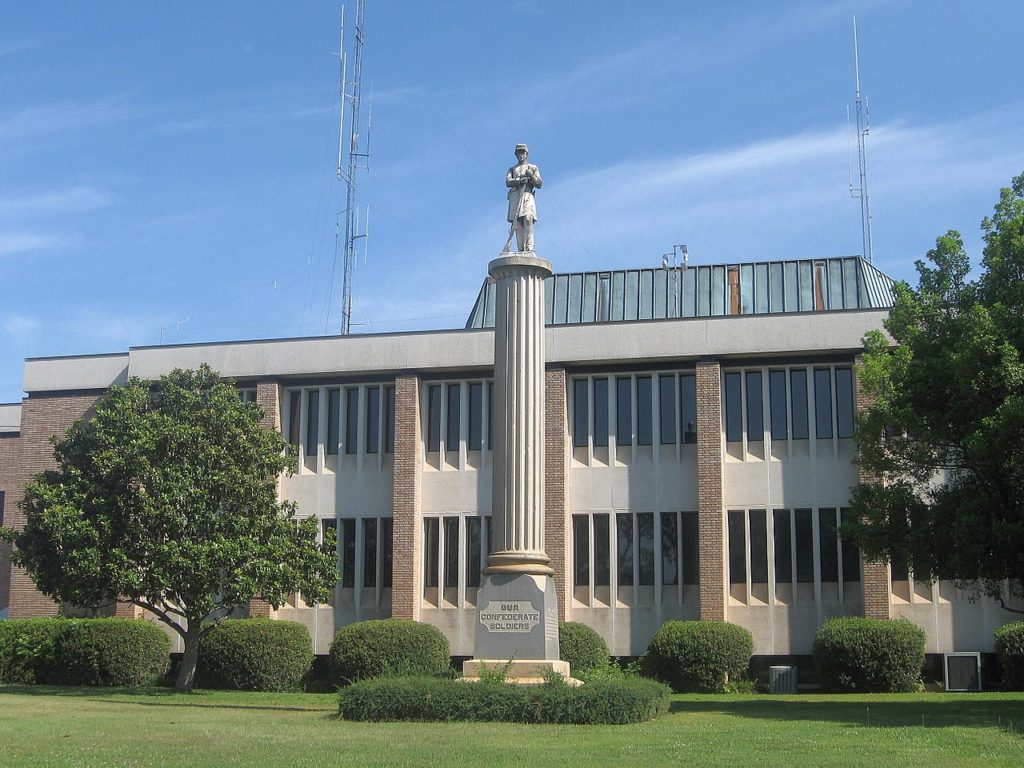
A guest editorial was published in our local paper a couple days ago entitled Leave Our Monuments Alone1. It’s about preserving the confederate monument in front of our local county courthouse. It really bothered me. South Carolina has removed less public symbols of the Confederacy than any other state with 98% remaining2,3. Originally, I was going to respond directly to the author, but I’m writing this post as a response. I can cite hundreds of reasons for removing confederate monuments mostly involving the reasoning used to construct them in the post civil war Jim Crow2 southern states, but I feel like my concise little letter captures the essence of it.
Gary,
I just wanted to write a brief response on your guest editorial. I understand and agree with the some of your points and I applaud your confidence to write openly about it. I’m not going to waste any time with the political references because a lot of folks seem to be politicizing everything these days. I would, however like to respectfully disagree with your conclusion that the idea that “tearing things down is not a way to make things better”. We, the United States of America, tore down the confederacy for just this reason. We, the State of South Carolina, removed the confederate flag from atop our capital building for just that reason and we in Greenwood County can certainly do the same with the confederate monument in front of our courthouse. I’m very sympathetic to historical monuments. My ancestors in South Carolina served in American Revolutionary War. It just doesn’t make sense to keep a memorial dedicated to the failed confederacy in front of the building which represents the system of justice which has been defined the greatness of our country. Perhaps you could raise some money to move it elsewhere. You’re apparently intelligent enough to graduate from Stanford and I would like to ask you to please put that to good use by trying to empathize with those who may take affront to a monument memorializing a scar on our systems of justice. I’ll leave you with this quote from a man who studied in your state, honored by our state, and a true local hero. “We, today, stand on the shoulders of our predecessors who have gone before us. We, as their successors must catch the torch of freedom and liberty passed on to use by our ancestors.” ~ Dr. Benjamin E. Mays
I believe that in order to uphold those values of freedom and liberty, we must, on occasion move, remove, or to be more specific, tear down the monuments which no longer align with those values in order to make things better.
Sincerely, David A. Windham
- Leave Our Monuments Alone – http://www.indexjournal.com/opinion/guest_column/guest-column-leave-our-monuments-alone/article_4eded3b5-7cd5-5106-ab53-26a6802ee0f4.html
- Jim Crow laws – https://en.wikipedia.org/wiki/Jim_Crow_laws
- List of Confederate Monuments in South Carolina – https://en.wikipedia.org/wiki/List_of_Confederate_monuments_and_memorials_in_South_Carolina
- (image) Confederate Monument, Greenwood County Courthouse, Greenwood, South Carolina – CC BY-SA 2.0 – https://www.flickr.com/photos/changeofvenue/albums/72157600786378963
-
Together

This is the last illustration from Milton Glaser1. At the time of his death, Milton Glaser was working on a graphical treatment of the word “Together,” to evoke the idea that during the separation of the pandemic, “we have something in common.”2 I just thought I’d leave it here as a reminder to try and think more like he did.3,4
-
Althea Gibson
Althea Gibson on What’s My Line – Aug 10th, 1958 Althea Gibson1 is an America treasure. We need more uplifting American stories right now. As I wrote a couple posts ago, I’ve been digging in to help edit and create Wikipedia pages related to African American injustices and success stories. It’s just my little way of helping make the internet a better place. The county in South Carolina in which she was born features a large confederate memorial2 in front of the county courthouse. I think it should be replaced with one of Althea Gibson. We also have a confederate monument in my little town in South Carolina sitting in front of our courthouse3. It should come down simply because America has always been about change and our monuments should be focused on the positive contributions of our citizens and not shrines to lost causes. Althea Gibson is the type of American we need to memorialize.
I did a deep dive into her story in the last couple days because it resonated with me. It’s her spirit. I’m not going to rehash it but I’d like to cite a couple highlights before I send you down the internet rabbit hole. She was born in a small town in South Carolina to sharecroppers. Moved to Harlem and started street fighting. Dropped out of school and was sent to a shelter. Was introduced to tennis through a police athletic union. Was convinced to go back south by Sugar Ray Robinson. Went back to school in Wilmington, North Carolina. Became a great tennis player. Graduated college. Won 11 major tennis titles. Recorded and album after singing at W.C. Handy’s birthday. Acted in a film alongside of John Wayne. Decided to take up golf becoming the first African American to join the professional tour. Got sick. Went broke. Saved by a former doubles partner. Finally memorialized and remembered for the pioneer that she was. I’d recommend that every American watch the documentary film on her life. 4,5
- https://en.wikipedia.org/wiki/Althea_Gibson
- https://digitalcommons.unf.edu/historical_architecture_main/6558/
- https://en.wikipedia.org/wiki/List_of_Confederate_monuments_and_memorials_in_South_Carolina
- https://www.pbs.org/wnet/americanmasters/althea-gibson-full-film/5387/
- https://www.espn.com/espnw/athletes-life/story/_/id/13614418/6-reasons-why-watch-althea-gibson-documentary
-
South Carolina PPP Recipients
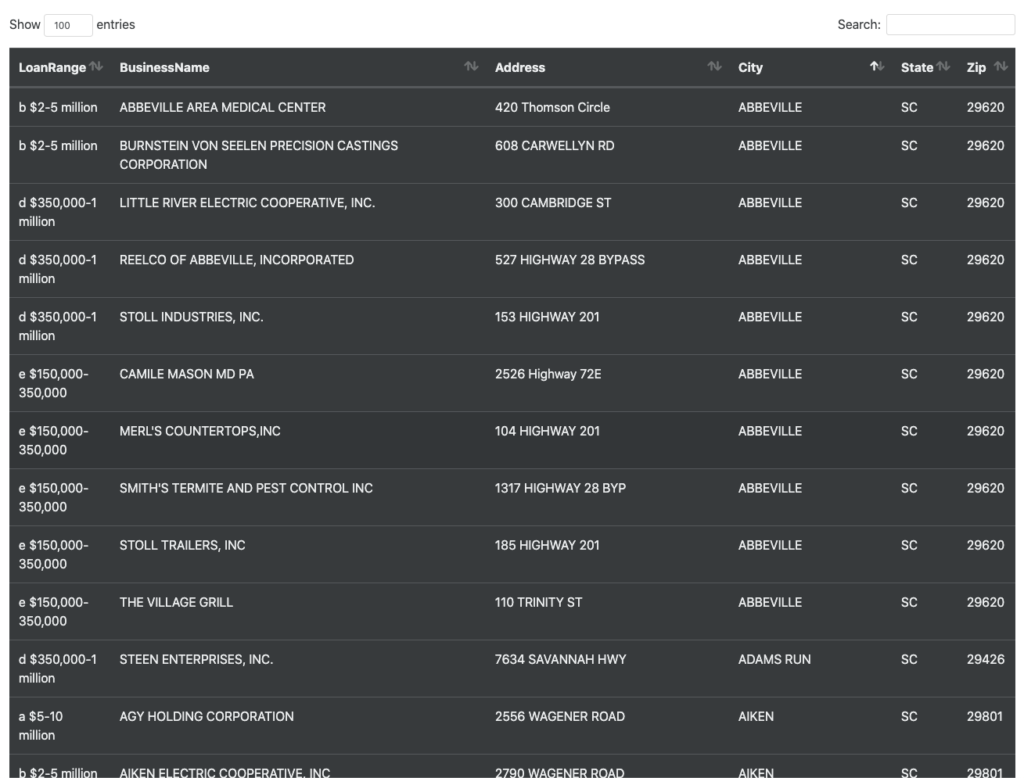
I was wondering this morning who locally had received money from the CARES Act Paycheck Protection Program1. I grabbed the existing data from the press release from the Treasury2. I imported it into a database trimmed out all of the other states, decently formatted the tables for the web, and published it to a searchable/sortable page.
You can access it @ https://davidwindham.com/wha/sc-ppp/
- https://en.wikipedia.org/wiki/Paycheck_Protection_Program
- https://home.treasury.gov/news/press-releases/sm1052
Related Articles:
- The Economist – America’s covid job-saving programme gave most of its cash to the rich – https://www.economist.com/graphic-detail/2022/01/31/americas-covid-job-saving-programme-gave-most-of-its-cash-to-the-rich
- Fast Company – Less than 35% of the $800 billion in PPP loans actually went to workers, say economists – https://www.fastcompany.com/90713747/workers-800-billion-ppp-loans-economists
-
People of Trump
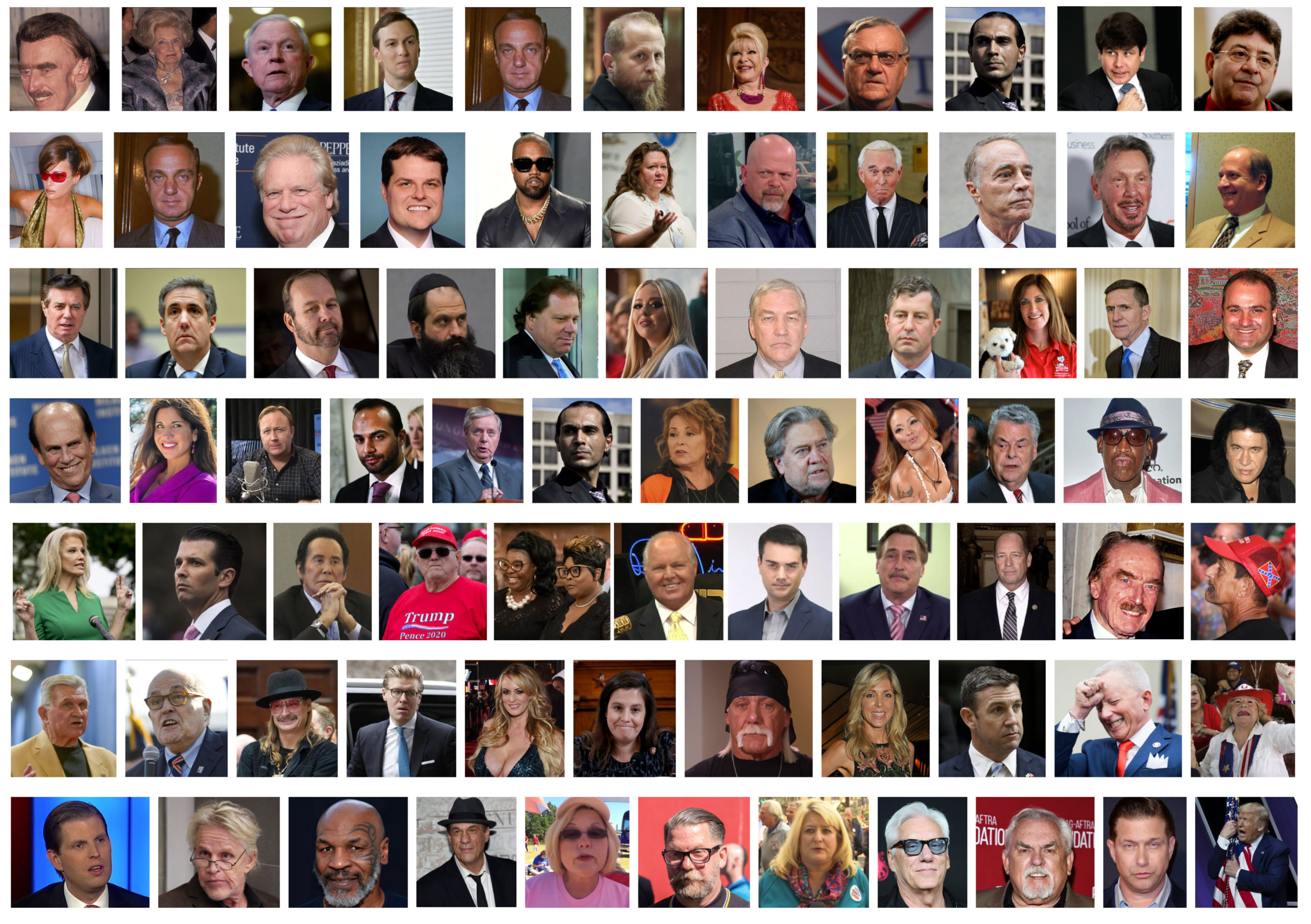
Take a look at the photo above (click for full size). I just have one question: Do these folks look like the ‘good guys’? If I walked into a party and that crowd was there, I might say “honey, we’re in the wrong place and we should leave”. The collage took me about ten minutes this morning after reading the news and ‘googling’ “Trump Supporters” and “Trump Associates”. Maybe it’s just me, but considering the number who’ve been convicted of crimes or made other hateful statements, the odds of me being correct could be in my favor. Unlike People of Walmart1, this isn’t a group of folks who we might inappropriately laugh at because they’re either too poor or too uneducated to know better. These are folks who have decided that their political opinions or actions are important for one reason or another. I think the main attributes they share are anger and greed. And as much as I pride myself in trying to not to judge others… these are not my people.
I hope that this is absolutely the last political thing I ever include on my website and I hope we vote him out of office. I think I was pretty spot on with my previous political post2 in 2011 because I keep seeing that same image in the news. The folks I know who are involved in politics don’t rank high in my network. I’m happy to have the freedom to express my opinion, but in many ways, just posting about it is dragging me down. “Politics it’s a drag”…. that’s a line from the Ben Harper song Both Sides of the Gun2. It’s the last CD I think I ever bought and disc 2 is still in the player in my old truck… take a listen2. I was talking last night to my better half about the type of personality I admire and want to represent… it’s a person who exudes peace with themselves and the world around them. “Living these days is making me nervous”2, but I’m working on it.