-
Jocassee
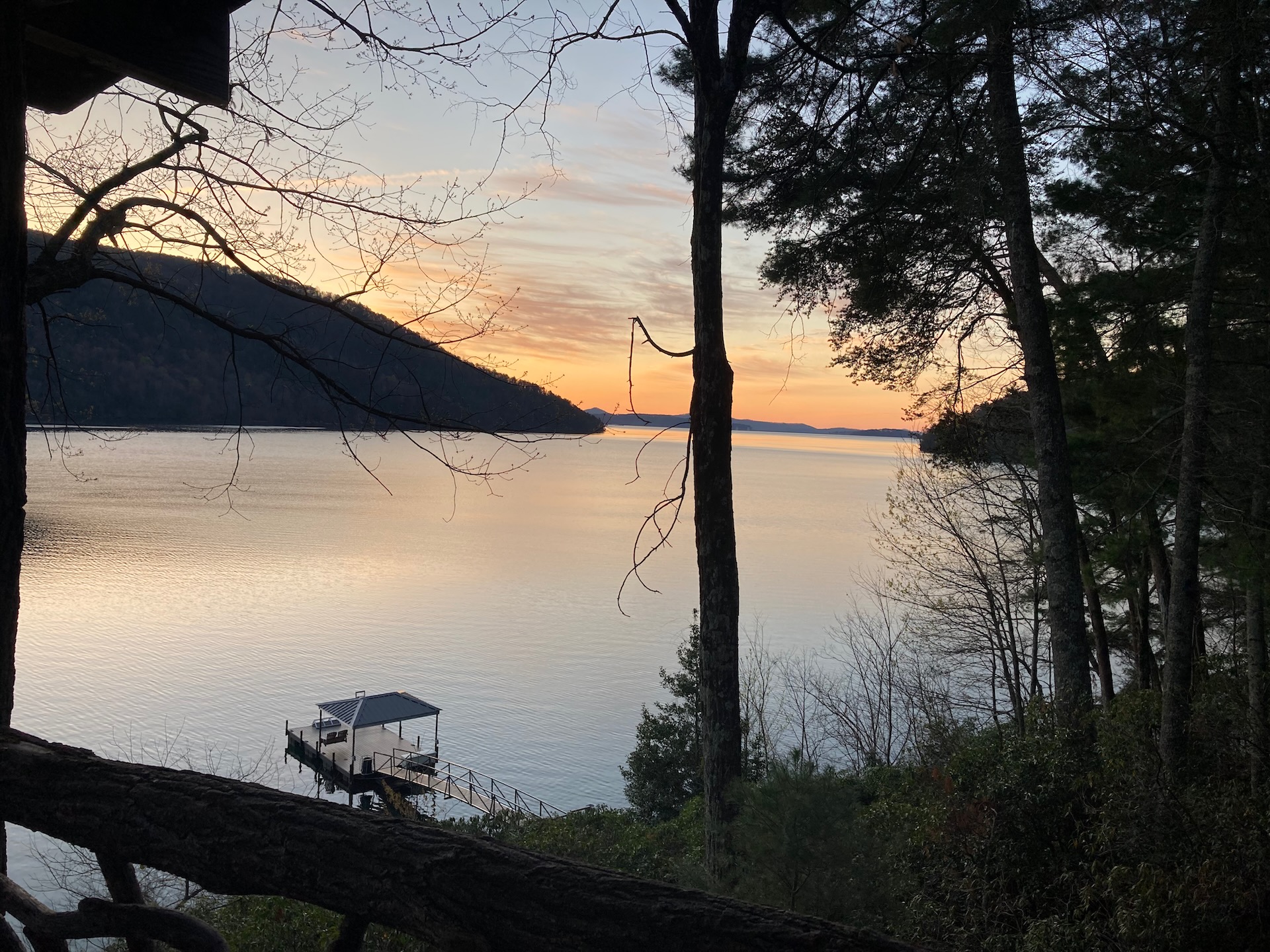
Jocassee – “Place of the Lost One” I took a trip up to lake Jocassee1 last weekend with some old friends.
- Lake Jocassee – https://en.wikipedia.org/wiki/Lake_Jocassee
-
Bob Dylan
I went to see a Bob Dylan concert last night1,2. I had seats up front just a couple rows back in the middle aisle and it was good.
- Watching the River Flow
- Most Likely You Go Your Way and I’ll Go Mine
- I Contain Multitudes
- False Prophet
- When I Paint My Masterpiece (Bob on harp in beginning then on piano)
- Black Rider
- I’ll Be Your Baby Tonight
- My Own Version of You
- Crossing the Rubicon
- To Be Alone With You
- Key West (Philosopher Pirate)
- Gotta Serve Somebody
- I’ve Made Up My Mind to Give Myself to You
- Melancholy Mood (Frank Sinatra cover)
- Mother of Muses
- Goodbye Jimmy Reed
- Every Grain of Sand
The setlist mixed several unique renditions of his songs from the last 59 years flanked by the majority of his most recent work from Rough and Rowdy Ways which in my opinion is as good, if not better than any of his previous work. It’s not really appropriate to compare his works because each one reflects a different state of mind and time. The most recent is littered with references to mortality and art keeping him alive. For the last several weeks, I’ve been recently listening his discography, interviews, outtakes, and reading anything related because there’s a small part of me that likes to try and personally connect to the event. Dylan explained in his Nobel Prize in Literature essay and in other interviews that he had connected to Buddy Holly in a very mysterious way just days before he passed. Ole’ Zimmy will turn 82 years old before this tour is over and although literal volumes have been written about him, this is mine.
The first time I actually paid attention to Bob Dylan was when I was in my early teens listening to the soundtrack Pat Garrett & Billy the Kid3. I had a kind of peculiar luxury growing up when it comes to listening to music. Our house as filled with albums because my father worked in radio and had promotional copies. We had a whole wall of cabinets filled with albums. I would just pick them out randomly based the covers and listen to them. I tended to gravitate towards the playful and colorful albums of The Beatles when I was really young. But for whatever reason, I first discovered Bob Dylan through an obscure soundtrack which only has two songs on it that aren’t instrumentals even though a couple outtakes have since been recorded by other artists. Kris Kristofferson played Billy in the film and the album was recorded a couple days before I was born.
I listened to the other albums with interesting covers before I was old enough to drive… Dylan, Planet Waves, and Slow Train. I didn’t really pay much attention then because the lyricism didn’t resonate with me and I was too focused on new music and the sounds of bands like Led Zeppelin. In my late teens, I picked up a couple CD’s that I listened to a good bit. During my first year of college, one of my best friends was a rabid Dylan fan. Her dorm room was covered in Dylan posters and out of respect, I borrowed and listened to every album meticulously reading the lyrics alongside. Another college girlfriend would also listen to Blood on the Tracks regularly. And during my most debaucherous college days my friends and I would listen to The Basement Tapes somewhat religiously and play our own versions. The CDs I wore out more than any other was the double disk live 1966 Royal Albert Hall concert. The very first songbook I purchased while I was playing guitar was called Classic Dylan which included Blonde on Blonde, Nashville Skyline, Blood On the Tracks, and Desire. At one point, I knew every note and lyric to all four of those albums and that’s pretty tough for even Dylan to remember who has often ad-libbed some of the lyrics in live performances.
So what is it about Bob Dylan? I mean… there’s a reason he’s won a Noble Prize, Presidential Medal of Freedom, Academy Award, Golden Globe, 10 Grammy Awards, various Hall of Fame awards, numerous books and documentary films. His own book Chronicles Vol. 1, received acclaim. My dad and wife both like to joke about him with the nasal voice bit. Just writing this is making me try to find the seed. My father has a deep interest in early American Rhythm and Blues which I think comes from his own experiences. I don’t have any real world experience that connects me with any Dylan’s political or protest songs. I think that the nonconformity and anti-authority aspect certainly hit some personal ideals, but it’s more than that. Dylan walked off the set and refused to appear on the Ed Sullivan show after CBS informed him that his tune my be considered libelous to the John Birch Society. But it’s not his political nature that appeals to me either even though I very much respect him for his participation in the anti-war and civil rights movement. In a way, I think it’s more about his individualism and sarcasm. At every turn in his career, he’s never taken the path of least resistance even though he could have retired on his reputation alone forty years ago. Even his albums from the last ten years have remained somewhat controversial because he shifts his artistic style.
I have had two very small personal connections to Bob Dylan. The first is that a friend of mine briefly exchanged words with him on the street in New York. As I was told, it went something like this… “Uh Mr. Zimmerman, I just wanted to say that I’m a big fan” and Dylan replied “what are you, some sort of penis salesman” and walked off. The second is that I was building a website for a polo association down in Aiken, South Carolina when I met the sister-in-law of D.A. Pennebaker, the filmmaker who caught Dylan flipping cards in front of Allen Ginsberg for his documentary Dont Look Back4. They asked me to help build their website and I still host and manage it5. Pennebaker shot another documentary film titled Eat the Document6 that Dylan edited and has never been released.
I still discover things about Bob Dylan that I didn’t know. I was recently listening to an interview with Larry Charles7 where he describes how Dylan had contacted and met with him about creating a TV Show. That eventually became the movie Masked and Anonymous8. In April of 2020, Bob Dylan had his first ever Billboard top charting track with Murder Most Foul9which is a 17 minute track about the killing of John F. Kennedy which is his longest song ever and references 70 other songs10. I return to Dylan every so often when a new album is released and each time I listen to a new album, it leaves me the feeling of wanting just a little bit more. If I could attempt to distill my enthusiasm in the simplest terms, I think it would revolve around his distaste for the obvious and his embrace of the mysterious. While listening to a lot of Dylan recently, I was constantly reminded that his music and lyrics make you think. In my opinion, his art attempts to closely mirror the type of balanced juxtaposition that our world is made of in the tradition of all the great works or art. If he reaches the end before this tour is over or another album is released, it’d be a perfectly poetic ending. Cheers to everyone I’ve known that shares my enthusiasm for Bob Dylan. These are some of the best people I’ve ever known because they seem to share an appreciation for the sublime that’s as old as humankind.
- Bob Dylan – https://en.wikipedia.org/wiki/Bob_Dylan
- Rough and Rowdy Ways Tour – https://en.wikipedia.org/wiki/Rough_and_Rowdy_Ways_World_Wide_Tour
- Pat Garret & Billy the Kid – https://en.wikipedia.org/wiki/Pat_Garrett_%26_Billy_the_Kid_(album)
- SubterraneanHomesick Blues – https://vimeo.com/63913470
- Dont Look Back – https://phfilms.com/films/dont-look-back/
- Eat the Document – https://en.wikipedia.org/wiki/Eat_the_Document
- Larry Charles – You Made it Weird with Pete Homes – https://youmadeitweird.libsyn.com/larry-charles
- Masked and Anonymous – https://en.wikipedia.org/wiki/Masked_and_Anonymous
- Murder Most Foul – https://en.wikipedia.org/wiki/Murder_Most_Foul_(song)
- A List Of The Songs Named In Bob Dylan’s ‘Murder Most Foul’ – https://www.npr.org/sections/allsongs/2020/03/27/822468820/a-list-of-the-songs-named-in-bob-dylans-murder-most-foul
22.07.02 – I had a text thread going with a couple friends about Dylan and we started ranking our favorite albums. I went ahead and made an exhaustive list excluding the various bootleg and outtakes compilations. There are some ties in here and I might could shuffle a couple around. It’s just me reminiscing about listening to them which might be affected by the state of mind I was at during the time that I liked each album. I’ll just put it here as a reminder.
- Royal Albert Hall
- Before the Flood
- Budokan
- Basement Tapes
- Highway 61 Revisited
- Bringing It All Back home
- Desire
- Street Legal
- Hard Rain
- Blood on the Tracks
- Blonde on Blonde
- Rough and Rowdy Ways
- New Morning
- Dylan
- Infidels
- Freewheelin
- Another Side
- Bob Dylan
- Dylan & the Dead
- Triplicate
- Tempest
- Under the Red Sky
- Slow Train
- Nashville Skyline
- Rolling Thunder
- Self Portrait
- Real Live
- John Wesley Harding
- Time Out of Mind
- Oh Mercy
- Empire Burlesque
- Shadows in the Night
- World Gone Wrong
- Shot of Love
- Saved
- Planet Waves
- Fallen Angels
- Love and Theft
- Knocked out Loaded
- Unplugged
- Good As I Been to You
- Together Through Life
- Down in the Groove
-
Automobiles
I sold two cars and got a new one last week so I’ve been thinking a good bit about automobiles recently. Before I get started on this, let me first just say that I don’t really like automobiles or driving anymore. I find the roads just too congested with idiot drivers in a rush. I used to commute a pretty good distance on highways every day and often found myself dodging the lane swayers on their phones. I can now go weeks without leaving the neighborhood because I work from home and ride my bicycle to the tennis courts. I enjoy a vacation where I can just park my car for the week and ride a bike.
I wish U.S. metropolitan areas had been developed before the car. I think the best cities are those that were built before the car even mattered. I was down in Charleston last week and I wish someone would ban cars downtown in favor of trolleys even though the port there is shipping out a mass of them overseas keeping the economy afloat. It’s not just the whole dinosaur juice-burning thing either. Electric cars will only solve part of the equation and we should be focused on high-speed mass transit and urban mobility at this point in the game. I spent almost eight hours in the car last week and it wasn’t exactly what I’d call a luxury. So what I’m hoping for now is a high-speed rail with a station within a short drive. There has been some discussion of a rail connecting Atlanta, Charlotte, Raleigh, and Washington DC that runs through Greenville just up the road. That’d connect almost the entire east coast. Automobiles used to have that distinctive sort of American freedom attached to them, but they’ve become more of a burden than a luxury1,2.
I still enjoy a nice drive through a quiet country road on occasion. I used to love cars and driving. I have this thing where I can identify almost any year and model of automobile just from the front or rear. I’ve driven up and down and back and forth across the United States in several different automobiles. I’ve also driven hundreds of models of cars too because I would ask the valets at a hotel I worked at to let me park em and go on joy rides. I grew up riding around in a 1967 Pontiac Lemans Convertible. It was the first car I ever drove. My uncle had taught me to drive while I was still in elementary school and one afternoon while my parents were away after school, I loaded up my brother and took it for a ride through our neighborhood while I could barely reach the pedals or see over the dash. I was embarrassed by that car because I thought it was old, but the reality was that my other uncle was quite the grease monkey and had that thing in mint shape tuned up to high hell and back. It would burn the tires off the wheels with the 450 GTO package, Cragar mags, and a Holley carburetor. The top stayed down most of the time and those seats would burn your skin off the back of your legs if it had been sitting in a parking lot during summer. I just didn’t realize that my mom was driving around in the 1980s in a classic muscle car.
I’ve personally had an assortment of vehicles: Honda, Porsche, VW, Jeep, Nissan, BMW, Mazda, & Toyota. I think the best one I ever had was a 1989 Toyota Tercel that I bought for $400 and sold for $1000 after driving it for two years. I lived in downtown Charleston during that time, so it was the perfect beater. I blew up the Porche engine because I was irresponsible and reckless. I’ve put 150,000 miles on the Honda and Nissan. The 86 Jeep Grand Wagoneer got about 12 miles to the gallon and was the worst driving but most comfortable of the bunch.
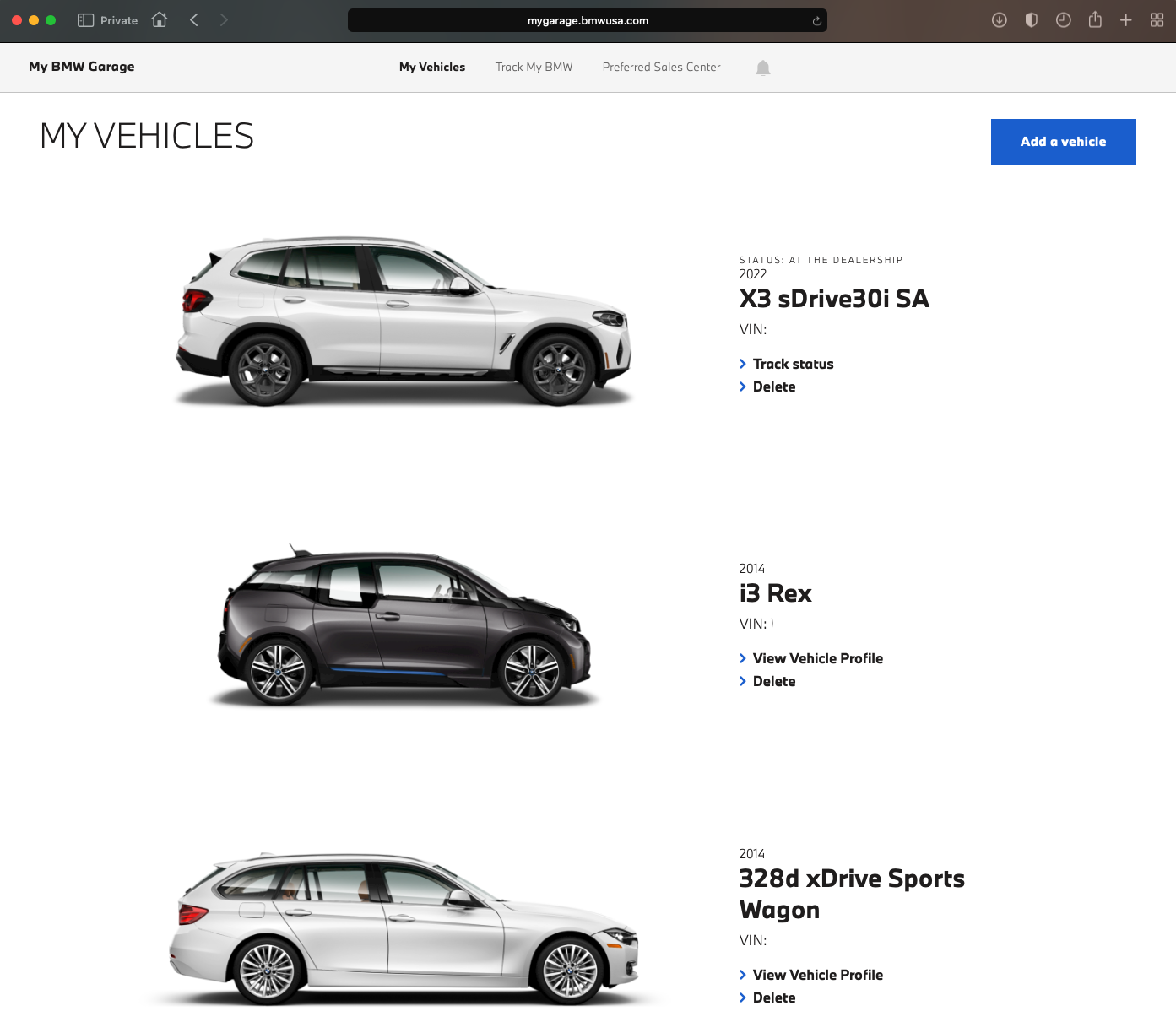
I got a new BMW X3 last week and traded in a BMW touring. I originally got a BMW for the interstate drivability. I just found that at high speeds it handled better than other cars. I’ve now grown fond of their driving style and will even rent them when available. It’s also partially to support our local economy because the new car was assembled just up the road from me. BMW has been the largest American-made vehicle exporter for the last 10 years. They have been great at customer service providing us with great loaners, customer loyalty discounts, and quick recall repairs. I’m not likely to drive the new one more than 50,000 miles before I trade it in, but our i3 is almost 10 years old now without a single issue3. I think it’ll end up outdoing the old Tercel for my all-time favorite.
I just don’t look see the automobile as the luxury I used to and more like a necessary cost of doing business. I might add a small pickup truck back to the mix at some point because I just prefer the everyman image it exudes. Although I’ve been tempted to take on a project car, I just don’t want it taking up space and I’ve kinda got this attitude now that the perfect automobile is one that’s paid off, reliable, and under warranty. Perhaps when I’m closer to retirement, I’ll fix up an old Pontiac LeMans to try and relive the joy and freedom I had of driving in my youth.
- U.S. Bureau of Transportation Statistics The Average Cost of Owning and Operating an Automobile – https://www.bts.gov/content/average-cost-owning-and-operating-automobilea-assuming-15000-vehicle-miles-year
- U.S. CDC – Road Traffic Injuries and Deaths – https://www.cdc.gov/injury/features/global-road-safety/index.html
- It’s Electric – https://davidwindham.com/its-electric/
-
Old Photos
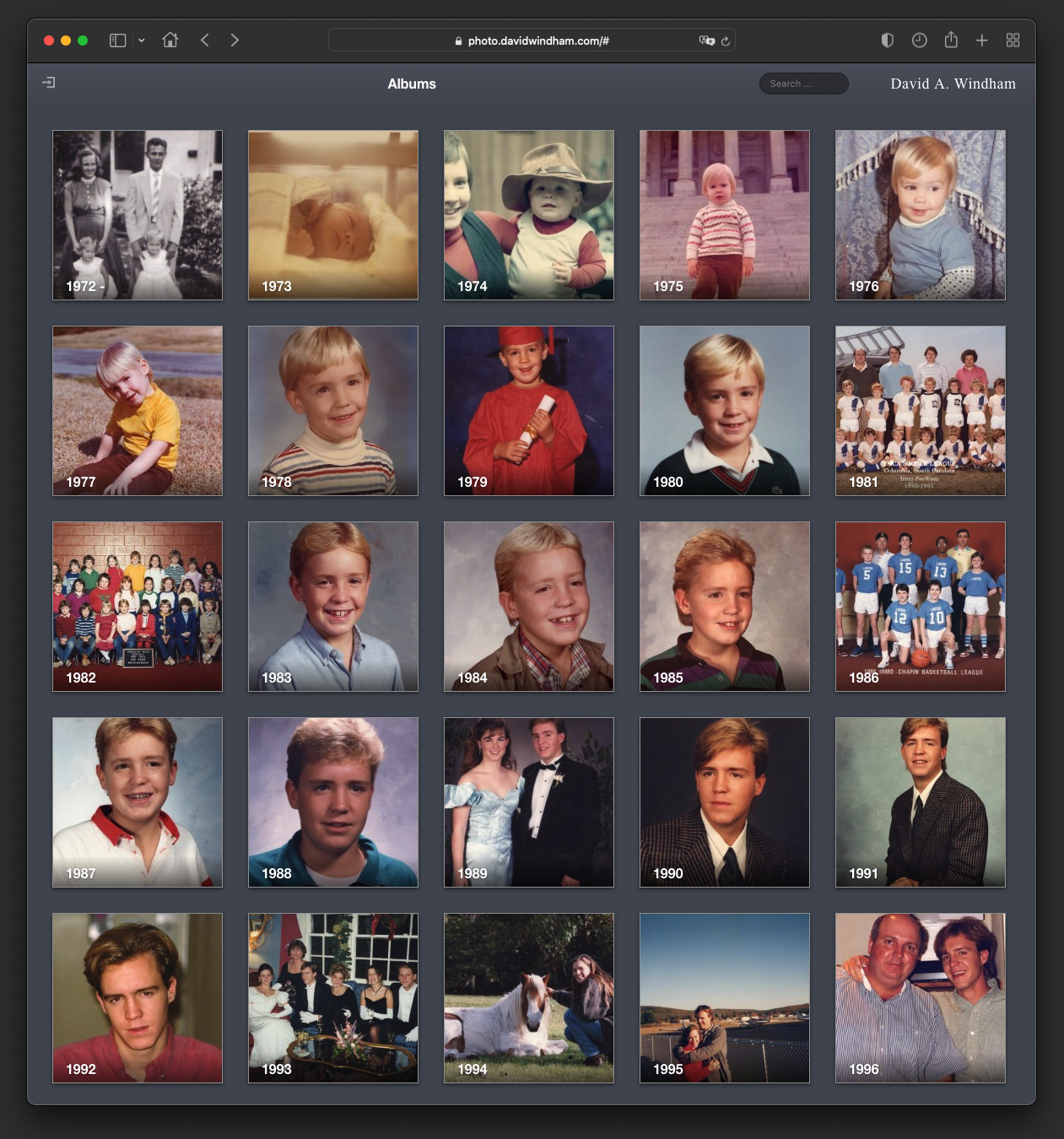
https://photo.davidwindham.com (1) Back when I was in my early teens, I got an old Minolta SL-T 1012 camera and started taking photos. It was my parents camera and you can see it in this photo of my mom3. These were the pre-digital days and I even signed on to newspaper and yearbook staff at school so that I had access to the darkroom4 and learned to develop them the old fashioned way. At one point, I wanted to become a photo-journalist because I thought it’d be fun. While in high school, I went to journalism camp several summers at the University of South Carolina… yes there is such a thing for all the really hip kids. We stayed on campus and went to various classes. I like to carry around my camera and take edgy odd perspective images of all kinds of people and stuff. I heard one of the best comments about photography from a friend’s father that has really come to stick with me in the digital age and define my attitude towards the ever present camera these days. He said “I used to take photos all of the time, and then it occurred to me that I was actually missing out on life trying to get photos”. I very much feel that way now in that I will not keep my phone or camera on me for events, I regularly duck out of group photos, and avoid a camera aimed at me like a virus.
While at the College of Charleston, I got a job in the art department as the slide library manager. This is back when professors had to line up a carriage of slides for art lectures. I photographed student artwork and managed a library full of analog imagery. I was honored to have the gig, because I was nominated by a department professor for the position. It was a great way for me to get to know all of the art department staff and many of the students. At one point after I started messing around with VR and time lapse photography. I remember vividly one time while working on a large format painting and the head of the studio art department asking me why I was distracting myself with the camera. The reason I remember is that within just five or so years, it became a very popular with other visual artists. Aside from building websites for art school pals, learning to embed these images are one the things that really got me into learning web publishing. Needless to say, I’ve kept all of those old photos over the years and I’ve developed some digital asset management strategies that work for me.
I’ve used an assortment of software and cloud hosting for managing images such as Adobe Lightroom, Apple Photos, Flickr, Dropbox, and Picassa. Having run into various migration pains, I’ve always liked to keep the originals organized in a plain file system with backups on my local computers. I’ve scanned in thousands of old family slides. Recently, I had a project moving a bunch of old VHS movies to digital files… because if you didn’t know, they degrade pretty fast. I kinda fret when folks these days just upload imagery to Facebook, not realizing they’ll be downscaled and you’ll never get back the original you uploaded long after your current phone or computer is gone. I can only image the volume of videos and photos being generated today. When folks, usually documentarian parents, ask me about good system to store them all, I always try to steer them towards a hybrid cloud solution. In the process of migrating computers and servers, I usually shuffle around various projects between machines. Sometime after 2000, likely in another migration process, I started using a hosted open source photo manager5 so that I could share some of them with others and because I think it’s in our best interest to control our own resources online6.
So there I am in 1985 if you are curious what I might have looked like. It’s nice to watch yourself grow and age. Perhaps I’m just using it to remember. Right around the turn of the century must have been fun because I have literally no imagery from it. I used to keep the majority of them password protected, but I’ve since made some of them public. On newer images, I scrub some of the exif7 data. I try to keep those images blocked from being indexed by search engines even though I know some will not respect my requests. Having had my website running for almost twenty years now, I’ve got a good feel for who my real visitors are. I ran a the PimEyes8 facial recognition scanner recently to see if they could match my face and the only photo that turned up in the one I use on my personal about page for my website.
Although I try to keep my phone camera out of my hand, I still have a pretty nice photo rig and I make the effort to take some photos on occasion9. There is just something about an image that it might take me a thousand words to describe10. Sometimes when it’ll take me looking at an old photo for some period of time before I discover something interesting about it. I’ll add new and old photos to that collection as I have time. I’ve had numerous opportunities in the last couple months to reminisce about old photos, so hopefully I live long enough to one day reminisce about the one’s I’m publishing now.
- Photos | David Windham – https://photo.davidwindham.com
- Minolta SR-T 101 – https://en.wikipedia.org/wiki/Minolta_SR-T_101
- David Windham – My Mom – https://davidwindham.com/my-mom/
- Darkroom – https://en.wikipedia.org/wiki/Darkroom
- Lychee – https://lycheeorg.github.io
- AlwaysOwnYourPlatform.com – http://www.alwaysownyourplatform.com
- Exif – https://en.wikipedia.org/wiki/Exif
- New York Times – A Face Search Engine Anyone Can Use Is Alarmingly Accurate – https://www.nytimes.com/2022/05/26/technology/pimeyes-facial-recognition-search.html
- David Windham – Butterflies – https://davidwindham.com/butterflies/
- An Image is Worth a Thousand Words – https://en.wikipedia.org/wiki/A_picture_is_worth_a_thousand_words
-
Slow Thinking
How I try to organize my attention.
I started this essay because I got a new computer a couple months back which always prompts me to reevaluate exactly how I use it. I also recently added in a set of notes to my Today I learned1 and in the process of doing so, I mapped out my personal workflow and started thinking about it. I have the tendency to ‘zoom out’ on anything to conceptualize it and I suppose the ideas here might find themselves inside of a larger topic. A couple of days ago, a fella asked me where I thought we were with internet technologies and I found myself repeating my opinion that we are only on the cusp of the information age and the implications are just now starting to come into focus.
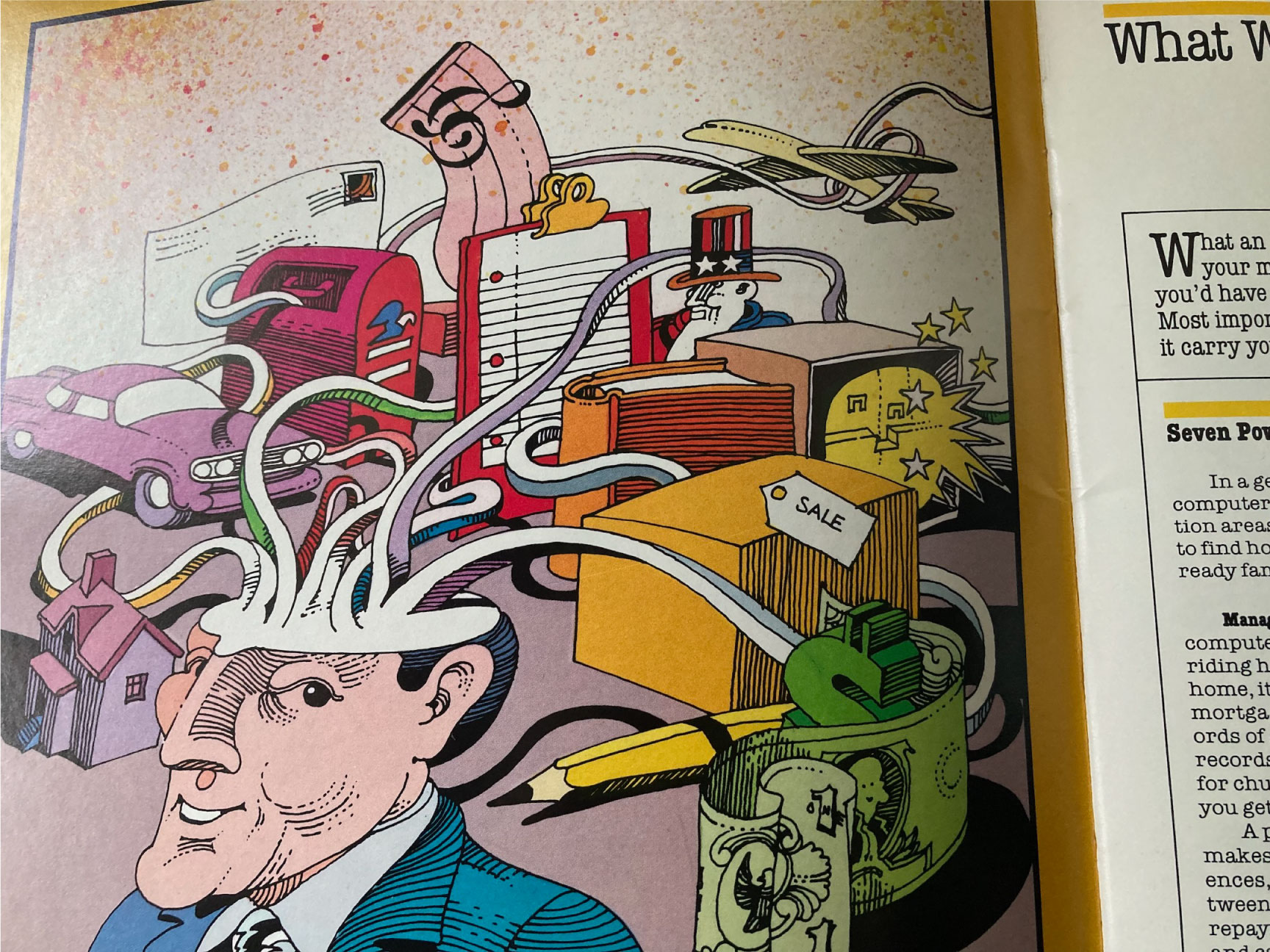
Photo of my 1982 Apple brochure… the same one I used to convince my parents that we needed a computer in the house. ( Illustration by Don Weller ) Computers are really just based on organizing information via file and network systems protocols. I’ve noticed that the vast majority of computer software focuses on file and communications organization. There are literally thousands of productivity, communications, note taking and reminder apps. At the core of it is something I completely understand because my better half has the manual for every kitchen appliance filed in a drawer in her office. I use an 1989 Matt Groening illustration for a Macintosh brochure on my desk page which captures the essence pretty well. And because I’ve always been loose with my focus, I have a tendency to try and balance that off with a bit of retentiveness and minimalism. What I’ve come to realize is that staying focused is an exercise that is heavily dependent on your state of mind. It’s not exactly a secret that everyone is overloaded with emails, text messages, notifications, various communications systems, and whatnot2. It always reminds me a song lyric from Sylvan Esso3:
I’ve got a television, it’s filling me with home.
I’ve got a phone that beeps, makes me know I’m not alone.
– Sylvan Esso – H.S.K.T3Although there may be some fundamental psychological truths as to why we want to stay so connected, I personally try to disengage from all automated notifications systems. Engagement is the metric by which everyone is trying to measure their effectiveness. It’s literally your attention that’s being capitalized and mine is not for sale. Those little notification bubbles and email reminders are why many have started to wish for the web of days old calling it the ‘slow web’. Jack Heng wrote in his 2012 essay The Slow Web4, “The Fast Web is a cruel wonderland of shiny shiny things” where he succinctly lays out a great explanation of problem. There are now countless articles5 that follow up on that same philosophy with a bunch of approaches6 to handling it. One essay7 in particular struck a chord with me because it’s so close to my own method. The technique I use revolves around two basic concepts: avoid all distractions and everything can be organized with just a couple files.
Calendar: As much as I think things could be organized non-linearly8, there’s no way around the reality of the forward march of time. My mechanic needs to know when he’s working on my truck and my doc needs to schedule time to see me. Although I’m not a big fan of meetings, I will concede that there is something that feels very productive about in-person discussions that can’t seem to be replaced by shared documents or whatever new fangled ‘team’ communications software you’re using. The best way to make them work is to have exactly what is to be discussed outlined and well documented. I use the native Calendar app on my devices and I only set events for actual events and alerts for things I actually need to prepare for like leaving the office at a particular time. It’s mostly my public contract/project work calendar, meetings, birthdays and travel. Otherwise, I never add deadlines, reminders, or anything else in my calendar because I find it’s just another way or trying to make me feel like I’m organized that just ends up being another distraction.
Notifications: I avoid real time notifications like the plague. I literally only have phone and text messages on two numbers that notify me in real time. I silence them twice a day on a regular schedule between 6-10am and 6-10pm. It doesn’t prevent me from checking their status by looking at them, it just stops me from being interrupted by them. An unintended outcome is that because others have gotten accustomed to my often delayed responses, I’ve found that I’ve conditioned them to be proactive in how they contact me. I have push disabled on my email clients and I only receive new emails when I open and request them in the morning and before I shut down.
Reminders: Aside from a calendar and email, I keep reminder files available on all of my devices. Todo, Short, Middle, Long, and Pass. Pass is the only one I do not sync between servers because it contains my cryptographic keys and passwords that allow me to log into various services. I also keep a list of those accounts and a list of contact info just in case all of my devices are ever taken offline. Todo is shared with my wife because we keep groceries, house chores, and other tasks together on it. I divided the others by priority. I don’t have any limits to these list but they tend to hover around 10 items on them at a time.
Visual: I keep my screens clean by letting those items dominate prominently in large format widgets on my devices. It keeps my calendar, reminders, and notes prominent so that I have to make a purposeful decision to open any other application. I also keep identical start pages on all of my browsers across computers so that the first thing I see when I open the browser or new tab is a page dedicated to what I’d like to focus on. It maps out all of my devices, servers, projects, and accounts.
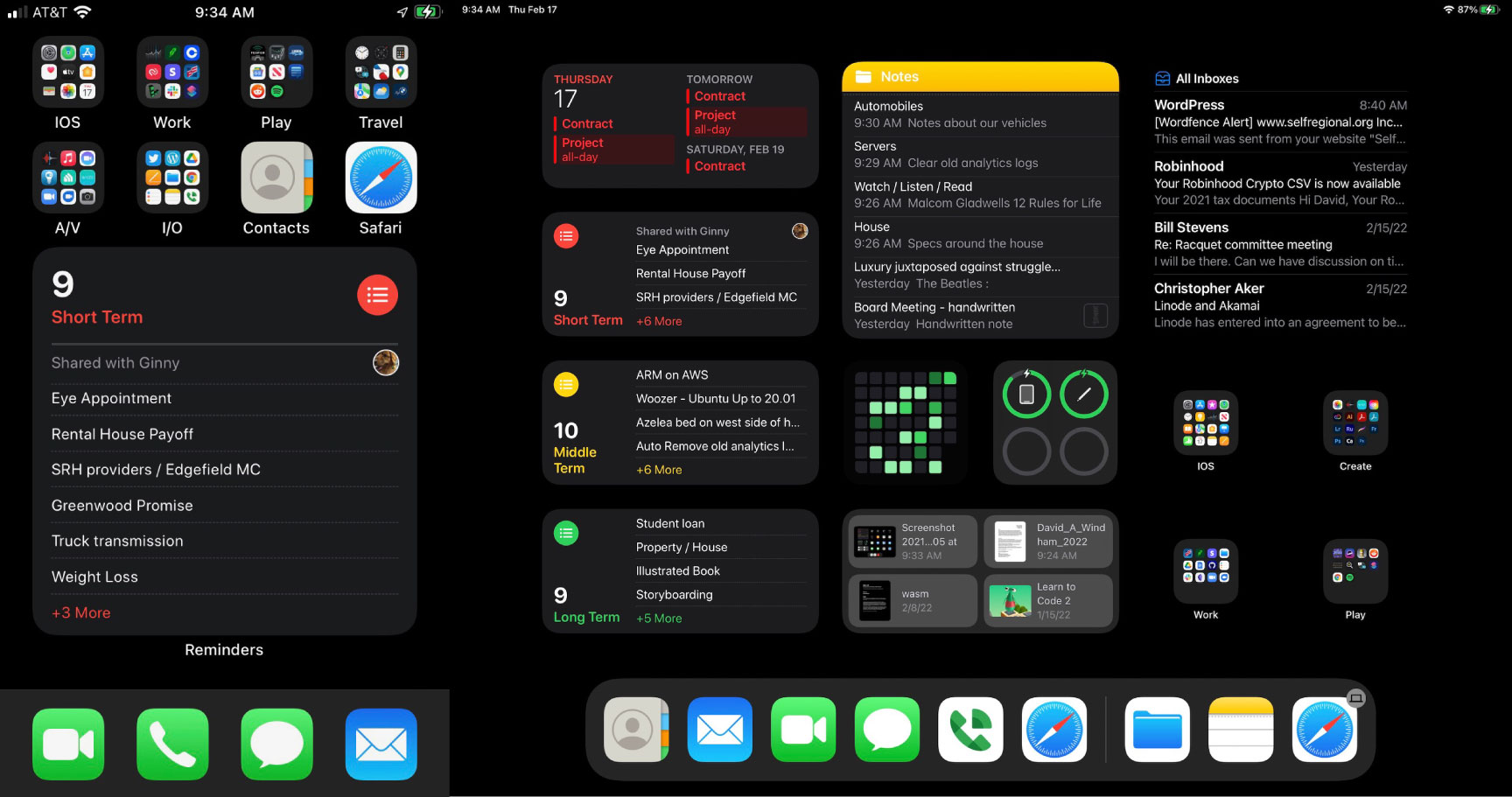
screenshot of my phone and tablet 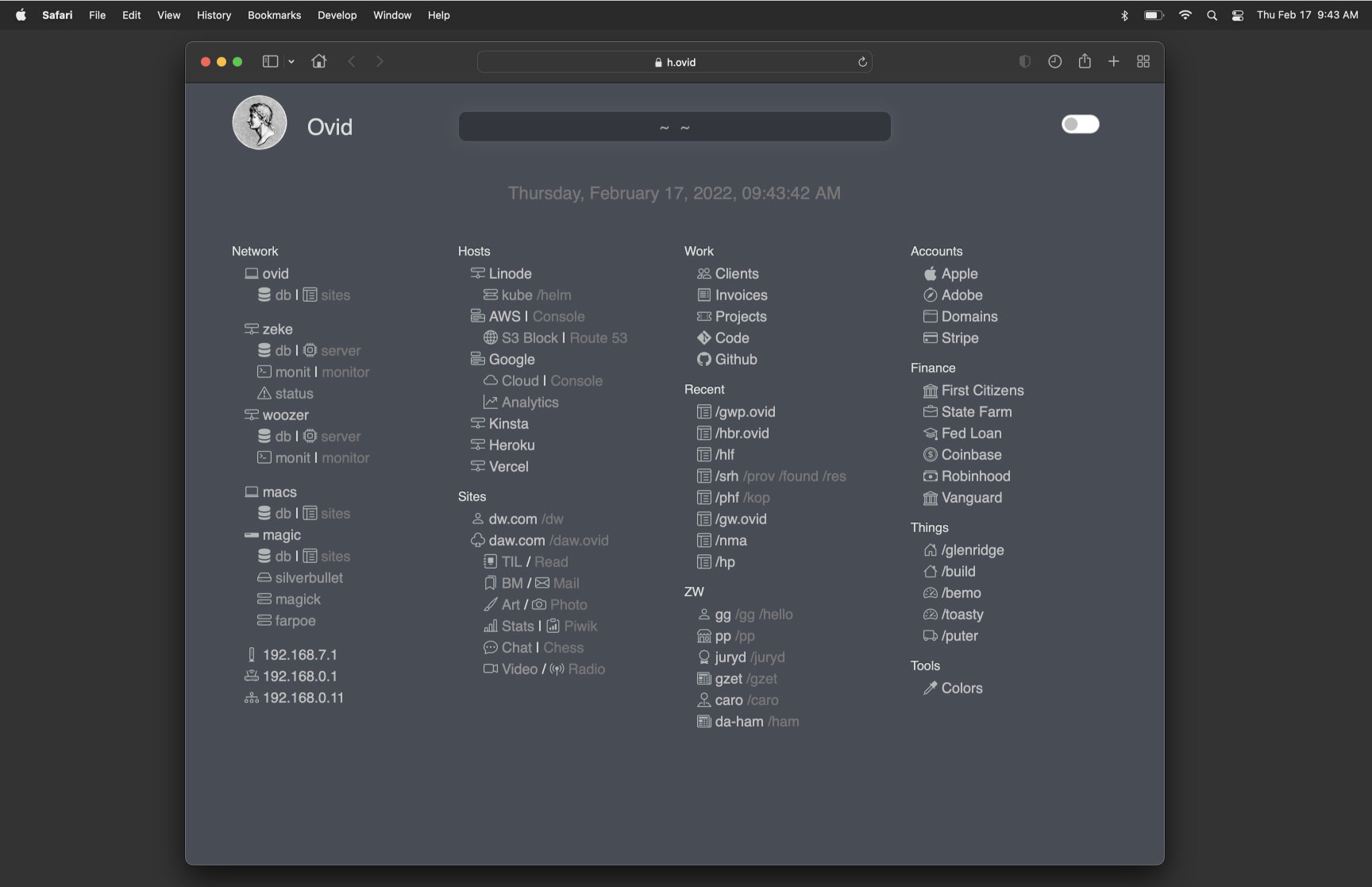
screenshot of my start page Attitude: A lot of my state of mind has to do with my attitude towards work and chores. I always try to make my chores a game of staying ahead and I always try to consider ‘work’ as the opportunity to help people. Sure, I sometimes glare at it like an opponent in a game that I’m trying to win. But what I realized long ago is that there is more to it than just money. If you look at it just for the money, it’s a game you can’t win. I try to enjoy my work. Even in little small side projects, I try to slide in new concepts to have fun and learn new things. And lastly, I’ve found that keeping a focused state of mind means letting it completely loose on occasion for moderation. I enjoy the absolute worse of the mindless fast web as long as it isn’t programmed to try and re-engage me via notifications. I like to occasionally surf r/PublicFreakouts and r/IdiotsinCars. Long gone are my days of debauchery and social media because I now find them mostly boring. In my down time, I try to enjoy the most basic of things like mowing the yard, reading a book, or a game of tennis. The very best of days involve a midday nap and an afternoon movie. Slowing down to control attention is something I recommend to everyone and I hope the attention you just spent on this essay was worth it.
- David A. Windham – Today I Learned –https://davidwindham.com/til
- Johann Hari – The Guardian – Your attention didn’t collapse. It was stolen. – https://www.theguardian.com/science/2022/jan/02/attention-span-focus-screens-apps-smartphones-social-media
- Sylvan Esso – H.S.K.T – http://www.endlessendless.com/sylvan-esso-hskt-1
- Jack Cheng – The Slow Web – https://jackcheng.com/essays/the-slow-web/
- Tariq Krim – Drifting. Why we need a Slow Web. – https://medium.com/@tariqkrim/drifting-c45102df9e3
- Ian Bogost – The Subversive Genius of Extremely Slow Email – https://www.theatlantic.com/technology/archive/2022/01/slow-internet-email/621232/
- Jeff Huang – My productivity app for the past 12 years has been a single .txt file – https://jeffhuang.com/productivity_text_file/
- David A. Windham – Non Linear Publishing – https://davidwindham.com/non-linear-publishing/
-
The Greenwood Promise
While updating my site recently, I noticed that I hadn’t added many recent projects. This is likely because I don’t depend on it as a marketing tool for selling my services and I try to keep a low profile regarding business because I really don’t want it dominating my social life in a small town. In the last year, I’ve also done a half dozen charitable projects as tax write-offs mainly because they’re fun without any purse strings attached. With that said, let me take a moment to brag about myself and catch up on some more recent projects.
The Greenwood Promise is a local charitable organization designed to provide locally qualified students with financial assistance for a post-secondary education1. One of their board members asked me to help them because they had an outdated website that a staff member had made on a free website service, so I reworked it into a static site and migrated it.
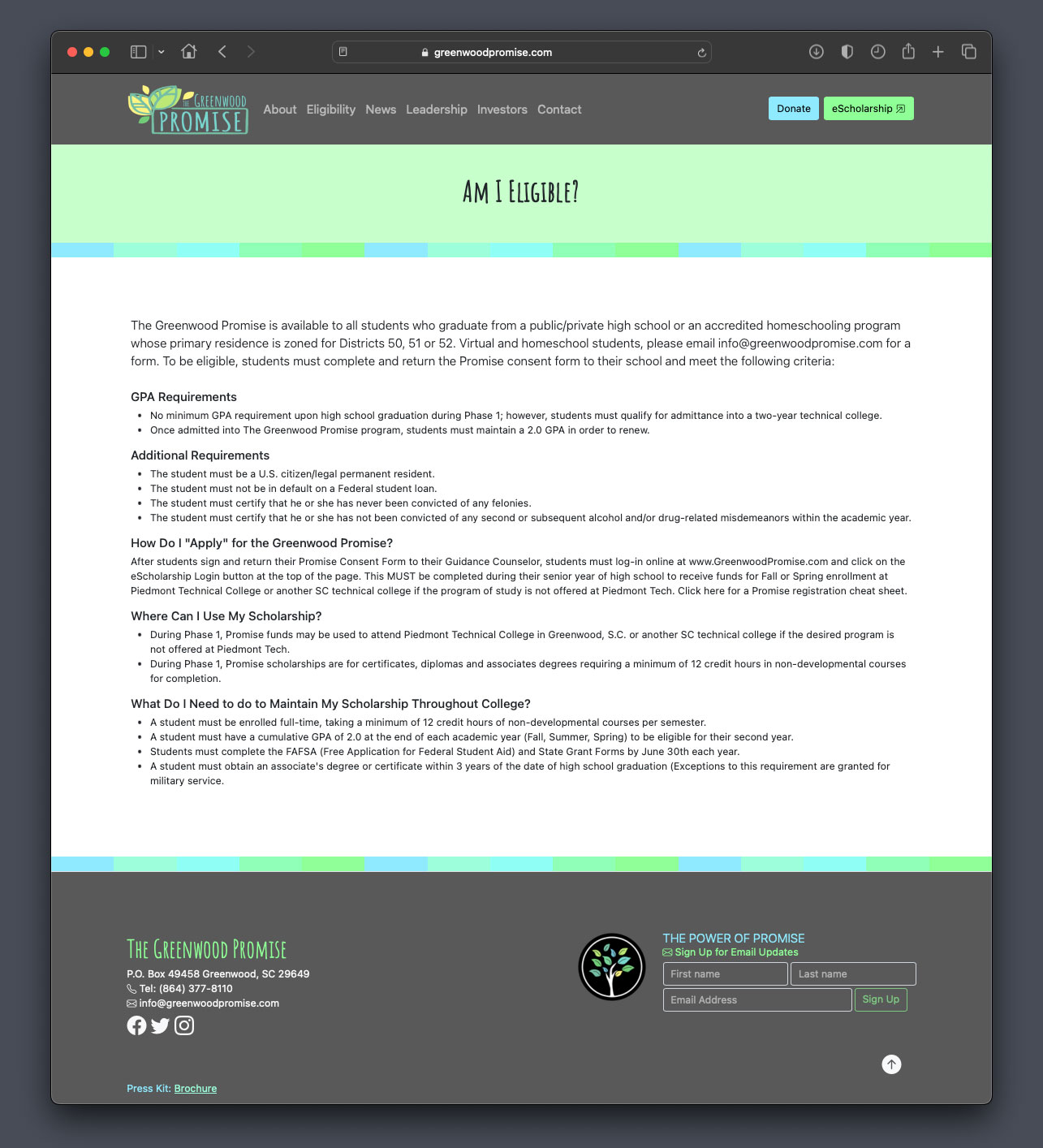
The thing I’ve noticed over the last twenty years about internet communications and websites is that they’re only as good as their message and content. The problem I see with many self-built projects using website builder platforms is that they tend to undermine the organization’s professionalism. Don’t get me wrong, I like the DIY spirit and sometimes the effort comes off as earnest and sincere. However, clean and clear communication is key if you’re trying to communicate to a larger audience online. I’ve also seen where DIY’ers will go for over-the-top designs in an effort to make themselves look more grand even though it usually looks like a secretary went to town in a web editor. I’ve also seen the overuse of content management systems when folks don’t really need them3. I think this is mostly because of the tools available and it’s easier for folks to use a builder to create a site. The designs tend to reflect whatever tools they’re given. I can usually spot the CMS just by the design and for this reason, I’ve gotten pretty quick at migrating back and forth between static and various CMS-powered websites.
I also try to make these projects fun for myself by adding new techniques to my toolbelt. In this case, I mostly stayed in my comfort zone with a workflow from my usual technical specifications… a task-runner, bundler, CSS framework, vanilla HTML, CSS, and JavaScript. Although I kinda wanted to go full-on Typescript and use Svelte4, I prioritized a really quick turnaround and they didn’t need any additional JavaScript features or an edge network because 99.9% of the valued visitors will be regional. Instead, I focused my learning on mapping custom color modifications using Sass5 which gave me easy-to-use class names for various elements and an easy way to change the color scheme. And as always, I’m a stickler for creating really clean markup which you can see in the published source code online6.
My approach to web communications is simple… keep it simple. I try to make the websites as performant and easy to use as possible on every device so that the design is just an add-on that stays out of the way. In the case of The Greenwood Promise, they just needed to convey their mission, leadership, and information to potential candidates because all of the rest of their outreach would be done via social media. I plopped their existing graphics, color palette, and content into an extensible web framework. I put up a preview domain for them to revise and edit, and then I migrated the domain. Every so often, I’ll get an email for a revision so it’s easy to maintain.
* 23/01/09 – Yesterday I published a new version of this site. A new director requested the ability to change the design so I migrated the site to WordPress, added full site editing capabilities, and changed the design to match the annual report from last year. Since I did it over the holiday as a charitable contribution, not only am I able to share my work here, I made it worth my time by learning some new skills related to the WordPress Gutenberg editor and Full Site Editing. It took a bit of work debugging some of the template errors in React, but otherwise, I was able to basically plop the existing static site into a theme. Because it was fun, I went ahead and threw in all the bells and whistles and customized the editor to match the site. I went so far as to future-proof it with fundraising and form-building tools. At some point, I’m sure they’ll go to an entirely digital workflow. Most of the technical details on it are available in my notes7 and here are a couple clips I made to walk them through it:

- The Greenwood Promise – https://greenwoodpromise.com
- Website builder – https://en.wikipedia.org/wiki/Website_builder
- Content Management System – https://en.wikipedia.org/wiki/Content_management_system
- Svelte – https://en.wikipedia.org/wiki/Svelte
- Sass – https://en.wikipedia.org/wiki/Sass_(style_sheet_language)
- Code – David A. Windham – The Greenwood Promise – https://code.davidawindham.com/david/gwp
- Notes/WordPress/Blocks – https://davidwindham.com/til/docs/host/WordPress-Block
-
BASIC
I was scrolling the intra-webs last night while the better half was wrapping up class when I came across something from my past. I was searching the trending repositories on Github for fun when I ran across a collection of BASIC computer games1. I opened the bowling game directory and instantly recognized it. Even thought I discovered it trending on Github, the fella that created it is one of the few tech writers I actually subscribe to in my feed reader. In his post on Coding Horror2, he mentions the first book I ever got on computers and how this book was the first on computers to reach a million copies have more circulation than actual computers.
In order to determine the exact year last night, I had to first determine when the Atari 2600 Pac-Man3 was released. It was released in 1982 and I went with my parents to Dutch Square mall in in Columbia, South Carolina to get a copy. I remember having to stand in line at the store to get it. In that same mall just down the way, there was a bookstore next to a record shop and down the way from an arcade. My parents would give me a little bit of money to spent there and it was there that I picked up some of the most influential things on me as a kid. I got a copy of School is Hell, Cerebus the Aardvark, and most pertinent to this essay… More Basic Computer Games4.
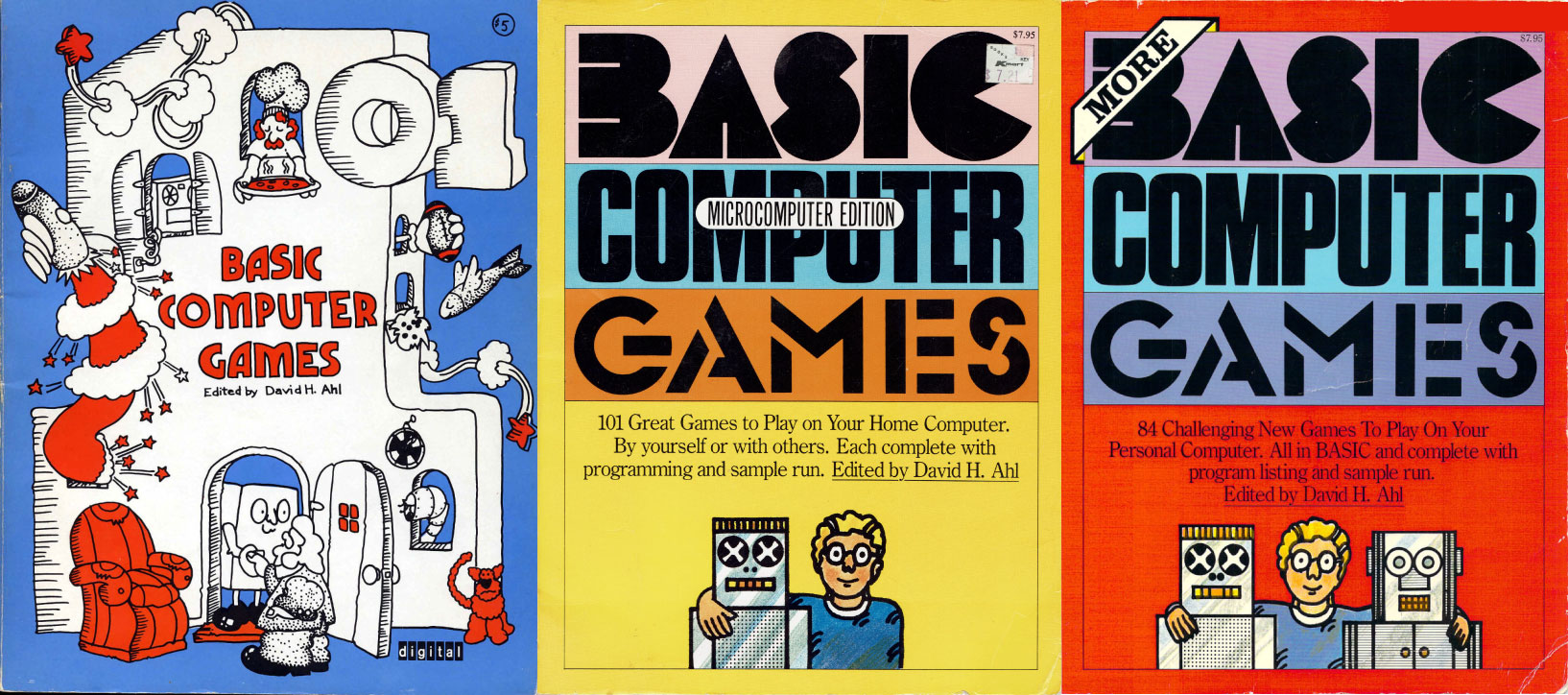
I got the book in 1983 after I managed to talked my parents into getting a computer. We got an Apple II which was also partially spurred on by the movie War Games which I’ve previously written about in Shall We Play A Game5. I spent countless hours typing those BASIC games into the computer. As a third or fourth grader, I didn’t even understand what I was entering. It seemed like magic to me but I gradually started to understand what was going on enough so that I was soon making my own games. Looking at the code now reminds me of exactly how important it was to learn those fundamentals.
Although I really didn’t dig into programming until late into college, all of the elements of programming were there in those games… commands, functions, loops, conditionals, operators, types, and variables. I was at an in-laws house over the holiday talking with a young kid who must have been about third grade or so who was telling me he really wanted to learn computers. I went out to the car and got my iPad to load up Swift Playgrounds6 which I had started tinkering with. I could tell he was hooked immediately.

When folks ask me about teaching programming to their kids, I recommend Swift Playgrounds because it teaches the fundamental of programming in a way that has incremental steps, immediate feedback, and playful results7. I enjoyed it so much, that I’ve gone through much of the Learn to Code, Starting Points, and Challenges just for fun. Discovering that code repository last night was a friendly reminder that everything is incremental knowledge, it’s never too soon to learn, and it’s never too late to have fun. The goal of the repo is to transcribe them all to other programming languages by the end of 2022 and I might contribute for fun.
- Basic Computer Games – https://github.com/coding-horror/basic-computer-games
- Jeff Atwood – Updating The Single Most Influential Book of the BASIC Era – https://blog.codinghorror.com/updating-the-single-most-influential-book-of-the-basic-era/
- Pac-Man ( Atari 2600 ) – https://en.wikipedia.org/wiki/Pac-Man_(Atari_2600)
- David Ahl – Basic Computer Games – https://en.wikipedia.org/wiki/BASIC_Computer_Games
- Shall We Play A Game? – https://davidwindham.com/shall-we-play-a-game/
- Swift Playgrounds – https://www.apple.com/swift/playgrounds/
- Teaching Code – https://www.apple.com/education/k12/teaching-code/
-
2021 in Music
I make a new playlist every month while I’m at my desk and about this time every year, I do a round up of my listening habits from the last year. I mostly try to add new releases and throw in any older songs I may have on repeat. I still try to listen to complete albums as they’re published, but I’ve found that so many artists are just releasing a track at a time prior to the album so I end up hearing several tracks before the complete album is out. And before you murmur to yourself… yes I agree the artist royalties are terrible for streaming and I would argue that they’ve been poor since the beginning and until artist go direct to consumer there will always be a cut. The problems is that the listeners need a way to find music and that will mostly be done where there are large libraries that act as a discovery mechanism. The reason I originally switched to streaming is that the cost of listening to hundreds of albums a month is much much cheaper and I still listen to streaming radio to discover new music so I’m not pigeon-holed into the streaming provider’s algorithms.
I think the big music news this year was everyone selling their catalogs. Simon, Dylan, Springsteen, and Young sold everything last year1. Although I don’t understand it completely, I can see where the art is already out there and that’s the only thing the artists is really concerned about. Who and how money is made from it when they’re long gone doesn’t seem to be a concern. I suspect that in the coming years, music streaming services will fragment like streaming television has done with more and more music publishers like making standalone streaming apps. I’d imagine that even the even independent record labels who’ve managed to sell download make far more from merchandise, LPs, and CDs. Part of me hopes that eventually the publishers will figure out the technology and they’ll be able to compete with the likes of Amazon, YouTube, Apple, and Spotify but I don’t see it happening anytime soon if ever because the consumers will take the path of least resistance.
I started out this year listening to Paul Simon and The Beatles discographies in chronological order because I recently listened to Miracle and Wonder2 by Malcolm Gladwell and watched Get Back3 by Peter Jackson. I’ve noticed that because of it, Paul Simon is now outnumbering Bill Evans in my charts. The last part of 2021 was dominated by me listening to music my brother liked so there is a lot of Dmitri Shostakovich and Glen Gould in there. I think 2021 was a pretty slow release year overall and even though I still peruse the charts and the end of year reviews, I don’t give them any precedence unless I respect the author’s tastes. I suppose music charts have always been reduced to the lowest common denominator and because they’re tracked worldwide in almost real time now. I try to remain open minded about all new music even though I have however many listening years under my belt. I’m pretty quick to critique and cut off a track just 10 seconds in. I’ve really started to focus on one particular artist at a time and I’ve started doing it with filmmakers and writers too.
The main way that my listening habits changed last year is that I started listening to more audiobooks and podcasts while I’m working. While thinking about how I’ve archived my music listening habits, I may have to switch this annual post from music playlists to podcasts, audiobooks, what I’m reading and watching too. I think that the best way to handle it will be to publish a non-linear list of recommendations. I’ve always planned on using the data I’ve collected to create a singular playlist of my music tastes. I’ve listened to just enough music now that the majority of popular music from the last century is starting to sound like the same song. I’m really hoping to see some good work from artists in 2022. I mean… the last couple years have been pretty serious. I’m kinda over any sorta cliché sound at this point and I really look for artistic integrity and sincerity in both the music and lyrics.
On a technical note, I started using an Apple One account alongside of Spotify mainly because of the new Dolby Atmos lossless audio codec4 at my desk. The 24-bit/192 kHz ‘high-res lossless’ is stellar but it doesn’t support Bluetooth in the car where I’m still using Spotify. Unfortunately Apple Music doesn’t not offer the ability to plug into the Last.FM API5 and I have to use a standalone app to stream the data. This also got me to thinking about my data portability because I don’t want to be locked into any particular service provider for my playlists and tracking. I found a couple apps6 that can export the data into a raw format for me to keep indefinitely irregardless of service. I’ve embedded my Spotify playlists below and you can see everything I listen to @ https://davidwindham.com/studio/music7
- NPR – Why are So Many Artists Selling Their Music Catalogs – https://www.npr.org/2021/12/22/1066650388/why-so-many-big-name-musical-artists-are-selling-their-music-catalogs
- Miracle And Wonder – Conversations with Paul Simon – https://www.pushkin.fm/audiobook/miracle-and-wonder-conversations-with-paul-simon/
- The Beatles: Get Back – https://en.wikipedia.org/wiki/The_Beatles:_Get_Back
- Spatial & Lossless Audio – Apple Newsroom – https://www.apple.com/newsroom/2021/05/apple-music-announces-spatial-audio-and-lossless-audio/
- Last.fm API – https://www.last.fm/user/windhamdavid
- Github – Exportify – https://github.com/watsonbox/exportify
- David A. Windham – Music – https://davidwindham.com/studio/music/
-
Zeke
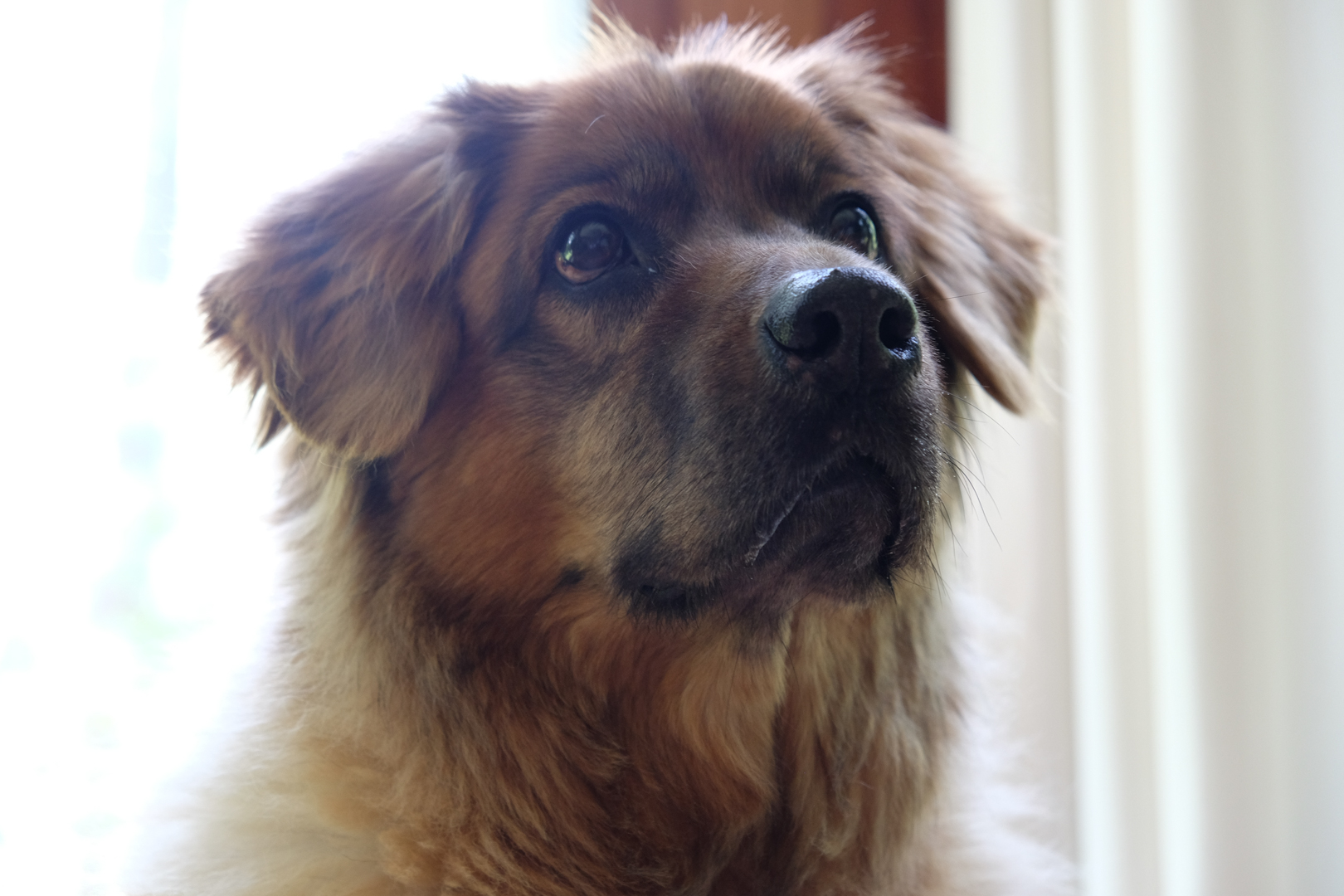
Our dog Zeke passed just before Christmas. Zeke was going on twenty years old which is pretty amazing in and of itself. Zeke had a great life and was the ‘goodest of boys’1. I made a comment recently about how it was looking good for me given that Ginny was providing such good elder care to which my friend responded that “the difference is that Ginny loves that dog more than you.” There is certainly some truth to it because Zeke and Ginny predated our relationship by several months and he was likely easier to love than me.
Ginny ‘adopted’ Zeke from an acquaintance one afternoon on King Street in Charleston. All of our dogs had kinda ‘found’ us in a similar fashion. Zeke was part of the reason that my wife and I gelled so well because he would come out to the country to run wild with my two dogs. Zeke was all prim and trim, regularly bathed and sleeping in the bed until he found me and my dogs. Because I lived out in a national forest, I would let the dogs run free and they might disappear for what seemed like days at a time and return to the house wiped out and covered in muck. Although I think it really scared Ginny when I would say that I hadn’t seen the dogs in a while because they were out running, I’m pretty sure the dogs enjoyed it.
When we moved upstate, Zeke took to the farm like a champ running with the horses and chickens2. When it was cold out, the dogs would often curl up in a pile together in front of the fireplace. Ginny would treat him to a spa day every so often to remind him of his early years. After the other dogs passed, Zeke was always at our side. We took him everywhere we traveled for many years and he became accustomed to long car rides. He always had dinner with us and I had started making purchases in three packs so Zeke could have his own. In his old age, he would always lie at my feet sleeping while I worked. When his back legs started to fail, I loved to see him dreaming of running kicking his back paws about.
Zeke always had the most patient personality of our dogs. I never once saw him act aggressive even though many thought he may have been because of his apparent breeds. We had always assumed he was about half German Shepard and Chow Chow3,4. Out of curiosity, we had a genetic test done on him last year and that was only partially correct. He had a number of other breeds mixed in and the most telling was about 20% ’super mutt’ which is exactly what you might imagine. Super Mutt will now forever be my favorite breed.
Zeke’s passing really marks the end of an era for us. He was the last of our beginnings together. As I was writing this morning and thinking of him, I remembered that the very first thing I ever posted to this website was a picture of Zeke in 20055. One of my servers is named after him6 so I’ll hopefully continue seeing his name daily for many for years to come. Although I had been making comments to Ginny about adopting new puppies, we’ll likely wait some time before we embark on any new dog parenting adventures. And while we try to shed this era somewhat gracefully, Zeke will certainly be remembered fondly and missed dearly.
- reddit/windhamdavid – https://www.reddit.com/r/lookatmydog/comments/fim036/goodest_of_boys_age_17/
- Dogs – https://davidwindham.com/dogs-3/
- German Shepard – https://en.wikipedia.org/wiki/German_Shepherd
- Chow Chow – https://en.wikipedia.org/wiki/Chow_Chow
- Boozie and Zeke – https://davidwindham.com/boozie/
- Anthropomorphizing Machines – https://davidwindham.com/anthropomorphizing-machines/
-
Kristopher Roland Windham
It is with a very heavy heart that I begin to write this… the last of this year has been tough for me because my brother is dying. I spent the last week with him and he died yesterday, Sunday December 12th, 2021.
I’ve been telling him for quite some years that we’re all in the process of dying. We all start the process at a certain age, it’s just that his is a little more accelerated than most due to the fact that he has had medical issues since he was young. I started writing this about a month ago after some frank conversations with him. I’ve still got his relics spread all about my office and our email and text threads which go back ten years. I hate to think of his obituary being the entry point for little trail of breadcrumbs that many folks leave online, so I figured I’d write and publish this in his honor alongside of a directory of some memories he left. I’m writing this not as he might like it to be written, but how I want to write it which he would understand. We discussed publishing it and having fun with his own obituary before he died because that’s the type of humor we reveled in. I’ve always tried to have a relatively sunny outlook on death because it’s just part of life.
What is evident amongst the relics I’ve been going through is that Kris was exceptionally unique. I’m not just saying that in hindsight, just ask anyone who ever knew him. He taught me a lot about life that I wouldn’t have had the opportunity to gain otherwise because he had a tendency to live everyday in the moment… like it might be his last. Because of it, he’s managed to live a life long beyond his years. Even though he was several years younger, I likely learned more from him than the other way around. My father repeated that to me during a recent phone conversation saying “Kris told me that he’s done more than most people will ever do in their lives”. It took me a very long time to truly understand and appreciate that outlook on life.
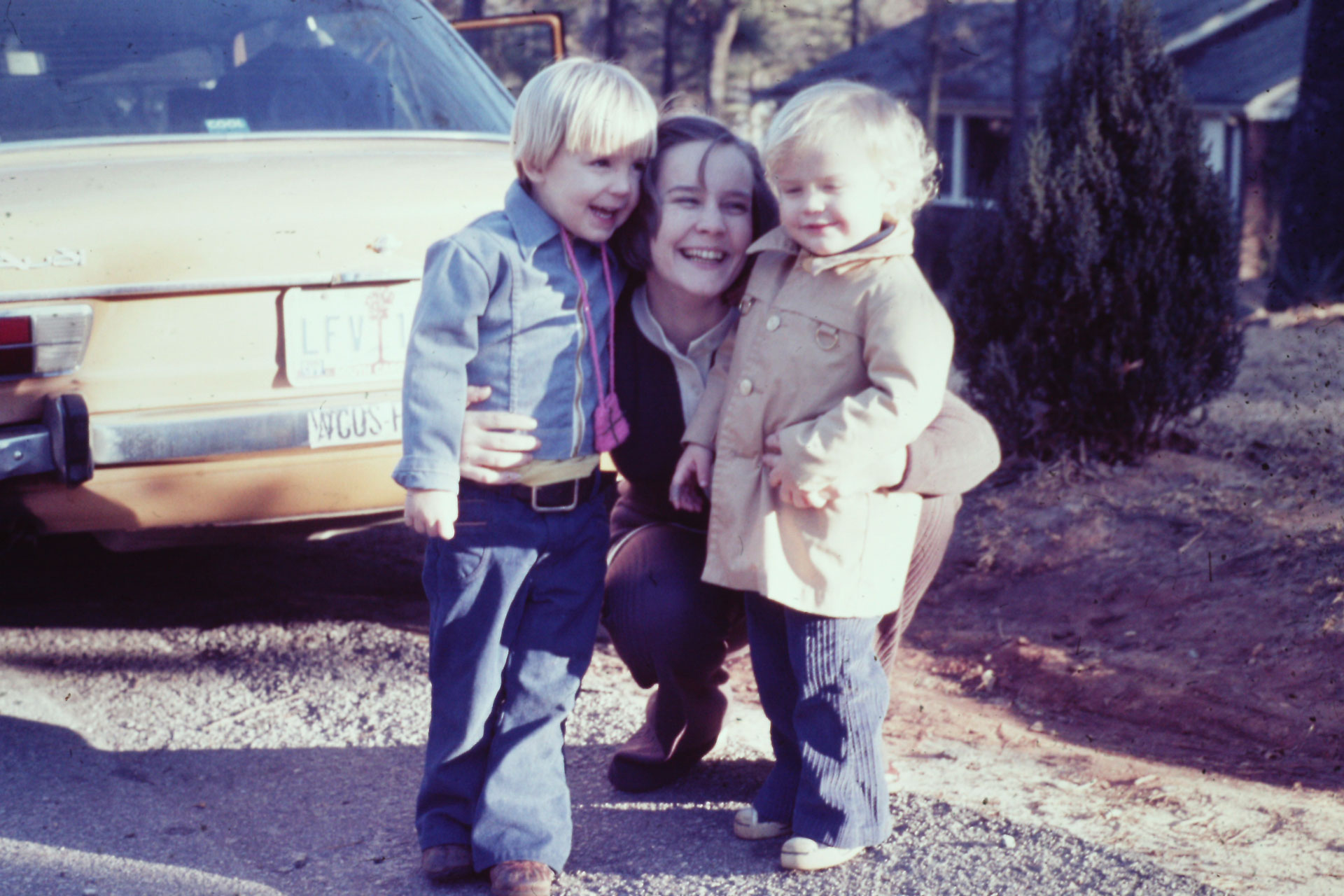
Kris and I were born about two years apart in Columbia South Carolina in the 70s. My parents gave him his first name after Kristopher Kristofferson1. There are certainly similarities. When I look back at the old photos of when we were really young I can see my parents’ hope. I think the whole Nixon and Vietnam affairs had really turned my parents’ lives inward. Mom was making macramé crafts and dad had started playing country music. I’ve since done my due diligence, and I can only sympathize with their fondness. Not unlike Kristofferson landing a helicopter on Johnny Cash’s lawn, I found several photos of the back of Cash’s house in my old family slides. The album Jesus Was a Capricorn and the movie Alice Doesn’t Live Here Anymore were released just months before Kris was born. Kristofferson songs will always remind me of my brother. Roland is an old family name on my father’s side. I was always envious of his name. Kristopher Roland was a very appropriate name.
Because Kris and I were relatively close in age, I think we were more than just siblings but also companions and friends. He shaped a lot of my personality and I possibly his. Almost all of my early memories are accompanied by his presence. His friends were mostly my friends and vice versa. I vividly remember some of our earliest years learning to swim, play ball, and ride bicycles. We shared most of our childhood together and we learned a lot from one another. Growing up, our parents were a nice blend of mom reading her fair share of contemporary books on child raising and my father’s conservative personality having grown up in a large family with a retired WWII veteran father. Kris, being the younger could always find a sympathy from mom and I tended to trend after my father. We were encouraged to be well mannered, expressive, intelligent, and creative. We spent a lot of time around adults as children so I think we were particularly mature while still being able to escape into our own playful imaginary worlds. We loved cartoons, comics, music, and games. We developed our own code languages and games. We would lay out large scale board games in the dining room table that would take months to complete. Some of of my earliest memories are he and I spending months trying to solve The Hitchhikers Guide to the Galaxy2 computer game, and getting deeply involved in Middle-earth Role Playing3. Our taste and interest really never split too far apart over the years.
Very early on, my family always poked fun at how picky an eater Kris was, but the reality was that it was an early sign of Crohn’s disease4. He would only eat very few foods and was very particular about eating. Kris had his first surgery for Crohn’s while he was still in elementary school. By the time he was into his teens his belly had been cut up like Frankenstein. He also had various medications to deal with the disease. He’d bulk up on the steroids and then lose a lot of weight. I still have the scars of trying to fight him while he was on steroids. His sleep patterns were also always off too. In retrospect, I think he was consistently in a bit of pain and he really did his best to hide it from everyone. Because of it, I’m very sympathetic to those with disability and disease. Kris’ personality was forever shaped by it and I think by his early teens he had given up on the illusion of trying to be ‘normal’. He has a pretty funny grin in about every family photo taken and I really appreciate that now.
Normal was not in Kris’ vocabulary and I could tell that he always had a deep sympathy for those who might be different for whatever reason. Anyone could see this in his choice of actions, acquaintances, and interests. I learned exactly how hard it is to be different anytime I followed his lead. I remember following in his footsteps literally, when I got my first pair of Birkenstock sandals. I endured a lot of harsh comments about them and just five years later everyone was wearing them. He still had a pair on last week when I visited. He always made friends with people that were of different ages, nationalities, and backgrounds. It taught me such an important lesson on not judging others and learning to see through what others might consider normal.
Kris loved music and was quite accomplished. He always hated that folks would say he was ‘so talented’ because in his words, he worked for it. He practiced piano non-stop in our house and won a number of regional piano competitions and scholarships. One of the competition’s scholarship had money attached to it and Kris convinced our parents to go spend the money on synthesizers. Because of this, we always had an assortment of musical instruments in the house. I learned a lot from his musical tastes and by the time I was a teenager I was regularly ‘borrowing’ his cassettes and cd’s. He recorded his first album while in seventh grade with another fella a couple years older than me at our school. I made the cover for those cassettes from a photo I had taken. Later on, he started another band and convinced a crew of fellas that California was the place to be, setting out in his orange 76′ Volkswagen Westfalia Van5 like a band on the run. He sent me some recent recordings just a couple months ago trying to mentor another fella just getting interested in playing music and he left quite a number of pieces online6.
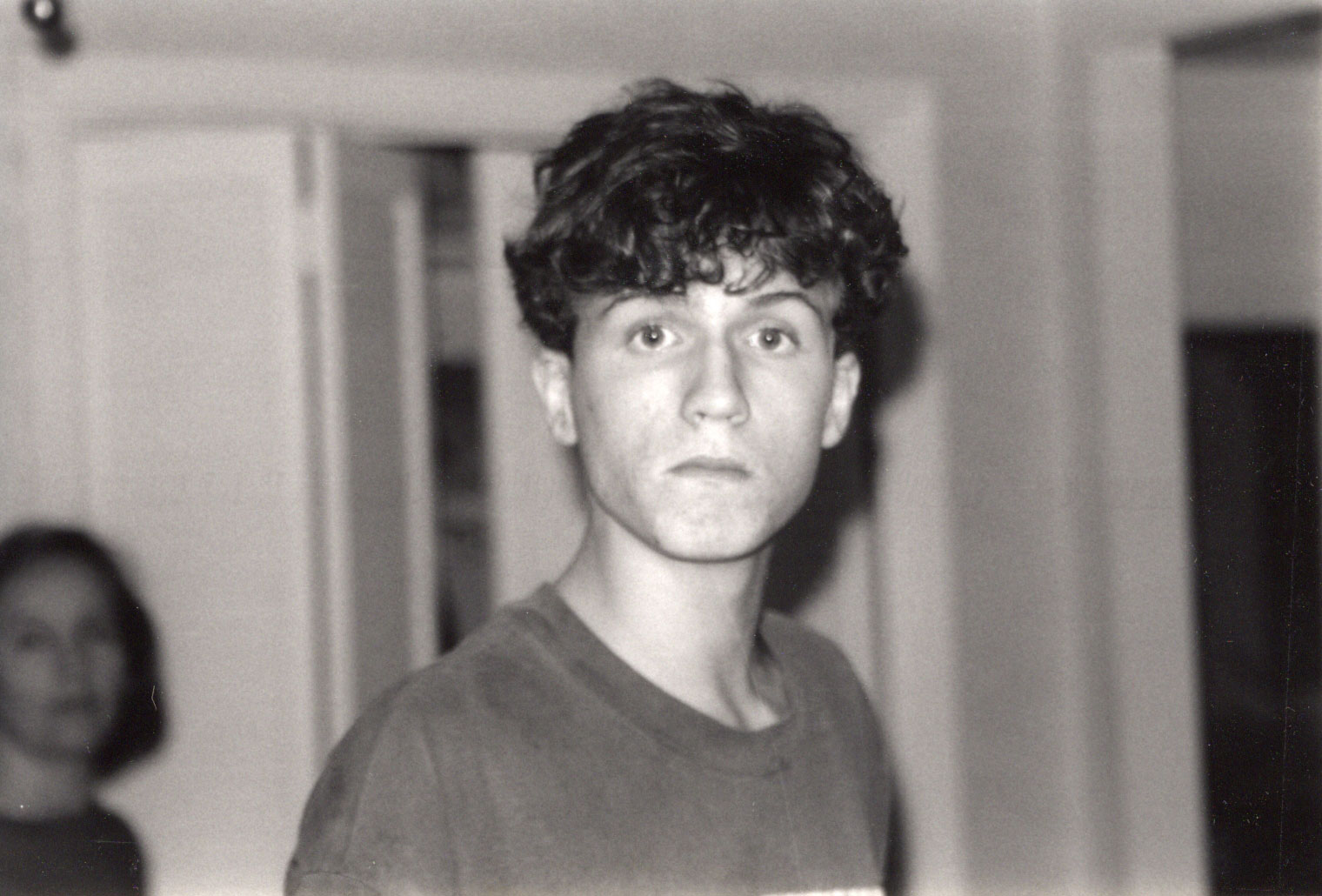
Kris excelled at academics. While most people like to act smart, there are those who truly enjoy it. Kris was one of those people who truly loved learning. After the obligatory afterschool sports of primary school, Kris really preferred to spend his recreational time reading. We went to the library once a week and Kris was knocking out several books a week while in primary school. I remember opening his closet once in my early teens to find that it was stacked from floor to ceiling with hundreds of books he had read. And mind you that by age fourteen or so he was reading the likes of Stephen King, Issac Asimov, Ray Bradbury, George Orwell, Frank Herbert, and J.R. Tolkien. By high school our dinner table conversations got interesting when he started reading the likes of Aldous Huxley, Aleister Crowley, the Quran, and Bible. It wasn’t just reading either. I remember one morning on the high school announcements where they congratulated him for placing nationally in a mathematics competition and he aced the SAT with a perfect score. He was the type of student that his teachers befriended because of his sincere interests in the subjects. He had music and academic scholarships to wherever he wanted to go. He was invited to attend the Governors School of Science and Mathematics7 the same year I left for college so we essentially left home at the same time.
Kris and I sorta started college together as roommates. He wasn’t too thrilled about Governor’s school and our family decided it would be good for us to room together at the College of Charleston since he had been accepted into the honors program before graduating high school. We only took one class together that year… an 8:00am anthropology class. We read Cows, Pigs, Wars, and Witches – The Riddles of Culture8. We spent most of our time playing music and making new friends. We performed a version of Woody Guthrie’s Going Down the Road Feeling Bad9 at a coffeeshop. Kris introduced me to ways to explore the metaphysical world and I remember our first Grateful Dead10 concert in the early 90s. The Grateful Dead myth comes from the biblical Book of Tobit where the souls of the dead save the living and the original lead ‘Pigpen’ also suffered from Crohn’s disease. We spent the evening after the concert with the Rainbow Family11 somewhere nearby. Kris spent a good bit of time with them and I learned to trust his obscure connections because they almost always led to the most magical places. I think we learned more from that those experiences than from any class I could have taken in college. Kris bored of college rather quickly and was back out exploring the world.
From then out, Kris and I would cross paths in various locales over the next fifteen years. We always stayed in touch and he would call every so often from various places explaining his travels. I always found myself defending his adventurous spirit to my parents. I joined him in California for a while and then again up in Montana. He was living out of the cowboy hotel which was an old converted hotel full of a cast of characters renovating it. One Christmas we went snowboarding midweek up in Vermont. We had fresh powder coming down and hardly anyone was there. I remember all of the lift operators having such a good time with us. Kris had that sorta spiritual guide nature about him where people seemed to just treat him differently. I joined him again in Hawaii. I had bought a one way ticket and by the time I got to Maui, he had already left for the island of Kauai. We met up in Hanalei. I stayed in Hawaii for quite a while and I departed after staying up all night at a party on the west side of Maui and hiking to the top of Mount Haleakala the next morning. An apartment in San Francisco or New York, a remote cabin in the Appalachian mountains, on a ridge on the northern Sierra Nevada mountains, the west entrance to Yellowstone on the offseason, or a remote beach on the north shore of Kauai – those are the types of places I always found Kris.
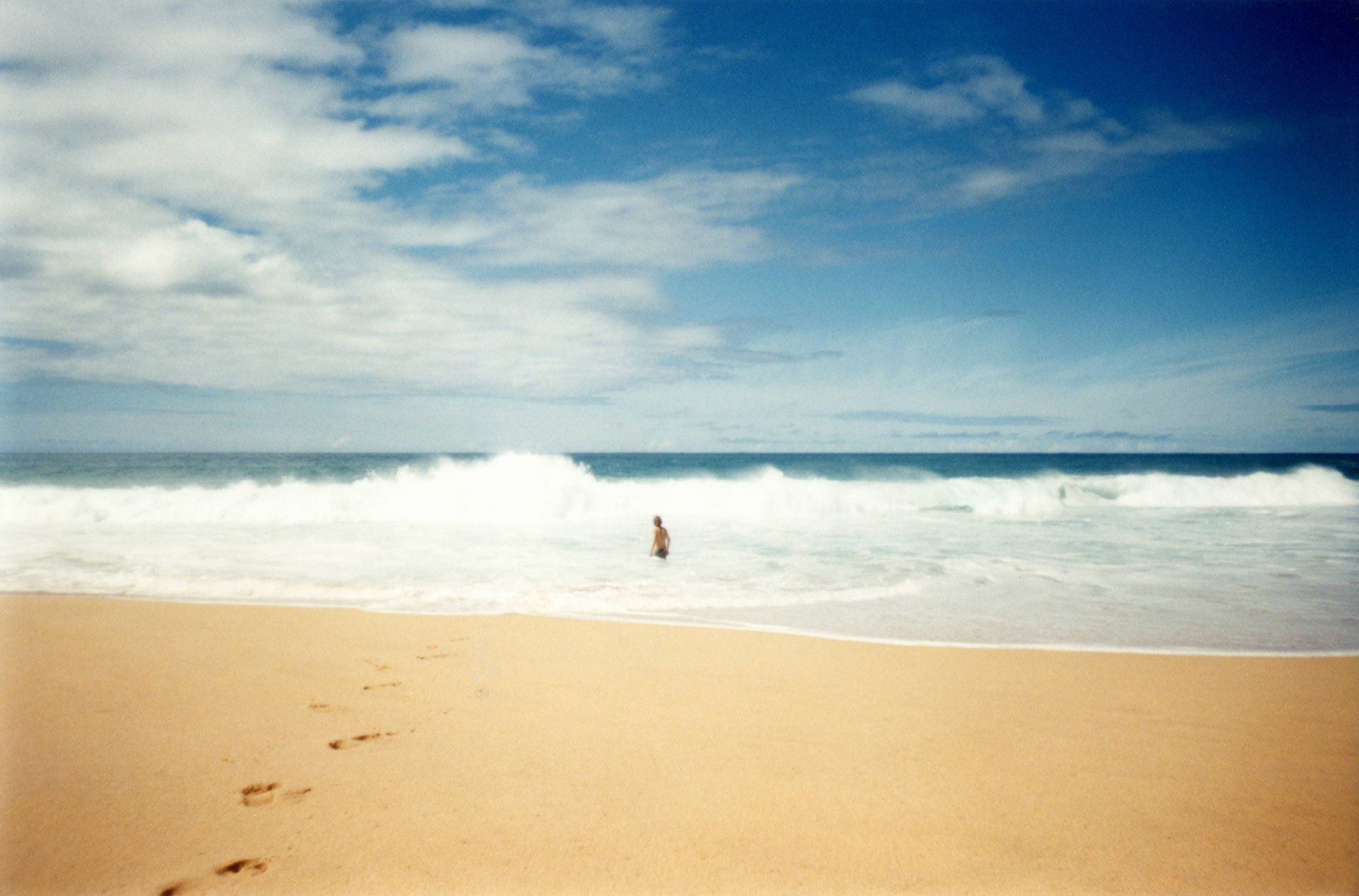
Kris returned to the Carolinas for his first marriage. I’m not sure what spurred it, but sure enough they were expecting their first child when I visited. He was living in a cabin up on the side of Black Mountain outside of Asheville and she had decided to have their child in a tub on the porch. They managed to pull it off in a snowstorm with no assistance from the midwife. I’m sure that was an adventure in itself. For what I could imagine might be a litany of reasons, that marriage didn’t work out and Kris moved on to his second wife and had three more children. By this time, I had started doing work with computers and I encouraged him to join the fray because of the money. He was really talented with computers too and was soon coding circles around me. At my referral he moved back to Charleston and started doing software development. He had a good salary, a new car, a suburban house, and he was teaching his girls to surf almost everyday. I was kinda surprised and thought that the wondaring bug was finally gone and he would settle into adulthood nicely. That fell apart too, he moved on to another gal and had one last child. One afternoon, I get a text photo of him on a beach. I ask where and he responds Nicaragua. He calls and tells me that he’s bought a motorcycle and is planning on traveling around for a while possibly heading down to South America. Although I was tempted to join him again, I never did.
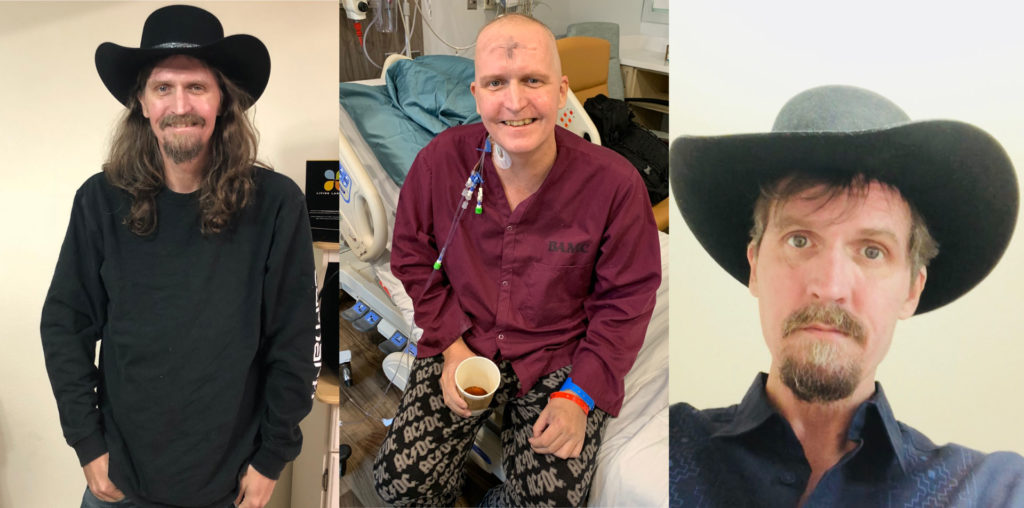
A year later he moved to West Texas out in the middle of nowhere near Lubbock. He would text me country music, funny memes, and random photos on occasion. He got a pet snake and a big Stetson hat he liked to wear. He set up an online radio station for my dad and uncle, and we would occasionally do a show together as well. I’ve attached a recording of us discussing the merits of Insane Clown Posse below12. I joined him again in San Antonio a year later and we went to see Ray Wylie Hubbard at Gruene, Texas’ oldest dance hall13. He was using a walker by this time and his health was severely deteriorating. For the next year, we regularly exchanged texts and phone calls. During the last year, he spent more time in the hospital than not. Even in the hospital, he would brag about how nice the views were of the city. He went up to John Hopkins in New York for chemo and an experimental genetic treatment last year. We talked a bit more seriously over the last year and I could feel it coming. I’m glad I had the chance to visit him one last time as I think we had been preparing ourselves for the inevitable. I’m glad that he passed relatively peacefully and my heart goes out to his children Aren, Rose, Sylvia, Ruby, Lydia, their moms, his wife, step-children, and my parents.
Kristopher Roland Windham: 1975-2021
Epilogue
Kris was a very spiritual person and regularly used spiritual terms in conversation. He had a bumper sticker on the back of two of his vehicles that read “Not All Who Wander Are Lost” which quoted J.R.R. Tolkien’s poem The Riddle of Strider from The Fellowship of the Ring14. My sympathies to anyone who’s ever tried to argue with me because I learned from the best growing up with Kris. I think polymath might be an appropriate description although Kris told me on several occasions that it really ‘fucked him up by everyone telling him he was so smart’. By the time we were coming of age so to speak, Kris was deeply into the ideas that were far beyond his years… existentialism, transcendentalism, hermeticism, gnosticism, and panpsychism. Being that my mom was somewhat religious in the Anglican practice, our dinner table conversations would get heavy because he had read the Bible many more times and was a decent scholar on it and other religions. I remember him discussing religion one night and my mom about went into an epileptic fit over it. I mostly stayed out of it, but I never once really doubted his experience or knowledge.
Each time I traveled to see Kris it was almost always accompanied by some sort of metaphysical transformation usually spurred on by our relationship. As I returned from Texas last week, every song ever written about a wandering cowboy came to mind. His wife told me about a time not too long ago that he said he was going to walk to Mexico and I can definitely imagine him out crossing the Texas landscape. In Montana, I spent a week camping in the same place that A River Runs Through It15 was filmed. That book explores very closely my relationship with Kris and the idea that “It is those we live with and love and should know who elude us. You can love completely without complete understanding”… “Yet even in the loneliness of the canyon I knew there were others like me who had brothers they did not understand but wanted to help. We are probably those referred to as “our brother’s keepers,” possessed of one of the oldest and possible one of the most futile and certainly one of the most haunting instincts. It will not let us go.” “All there is to thinking is seeing something noticeable which makes you see some thing you weren’t noticing which makes you see something that isn’t even visible.” And although not necessarily Puff’s Honalee16, I couldn’t help but think about the poem camping along the north shore of the Nepali coastline near Hanalei Hawaii that “A dragon lives forever but not so little boys” and the loss of the imagination of childhood as I contemplated my return to normalcy in the Carolinas.
Kris sent me a copy of The Brothers Karamazov17 as a wedding gift some years ago and in it he wrote a dedication to me in Russian that it was his favorite book. I’ve been seriously mulling through the themes in that book over the last month. When I first read it, I skimmed a lot and didn’t pay much attention. I had read Crime and Punishment at the request of the former head of the lit department at Boston University saying it was the best piece of literature ever written so I felt like I already knew Dostoevsky. What I didn’t consider was that Kris was so deeply moved by this book because his own life mirrored those themes. Considering redemption, spirituality, and your own mortality from a very young age might do that to you. Kris joins a pretty strong group of others in his opinion. It was Einstein and Freud’s favorite, Camus, Sartre, and Huxley cited and Kurt Vonnegut wrote “everything there was to know about life was in The Brothers Karamazov”.
“Brother, I’m not depressed and haven’t lost spirit. Life everywhere is life, life is in ourselves and not in the external. There will be people near me, and to be a human being among human beings, and remain one forever, no matter what misfortunes befall, not to grow despondent, and not to lose heart – this is what life is, herein lies its task.”… ”Now, changing my life, I’m being regenerated into a new form. Brother! I swear to you that I won’t lose hope and will preserve my heart and spirit in purity. I’ll be reborn for the better. That’s my entire hope, my entire consolation.” – Fyodor Dostoevsky in a letter to his brother Mikhail after being arrested for being part of a secret utopian society and sent to a hard labor camp in Siberia.
There is nothing higher and stronger and more wholesome and good for life in the future than some good memory, especially a memory of childhood, of home. People take to you a great deal about education, but some good, sacred memory, preserved from childhood, is perhaps the best education. If a man carries many such memories with him into life, he is saved to the end of his days. And even if only one good memory remains with us in our hearts, that alone may serve some day for our salvation.” – Alyosha Karamazov The Brothers Karamazov
In 2007 Pope Benedict XVI’s Spe Saliv cited it with “Grace does not cancel out justice. It does not make wrong into right. It is not a sponge which wipes everything away, so that whatever someone has done on earth ends up being of equal value. Dostoevsky, for example, was right to protest against this kind of Heaven and this kind of grace in his novel The Brothers Karamazov”. “Est autem fides sperandarum substantia rerum, argumentum non apparentium”. ( Faith is the substance of things hoped for; the proof of things not seen ) The book implies that Jesus, in giving humans freedom to choose, has excluded the majority of humanity from redemption and doomed it to suffer. His acceptance of suffering as a condition of life emphasizes the importance of living life as an unending journey, in allocating importance to the search for an answer, and not necessarily in the answer itself.
Kris was not lost nor will he ever be to those who knew him. The last decent conversation we had was when I spoke to him on the phone a couple weeks before he died. He was having multiple organ failure and didn’t want to be put on a transplant list. He was trying to tell me that he was done with this earthly life. I told him that “I loved him, supported his decision, and to just look at it like your next adventure because I’ll catch up with you soon enough like I always do”. I will always admire my brother’s spirit and in a way, I’m very happy that part of it is still alive in his children. I will try my best to keep that spirit alive. I know that I was very lucky to have him as my brother as he made me a better man because of it.
A Poem for My Brother

reconcile
relics of the past
harmony found

brother
ascetic to know peace
blessing to share your life

redemption
lifted from this earth
- Kristopher Kristofferson – https://en.wikipedia.org/wiki/Kris_Kristofferson
- Hitchhikers Guide Computer Game – https://en.wikipedia.org/wiki/The_Hitchhiker%27s_Guide_to_the_Galaxy_(video_game)
- Middle-earth Role Playing – https://en.wikipedia.org/wiki/Middle-earth_Role_Playing
- Crohn’s Disease – https://en.wikipedia.org/wiki/Crohn%27s_disease
- VW Westfalia Campervan – https://en.wikipedia.org/wiki/Volkswagen_Westfalia_Camper
- Kris online – https://www.youtube.com/channel/UC9f3XDrIHxQPQLa7OT_mjhQ , https://soundcloud.com/krwindham , https://www.youtube.com/channel/UC08wmSDCwlI8XDsBvnXy14w , http://commandlinejunkie.com , http://kriswindham.com
- SC Governor’s School – https://en.wikipedia.org/wiki/South_Carolina_Governor%27s_School_for_Science_and_Mathematics
- Cows, Pigs, Wars, & Witches – https://en.wikipedia.org/wiki/Marvin_Harris
- Going Down the Road Feeling Bad – https://en.wikipedia.org/wiki/Going_Down_the_Road_Feeling_Bad
- Grateful Dead – https://en.wikipedia.org/wiki/Grateful_Dead
- Rainbow Tribe – https://en.wikipedia.org/wiki/Rainbow_Family
- Kris & David clip – https://davidwindham.com/wha/Kris_David_Windham.mp3
- Ray Wylie Hubbard at Gruene Hall – https://davidwindham.com/media/ray_wylie.mp4
- All That Glitters is Not Gold – https://en.wikipedia.org/wiki/All_that_glitters_is_not_gold
- A River Runs Through It – https://en.wikipedia.org/wiki/A_River_Runs_Through_It_(novel)
- Puff, the Magic Dragon – https://en.wikipedia.org/wiki/Puff,_the_Magic_Dragon
- The Brothers Karamazov – https://en.wikipedia.org/wiki/The_Brothers_Karamazov
Update: 22/11/21 – I just reworked and moved Kris’ old domain over to one of my hosts so that I could publish his recordings for anyone who might want to listen. There are currently 101 original recordings of mostly piano, keyboard and electronic tracks. It’s available @ https://kriswindham.com