Feed

  • Twitter

    I logged in the first time soon after it started in 2007. I did my ten years and then mostly logged off by 2017. I’m not likely to start using it again regularly although I still use it occasionally as a people bookmarking service of sorts. I logged in last week to get an ‘archive’ of all of my data and publish it elsewhere1,2.  I tweeted 828 times and based on the IDs in the data, I’m guessing that I was the 950,535th person to ever tweet. The process felt achingly familiar3. I’ve had some discussions with others about it recently and it reminds me to think about how I use the web. Per the course… I like to flush it out, write it down, and publish it so I can send a link instead of hashing it out in an email or text thread.

    Twitter was built as a MicroBlogging service. Microblogging as a type of broadcast medium was the forerunner to social networking platforms. Social networking existed from the moment the first network computer connections were made. Twitter had a good name and was the best breed of something not unique amongst the landscape at the time. The fundamentals of Twitter already existed elsewhere. The Twitter idea originated from Odeo4,5, a podcasting company. It was just a means of having an SMS group chat.  Evan Williams created Blogger which was sold to Google and was the basis of the ideas behind both podcasting and blogging. Before Twitter, social media meant connecting with others online primarily through email and RSS, both of which could be read from the same client and in a browser. Some folks worked out unique ways to notify others via email for pingbacks and trackbacks6. I was a fan of Friendfeed because it supported pulling feeds from various sources. Facebook acquired it for $15 million and shut it down7.  Similarly, Pump.io, StatusNet, and identi.ca were using the open-source Activity Streams format which was a precursor to the ‘Fediverse’ or federated social network terms tossed around today. 

    Inter-Net-work….the web was inherently social long before the media part. In Silicon Valley’s race to capitalize, proprietary methodologies were created because open standards hinder income potential. Even the data archive I got from Twitter last week isn’t exactly portable. The WC3, who sets the standards has recommended Web Mentions, Activity Streams, and Activity Pub9 standards which is the protocol that makes Mastodon federated. I migrated most of my Twitter follows over to Mastadon while I was at it last week. Watching the other platforms pivot to gain new users is amusing. Substack has added ‘mentions’, ’cross-posts’, and ‘best seller’ badges10. Tumblr rolled out a $7 badge and the owner insisted they would be implementing the activitypub specification which I noted appropriately11. I’m sure folks will figure out a way to spam those protocols too as long as there is a way to profit from them. Twitter turned to bots after it gained popularity and the account APIs were introduced. The bot, spam, link farms, etc were online long before Twitter too.

    Elon Musk recently tweeted “Vox Populi, Vox Dei” likely in reference to his surveys on reinstating previously banned accounts. It translates to the “Voice of the People is the Voice of God”,  but the full context of the most cited reference to that term is:

    Nec audiendi qui solent dicere, Vox populi, vox Dei, quum tumultuositas vulgi semper insaniae proxima sit.  “ And those people should not be listened to who keep saying the voice of the people is the voice of God since the riotousness of the crowd is always very close to madness. 

    ~ Alcuin in his letters to Charlamagne Epistle 127 in 760AD12.

    The riotousness of the crowd is Twitter. And Twitter is just a bellwether for the internet as a whole as we adapt to new communications mediums. Those first couple of years were just techie types tweeting because those were most of the same folks with websites.  Then came the journalists, media, celebrities, publishers, and internet celebrities. Then everyone’s uncle had it installed on their phone.  When those other folks started rambling on about their other interests, I lost interest. And then they started to monetize it all with adverts, tracking users across the web, and rewriting shared URLs so they could track those too.  The most retweeted thing ever was a pyramid scheme offering a reward for retweets. The web was already decentralized and will likely always be outside some platforms’ walled gardens. I just hope that the efforts to improve the open standards aren’t sabotaged by private interests.

    I’m sure in the coming year we’ll end up hearing a lot more on free speech and social media. I have a very simple minded approach to it which I wrote about pretty extensively in my article on Section 23013. I think that you’re welcome to espouse your opinions, ideas, or theories however you’d like but not entirely without consequence if they are damanging to others. I think that the main product of social media platforms, aside from usability, is sorting and moderating that information so that it’s vaulable to it’s end users. A platform like Twitter is a private company and can make itself reponsible for moderation however it best see’s fit to it’s own business model. And likewise, I can excersize my own liberty to not pay it any attention.

    I’d use social media again if I had something to promote and I suppose I’m lucky not to have the need. Former Twitter CEO Evan Williams apologized saying he was “wrong to think that an open platform where people could speak freely would make the world a better place”.  I wouldn’t completely agree with him on that because I believe there have been some good things gained through social networking platforms.  I read an essay recently fed to me, not via social media but my handy dandy good ole’ fashion hosted RSS reader…  entitled A Tweet Before Dying that said “What then? We’ll all move over to some Twitter replacement like Mastodon, hundreds of millions of us, and ruin that too? Sigh.”13. Other than echoing my sentiments here, whatever happens with Twitter means very little to me because I choose to rely not on the platform itself but on the interoperable standards of the internet which were social from the get go. 

    2022/12/03 Update:

    Right on Cue… Matt Taibbi, the investigative journalist published a series of tweets he’s calling the Twitter Files15 yesterday afternoon looking into the content moderation efforts of Twitter during the last election. Main takeaway for me was the fact that, imagine this… people are sending emails around requesting removals and questioning various policies. Sometimes just having an audience has it’s own consequences.

    2025/11/15 Update:

    The thing is… all this new reporting on foreign spam accounts seems so obvious to me, I can’t even really understand how it’s news other than the fact that they added the ‘about this account’ features showing country of origin16. The new reporting did kinda touch on something I hinted at here and that America’s Polarization Has Become the World’s Side Hustle17. Perhaps I’ll log in again and leave this as my only ‘tweet’ since I previously deleted all of the others… na, ole Space Karen isn’t getting any eyeballs from me.


    1. @windhamdavid tweets – https://davidwindham.com/til/lists/tweets 
    2. @windhamdavid follows – https://davidwindham.com/til/lists/people#i-follow-on-twitter
    3. Windham, D. 2020. Dirty Algorithmhttps://davidwindham.com/dirty-algorithm/
    4. Odeo – https://en.wikipedia.org/wiki/Odeo
    5. Twitter History – https://en.wikipedia.org/wiki/Twitter#History 
    6. Pingback https://en.wikipedia.org/wiki/Pingback
    7. FriendFeed – https://en.wikipedia.org/wiki/FriendFeed 
    8. Silicon Valley – S3E10 – https://en.wikipedia.org/wiki/Silicon_Valley_(TV_series)
    9. W3C Social Web Protocols- https://www.w3.org/TR/social-web-protocols/ 
    10. Substack – https://on.substack.com/p/introducing-mentions-and-cross-posts
    11. Tumblr –https://windhamdavid.tumblr.com/
    12. Alcuin – https://en.wikipedia.org/wiki/Alcuin
    13. Windham, D. 2021. Section 230https://davidwindham.com/section-230/
    14. Ford, P. 2022. A Tweet Before Dying – https://www.wired.com/story/tweet-dying-revolutionary-internet/
    15. Taibbi, M. 2022. The Twitter Files https://twitter.com/mtaibbi/status/1598822959866683394
    16. Elon Musk’s Worthless, Poisoned Hall of Mirrorshttps://www.theatlantic.com/technology/2025/11/x-about-this-account/685042/
    17. America’s Polarization Has Become the World’s Side Hustlehttps://www.404media.co/americas-polarization-has-become-the-worlds-side-hustle
  • David Byrne

    I went to see David Byrne in Asheville a couple weeks ago. We were in the first rows and the audience started following the performers dance moves. It was like being in some sorta intimate line dance with the band. It was stellar. Watching him perform is more akin to watching a preacher than a rock musician. I’ve had a long held fascination with David Byrne and I think it began in August of 1981 when MTV first went on the air and I saw this video.

    I would have been just under 10 years old the first time I saw the video, but I remember quite vividly the debut of MTV on our console television in the living room. MTV aired a bunch of the same videos1 over and over, but none of them grabbed my attention the way Once In A Lifetime by the Talking Heads2 did. In retrospect, I believe the innovative use of film editing was just the product of the art school background of the Talking Heads band members. At that age, I didn’t really understand the meaning of the lyrics and it was only the motion that intrigued me. Regardless, the song reappeared in a 1989 film entitled Down and Out In Beverly Hills3, which gave me a bit of insight into the meaning of it. The theme of the film kinda nailed the existential crisis of the song lyrics. About that same time (1989) I owned exactly two concert films on VHS: The Song Remains the Same by Led Zepplin and Stop Making Sense by the Talking Heads4. Both of which are two of my all time favorite concert films. I bought up about every Talking Heads and David Byrne CDs I could get my hands on. And I played them non-stop. I had a couple friends who also enjoyed them, but they were few and far between.

    Skip ahead fifteen years or so, when I met my wife in college. Two things really stood out about our first date from my other gal pals. The first is that she had a really good sense of humor, not just the giggle type, but the dark and cynical gut rolling humor I like. The second thing is that she really liked the David Byrne and Talking Heads. It wasn’t just the ‘oh yeah, they’re cool’ type of like. She knew all of the lyrics to most of the songs and understood them. The first birthday gift I ever bought her was a talking heads CD box set. We played that thing out on every trip we took. I’ve since read How Music Works6 and followed about every recording project, film, or book he’s been involved with. I’m also particularly fond of his internet radio station7 because of the way he curates the playlists. I can’t say there is anything he’s created that I don’t like. I am particularly fond of a couple though… the film True Stories, Look Into the Eyeball, and Uh-Oh. I also really like the soundtrack to The Last Emperor and it was nice seeing him play himself on the Simpsons Dude, Where’s My Ranch? and in This Must Be the Place.

    Neither of us have ever seen David Byrne in concert. I bought the tickets as soon as they went on sale and put us in the second row. As with what has been noted the style of that original video in that he studied archive footage of “preachers, evangelists, people in trances, African tribes, Japanese religious sects” to see how he could incorporate them into his performance… the live performance we watched wasn’t too far off. The way he engaged the audience wasn’t that of a rock star, but of an evangelist. Because the set design was so simple and the accompanying band members engaged in a rehearsed synchronized dance routine, the first ten rows of the auditorium were completely engaged in the performance. Him and his crew were working hard breaking a sweat, and had obviously spent countless hours rehearsing the material and choreography. Like I said… it was top notch. We already knew the lyrics to the new album so we listened to the Imelda Marcos inspired musical Here Lies Love5 written by Byrne on the way up, while Ginny researched the Marcos’ real life. On the way back we listened to Brian Eno. I’d give the American Utopia concert a 10/10. And I give David a 10/10 on being an artist and a decent human being.

    Here’s the setlist for the show (Asheville, NC – May 8th, 2018):
    Here – Lazy- I Zimbra (Talking Heads) – Slippery People (Talking Heads) – I Should Watch TV (David Byrne & St. Vincent) – Dog’s Mind – Everybody’s Coming to My House – This Must Be the Place (Naive Melody) (Talking Heads) – Once In a Lifetime (Talking Heads) – Doing the Right Thing – Toe Jam (Brighton Port Authority) – Born Under Punches (The Heat Goes On)(Talking Heads) – I Dance Like This – Bullet – Every Day Is a Miracle – Like Humans Do – Blind (Talking Heads) – Burning Down the House (Talking Heads) – Encore: Dancing Together – The Great Curve (Talking Heads) – Hell You Talmbout (Janelle Monáe)


    25/12/04 Update: We saw David again last night in Atlanta for the Who Is the Sky? tour8. The thing is I’ve seen a lot of concerts in my lifetime and it’s definitely different. David takes a bunch of highly trained dancers, musicians, and vocalists and puts em through their paces in a thematic visually stunning choreographed set. He gave em what they wanted on this tour, yet the set list of songs somehow still felt like a tightly planned concept album. It’s really about him as an artist. It’s kinda hard to explain, but it’s like he’s floating up above it to steal a line from his song. He’s not rooted in any physical place or timeline even though several of the songs have very physical references. The lyricism is timeless and abstract – he blended a setlist that spans almost fifty years. Here’s the setlist:

    • Heaven ( Fear of Music )
    • Everybody Laughs ( Who Is the Sky? )
    • And She Was ( Little Creatures )
    • Strange Overtones (Brian Eno – Everything That Happens Will Happen Today )
    • Houses in Motion ( Remain in Light )
    • T Shirt ( Who Is the Sky? )
    • (Nothing but) Flowers ( Naked )
    • This Must Be the Place (Naive Melody) ( Speaking in Tongues )
    • What Is the Reason for It? ( Who Is the Sky? )
    • Like Humans Do ( Look into the Eyeball )
    • Don’t Be Like That ( Who Is the Sky? )
    • Independence Day ( Rei Momo )
    • Slippery People ( Speaking in Tongues )
    • I Met the Buddha at a Downtown Party ( Who Is the Sky? )
    • My Apartment Is My Friend ( Who Is the Sky? )
    • Hard Times ( Paramore cover )
    • Psycho Killer ( Talking Heads: 77 )
    • Life During Wartime ( Fear of Music )
    • Once in a Lifetime ( Remain in Light )
    • Everybody’s Coming to My House ( American Utopia )
    • Burning Down the House ( Speaking in Tongues )

    Anyway, you can go find the tour show reviews out there so I’m not going to sum it up. The Fox in Atlanta is wild with its mosque design. All I’ll say is if you haven’t seen a performance – it’s good – definitely worth the effort. Seeing the show is just a reminder of possibilities.

    1. https://en.wikipedia.org/wiki/List_of_first_music_videos_aired_on_MTV
    2. https://en.wikipedia.org/wiki/Once_in_a_Lifetime_(Talking_Heads_song)
    3. https://en.wikipedia.org/wiki/Down_and_Out_in_Beverly_Hills
    4. https://en.wikipedia.org/wiki/Stop_Making_Sense
    5. https://en.wikipedia.org/wiki/Here_Lies_Love
    6. https://en.wikipedia.org/wiki/How_Music_Works
    7. http://davidbyrne.com/radio
    8. Who Is the Sky?https://en.wikipedia.org/wiki/Who_Is_the_Sky%3F
  • Man from Plains

    All this talk of politics has affected my netflix lineup. Last night we watched the documentary “Man from Plains2 about Jimmy Carter3 and his most recent book. I’ve got to say that Jonathan Demme4 is one of the better filmmakers of our time. Ever since Stop Making Sense5, a video concert of the Talking Heads was released I’ve been a fan. What I like about Demme is the unbiased and personal approach. I’ve always said of good photographers and painters whom work with portraiture that the best approach is to be as transparent as possible so as to not influence the subject in any manner. This film does just that as it documents Carter’s travels to promote his most recent and controversial book entitled Palestine Peace Not Apartheid6.

    The film gives an honest perspective on the man and his principles as Demme was obviously given good access the former president during the filming and what impressed me most was exactly how candid and emotional Carter was during the filming. He is obviously a very intelligent man in the way he handles conversation and which may also explain why he is a physicist by trade. What is controversial about the book is that Carter is trying to explain that perhaps the Palastinians have been wronged which is very bold and politically incorrect these days. But Carter does it with eloquence and good rhetoric in the face of staunch adversaries.

    After the film, I followed up with some research on Carter and his policies. What amazed me is how strong his opinions about peace and energy conservation. He actually reduced the dependence on foreign oil by half during tenure as president. He installed solar panels (which were later removed) on the white house! It’s amazing how we continue to repeat ourselves in history as I think my third grade teacher began the first history lesson i remember with that exact phrase. President Carter had some interesting approaches to energy policy that may hold in todays atmosphere.

    Don’t get me wrong…I’m not a political or economic expert, but I can tell you a good deal about the Laffer Curve7 and supply side, trickle down Reaganomics including the fact that Author Laffer and Wanninski, credited with coining the term did so over a meeting in 1974 with Dick Cheney and Donald Rumsfeld present…so I’ll let you do your own research8. But I am a good with the study of human character and I can tell you that I am compelled to believe that Jimmy Carter is a good man with honest motives or at least the film did an excellent job of concealing anything otherwise.

    April 20, 1979, White House photo of Carter and rabbit from the Carter Library
    April 20, 1979, White House photo of Carter and rabbit from the Carter Library [1]

    I can whole heartedly recommend that you see the film for yourself. The photo above is of Carter fishing when a swimming rabbit “attacked” his boat.. lucky the secret service was there to capture it on film.


    23/12/06 – The rabbit incident came up in a conversation likely due to conflict in Gaza9. I replaced the missing photo and added the references. I didn’t replace any of the original links, correct any of the grammatical, or fix the spelling errors.


    25/01/09 – I referenced this essay in a recent conversation with friends since he passed away at age 100. He was the longest-lived president in U.S. history. I read quite a bit about him recently and I watched the service on C-Span 10 this morning. The Carter Center published a tribute site 11 that’s worth your time. I left a condolence message. The more I learn… the more I like.

    Jimmy Carter is an inspiration for a life well lived. I told my friends I’m gonna pick up some tools in his honor and to handle some carpentry work for myself and I might even go so far as start working on the solar thing. I’ve referenced the Crisis of Confidence speech12 a number of times recently and I suggest a revisit. I first picked up on it in the film 20th Century Women and rewatching it had profound affect. I sympathize with Jimmy Carter’s tough mind, soft heart mentality and I hope that his work to advance human rights and alleviate human suffering is an inspiration for generations to come14.


    1. Jimmy Carter rabbit incident – https://en.wikipedia.org/wiki/Jimmy_Carter_rabbit_incident
    2. Man From Plainshttps://en.wikipedia.org/wiki/Man_from_Plains
    3. Jimmy Carter – https://en.wikipedia.org/wiki/Jimmy_Carter
    4. Jonathan Demme – https://en.wikipedia.org/wiki/Jonathan_Demme
    5. Stop Making Sensehttps://en.wikipedia.org/wiki/Stop_Making_Sense
    6. Palestine Peace Not Apartheidhttps://en.wikipedia.org/wiki/Palestine:_Peace_Not_Apartheid
    7. Laffer Curve – https://en.wikipedia.org/wiki/Laffer_curve
    8. Reaganomics – https://en.wikipedia.org/wiki/Reaganomics
    9. Israel – Hamas War – https://en.wikipedia.org/wiki/2023_Israel–Hamas_war
    10. President Jimmy Carter Funeral Service at National Cathedral – https://www.c-span.org/event/public-affairs-event/president-jimmy-carter-funeral-service-at-national-cathedral/429876
    11. Jimmy Carter Tribute – https://www.jimmycartertribute.org
    12. President Carter Address on Crisis of Confidence – https://www.c-span.org/program/american-history-tv/president-carter-address-on-crisis-of-confidence/154404
    13. 20th Century Womenhttps://en.wikipedia.org/wiki/20th_Century_Women
    14. Carter Center – https://en.wikipedia.org/wiki/Carter_Center
  • MVC – and updating xcode to 2.5 for RubyCocoa..

    after fighting it for a day.. make sure your SDK is up to date and upgrade to xcode 2.5 or higher.. update (from yesterday):just update upgrade to Leopard….solved my rubycocoa and dashcode install issues..
    rubycocoa
    i’m sure theres a doc somewhere that i should of read.. Leopard solves most of it... but i did notice that with my last update to 10.4.11.. Dashcode beta died.. as this seems to be a “hey you guys upgrade to leopard” sort of delio.. that sounds all to much like a Microsoft policy.. and now you’ll need xcode 3.0 and leopard to use Dashcode or just do it the hard way… but if you look around long enough you will find it.. yeah.. file sharers of the world in Amsterdam.
    dashcode
    dashcode
    I’ve had some problems running it with xcode 2.5 though so just get Leopard and be done with it. I’m in on leopard.. i just always feel like i spent so much time getting everything just how i like it, and i’m sad to see it all go but a clean machine will do me good.. i’ll give you an update on how it goes.
    backups are a good place to start..
    hard drives
    and for Rails stuff.. mongrel, lighttpd etc..deployment can be tricky on shared hosting ..i’m going to let instiki lie for a bit… and get back to it later.
    instiki
    instiki
    gateway
    wikiweb
    instiki
    and the ever important model view controller model.. done in php.. Akelos

  • Ajax is just lipstick on a pig

    and i just had to post that again… the audience enthusiasm is awesome
    Thanks Dave… I think my brother would agree…
    If you use a browser to interact with a server, you’re using a half-duplex, forms-based device. The host sends down a form, you fill in the form, and send it back when you’re ready. This turns out to be really convenient for people running networks and servers. Because HTTP is stateless, and because applications talk to browsers using a fire-and-forget model, your servers and networks can handle very large numbers of devices. This is exactly the architecture that IBM championed back in the 70s. The half-duplex, poll-select nature of 3270-based applications allowed mainframes with less processing power than a modern toaster to handle tens of thousands of simultaneous users. The browser is really not much better than a 3270 (except the resolution is better when displaying porn). (Recently, folks have been trying to circumvent this simplicity by making browser-based applications more interactive using technologies such as Ajax. To my mind, this is just a stop-gap until we throw the browser away altogether—Ajax is just lipstick on a pig.).. continue

    or some other links you may be interested in..
    php vs rails.. and the comments are good
    Squeak… notice that it’s on the laptop for every child
    Seaside
    Smalltalk
    and i’d like to add my own comment to that php rails article.. any language that can bridge objective C with ruby… seems like it might be tougher to do this with php.. you can have your web apps and eat your software too!
    cocoa

  • Apache 2 PHP 5 and MySql 5 on Tiger 10.4.11

    It took some tinkering.. but it’s done… and it’s not for the faint at heart.
    Don’t go with the prefab installers… build it all from source, and be forewarned that it is easy to develop conflicts with an existing apache 1.3 install on a mac..
    …please back up your disk and os before you start.. I recovered twice while i was upgrading. These tutorials are helpful …. and another and you’ll want mod python if you want to run Django which requires at least Python 2.x and Apache 2.x… and i might as well update Lighttpd while i’m at it, b/c serving media is better with it using mod python.
    lighttpd
    python
    php 5
    apache config
    php admin
    no need for leopard now… excepting maybe time machine but i think carbon copy cloner works well.
    carbon copy cloner

  • what is a server? …Core Image and Ruby Cocoa!

    I recently got an email with a simple question “what is a server?”.. so in the most simple terms a server is just another computer just like your desktop that is networked to the “web”. I like to call it your public computer vs your private computer..and your public computer (server) can store and retrieve (serve) all kinds of documents, images, media, and information. It is running an operating system that is a variant of unix. And essentially you can connect to the remote computer and create and move files. This is very simple when it comes to publishing html pages but can get very complex quickly when scripting languages are used to manipulate data in various methods using the hardware resources of your server. In fact, search engine robots (another day :)) index pages in a very simple manner in much the way that antique browsers did like the lynx browser below.
    lynx browser
    The trick to serving up web pages and web enabled applications is mainly done with Apache (or another server) and it’s modules which enable http request and various scripting languages. What you see is a product of your browser interpreting this text sometimes with the help of plugins like javascript and flash. The content of a site is served up in various ways. I can’t answer it all about the web in one post… this is a good place to start.. it was born on Christmas Day 1990…or if you would prefer the original files of the first internet browser…When someone says content management, user generated content or dynamic content.. they generally mean content that can be edited and stored in a database. In the most simple terms a database is like a big excel speadsheet hosted on your server, be it oracle, postgres, berkleydb or mysql… with tables and columns. That data can be called upon by various scripting languages to appear in page or application. Content management systems like typo, live journal, wordpress, joomla, drupal, moveabletype etc etc..
    are just packages of scripts that give the average user ways to edit and manage this content with a simple user interface. The advantages of using these systems is that you can generate custom dynamic content tools quickly by modifying the files and having a community of developers and pre-written code. The web is an ever evolving and you want your public server to be able to change with your needs.. and you want to be able to change it easily without upgrading hosting or web development companies. In order for us computer guys to keep everything up to date.. you’ve got to keep a local machine up to date with the latest stable releases of scripting languages, frameworks and apps… these tools are what i recommend.. Textmate , Tinkertool , a Terminal, and Macports
    tinker toolmac ports
    …add these (CssEdit, CS3, Navicat, Cocoa Sql, Eclipse) and that’s about all i use.
    And while plugins like Pulse and Aptana for Eclipse.. setting up workspaces is cake, but you’ll never really learn to configure on your own… and I knew aptana was up to something.. it’s now $99 and i’m sure pulse will follow.
    pulse
    jrails aptana
    Today, i was working with Drupal 5.whatever to see if i could use it in with wildcard domains. I’ve noticed that several companies that need freelance work done are using it extensively so I picked up the most recent version and caught on to this concept quickly after looking over the packages… askimet (aka Automattic) is primarily fighting spam and looks like Acquia will be providing all kinds of $$ services for Drupal. It just comes down to personal preference and I still like wordpress because it’s familiar.. for most publishing projects add the multi-user version and BB Press with Google Apps / and or Basecamp and you’ve got something to work with? … and $7 million.. who knows what they’ll do with it.. I think they should give it away…but what do i know about venture capital?
    In doing so..(upgrading my local version of Drupal) i ended up working on my php install for quite some time… it was about time to upgrade
    phpphp two
    and this is what i’ve found is a good way to do it..
    it’s a prebuilt package..from Mark Liyanage
    And..this is a great post from Red Artisian and they recently included the performance benchmarks of core imagecore image
    And.. of note if you upgraded your rails to 2.0 sqlite3 is now the default database as this is standard in the leopard install
    ps…I would like to thank santa clause for my new reads.
    as3textmate
    and I would also like to thank The Pragmatic Bookshelf for my updated versions.
    pragmatic
    which has certainly helped with this..
    rails 2

  • Slice Host, Cake, and Commandshift

    Slice Host…even though it seems they having growing pains with network issues, i’m guessing that the new cluster server at (mt) – who have had they’re own growing pains) will be similar and hacks don’t have the money for the Engine Yard even though the only way to keep performance and scalability is don’t oversell the box and keep out the suckers (like me) with a smaller client roster and higher prices.
    this is a cool tool for cake (cut – paste) .. from Gennit.

    Cake Gennit
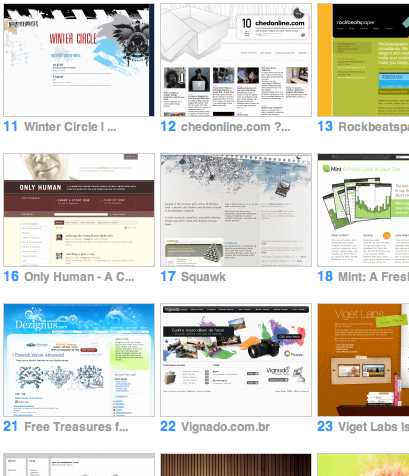
    and remember no matter what your code does
    Command Shift
    it’s still first impression that garners interest
    and once you have it heat maps are good for usability studies.

    Crazy Egg
    and navicat is good for databases sync-ingwhat else… oh.. flex 3 builder beta is out as a standalone and for eclipse..

  • Bundle Fu, Rails 2.0, Django containers , the Unix-Demiurge, and the all important Readme..

    A good thing to note..Media temple put Django containers into beta testing and i’m guessing they’ll release with their cluster server and a bad thing to note.. there’s a trick to running rails 2.0 on the gridserver… work with this and prey for no fsck..
    Dennis Ritchie has claimed “The second letter was originally different.” Who also gives rise to What??? – the Unix Demiurge?The basic Unix idea — a hierarchical file system with simple operations on it (create/open/read/write/delete with I/O operations based on just descriptor/buffer/count) — wasn’t new even in 1970.“Things that began as neat but small tools, like Perl or Python, say, are suddenly more central in the whole scheme of things. The kind of programming that C provides will probably remain similar absolutely or slowly decline in usage, but relatively, JavaScript or its variants, or XML, will continue to become more central”…dmr.. LinuxWorld.com 12/4/00 and I’ll have to agree on xml.
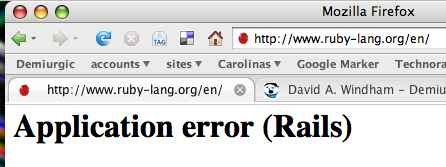
    old ruby
    ruby error
    ruby version
    ruby update
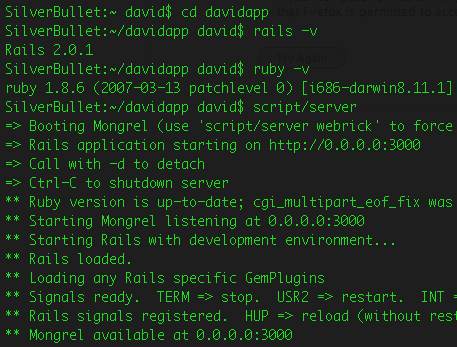
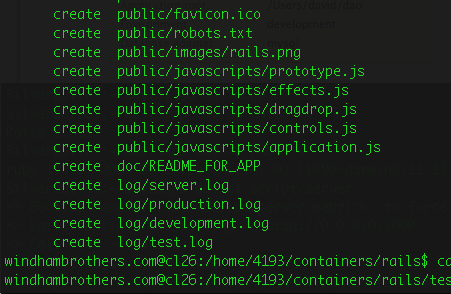
    So i’ve built two apps to use google apps since i already set up Gapps most the time..(to emulate this one of the awesome-est calendars)….. (as i like to keep up with my brother who seems to think he’s the smart one) and i updated my rails today.. (i like to take screen captures when i do it.. my connection seems to be jammed with holiday shoppers)..and i realized something that i do often.. i don’t follow directions.. never have..including updating my ruby to .6 but I like to take it all apart and figure it out myself.. when i first saw rails, it was shoved into my face and took the app apart figured out how it worked and moved on.. we’ll same goes for as and js.. i cut it up and figure out how the parts go together.. we’ll.. having been using eclipse for flex i just went with locomotive first and then rad rails.. bad move if you ever plan on deploying because you’ll have a time with server configuration, so go with a custom install on your machine..and understand the fundamentals before you go playing around with applications or code and take this advice …..always read the readme.
    this tutorial will get you going easier than any other..
    OH.. and Bundle Fu

    and where to start right..

    == Welcome to Rails
    Rails is a web-application and persistence framework that includes everything
    needed to create database-backed web-applications according to the
    Model-View-Control pattern of separation. This pattern splits the view (also
    called the presentation) into “dumb” templates that are primarily responsible
    for inserting pre-built data in between HTML tags. The model contains the
    “smart” domain objects (such as Account, Product, Person, Post) that holds all
    the business logic and knows how to persist themselves to a database. The
    controller handles the incoming requests (such as Save New Account, Update
    Product, Show Post) by manipulating the model and directing data to the view.
    In Rails, the model is handled by what’s called an object-relational mapping
    layer entitled Active Record. This layer allows you to present the data from
    database rows as objects and embellish these data objects with business logic
    methods. You can read more about Active Record in
    link:files/vendor/rails/activerecord/README.html.
    The controller and view are handled by the Action Pack, which handles both
    layers by its two parts: Action View and Action Controller. These two layers
    are bundled in a single package due to their heavy interdependence. This is
    unlike the relationship between the Active Record and Action Pack that is much
    more separate. Each of these packages can be used independently outside of
    Rails. You can read more about Action Pack in
    link:files/vendor/rails/actionpack/README.html.

    == Getting Started
    1. At the command prompt, start a new Rails application using the rails command
    and your application name. Ex: rails myapp
    (If you’ve downloaded Rails in a complete tgz or zip, this step is already done)
    2. Change directory into myapp and start the web server: script/server (run with –help for options)
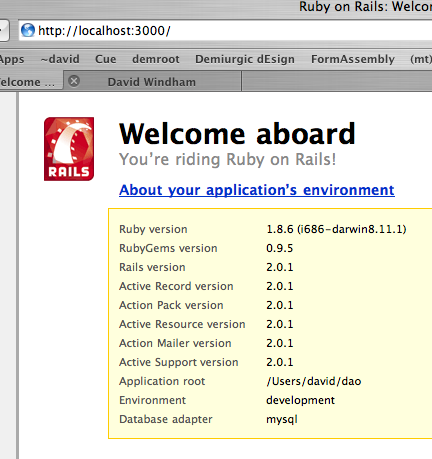
    3. Go to http://localhost:3000/ and get “Welcome aboard: You’re riding the Rails!”
    4. Follow the guidelines to start developing your application

    == Web Servers
    By default, Rails will try to use Mongrel and lighttpd if they are installed, otherwise
    Rails will use WEBrick, the webserver that ships with Ruby. When you run script/server,
    Rails will check if Mongrel exists, then lighttpd and finally fall back to WEBrick. This ensures
    that you can always get up and running quickly.
    Mongrel is a Ruby-based webserver with a C component (which requires compilation) that is
    suitable for development and deployment of Rails applications. If you have Ruby Gems installed,
    getting up and running with mongrel is as easy as: gem install mongrel.
    More info at: http://mongrel.rubyforge.org
    If Mongrel is not installed, Rails will look for lighttpd. It’s considerably faster than
    Mongrel and WEBrick and also suited for production use, but requires additional
    installation and currently only works well on OS X/Unix (Windows users are encouraged
    to start with Mongrel). We recommend version 1.4.11 and higher. You can download it from
    http://www.lighttpd.net.
    And finally, if neither Mongrel or lighttpd are installed, Rails will use the built-in Ruby
    web server, WEBrick. WEBrick is a small Ruby web server suitable for development, but not
    for production.
    But of course its also possible to run Rails on any platform that supports FCGI.
    Apache, LiteSpeed, IIS are just a few. For more information on FCGI,
    please visit: http://wiki.rubyonrails.com/rails/pages/FastCGI

    == Debugging Rails
    Sometimes your application goes wrong. Fortunately there are a lot of tools that
    will help you debug it and get it back on the rails.
    First area to check is the application log files. Have “tail -f” commands running
    on the server.log and development.log. Rails will automatically display debugging
    and runtime information to these files. Debugging info will also be shown in the
    browser on requests from 127.0.0.1.
    You can also log your own messages directly into the log file from your code using
    the Ruby logger class from inside your controllers. Example:
    class WeblogController < ActionController::Base def destroy @weblog = Weblog.find(params[:id]) @weblog.destroy logger.info(“#{Time.now} Destroyed Weblog ID ##{@weblog.id}!”) end end The result will be a message in your log file along the lines of: Mon Oct 08 14:22:29 +1000 2007 Destroyed Weblog ID #1 More information on how to use the logger is at http://www.ruby-doc.org/core/ Also, Ruby documentation can be found at http://www.ruby-lang.org/ including: * The Learning Ruby (Pickaxe) Book: http://www.ruby-doc.org/docs/ProgrammingRuby/ * Learn to Program: http://pine.fm/LearnToProgram/ (a beginners guide) These two online (and free) books will bring you up to speed on the Ruby language and also on programming in general. == Debugger Debugger support is available through the debugger command when you start your Mongrel or Webrick server with –debugger. This means that you can break out of execution at any point in the code, investigate and change the model, AND then resume execution! Example: class WeblogController < ActionController::Base def index @posts = Post.find(:all) debugger end end So the controller will accept the action, run the first line, then present you with a IRB prompt in the server window. Here you can do things like: >> @posts.inspect
    => “[#nil, “body”=>nil, “id”=>”1”}>,
    #”Rails you know!”, “body”=>”Only ten..”, “id”=>”2″}>]”
    >> @posts.first.title = “hello from a debugger”
    => “hello from a debugger”
    just thought i throw this in.. 🙂

    Atari 800
    …and even better is that you can examine how your runtime objects actually work:
    >> f = @posts.first
    => #nil, “body”=>nil, “id”=>”1”}>
    >> f.
    Display all 152 possibilities? (y or n)
    Finally, when you’re ready to resume execution, you enter “cont”
    == Console
    You can interact with the domain model by starting the console through script/console.
    Here you’ll have all parts of the application configured, just like it is when the
    application is running. You can inspect domain models, change values, and save to the
    database. Starting the script without arguments will launch it in the development environment.
    Passing an argument will specify a different environment, like script/console production.
    To reload your controllers and models after launching the console run reload!

    == Description of Contents
    app
    Holds all the code that’s specific to this particular application.
    app/controllers
    Holds controllers that should be named like weblogs_controller.rb for
    automated URL mapping. All controllers should descend from ApplicationController
    which itself descends from ActionController::Base.
    app/models
    Holds models that should be named like post.rb.
    Most models will descend from ActiveRecord::Base.
    app/views
    Holds the template files for the view that should be named like
    weblogs/index.erb for the WeblogsController#index action. All views use eRuby
    syntax.
    app/views/layouts
    Holds the template files for layouts to be used with views. This models the common
    header/footer method of wrapping views. In your views, define a layout using the
    layout :default and create a file named default.erb. Inside default.erb,
    call <% yield %> to render the view using this layout.
    app/helpers
    Holds view helpers that should be named like weblogs_helper.rb. These are generated
    for you automatically when using script/generate for controllers. Helpers can be used to
    wrap functionality for your views into methods.
    config
    Configuration files for the Rails environment, the routing map, the database, and other dependencies.
    db
    Contains the database schema in schema.rb. db/migrate contains all
    the sequence of Migrations for your schema.
    doc
    This directory is where your application documentation will be stored when generated
    using rake doc:app
    lib
    Application specific libraries. Basically, any kind of custom code that doesn’t
    belong under controllers, models, or helpers. This directory is in the load path.
    public
    The directory available for the web server. Contains subdirectories for images, stylesheets,
    and javascripts. Also contains the dispatchers and the default HTML files. This should be
    set as the DOCUMENT_ROOT of your web server.
    script
    Helper scripts for automation and generation.
    test
    Unit and functional tests along with fixtures. When using the script/generate scripts, template
    test files will be generated for you and placed in this directory.
    vendor
    External libraries that the application depends on. Also includes the plugins subdirectory.
    This directory is in the load path.

  • Google Android – Ten Million?

    Android has it’s source code available at the project page. Google is giving away $10,000,000 to the best applications. The Open Handset Alliance, a group of more than 30 technology and mobile companies, is developing Android: the first complete, open, and free mobile platform. Android is a software stack for mobile devices that includes an operating system, middleware and key applications. This early look at the Android SDK provides the tools and APIs necessary to begin developing applications on the Android platform using the Java programming language. Android does not differentiate between the phone’s basic and third-party applications — even the dialer or home screen can be replaced. Android relies on Linux version 2.6 for core system services such as security, memory management, process management, network stack, and driver model. The kernel also acts as an abstraction layer between the hardware and the rest of the software stack. Android will ship with a set of core applications including an email client, SMS program, calendar, maps, browser, contacts, and others. All applications are written using the Java programming language. Xmpp, Sqlite, Freetype, OpenGl, sgl, PacketVideo’s OpenCORE for media, and System C library – a BSD-derived implementation of the standard C system library (libc), tuned for embedded Linux-based devices.
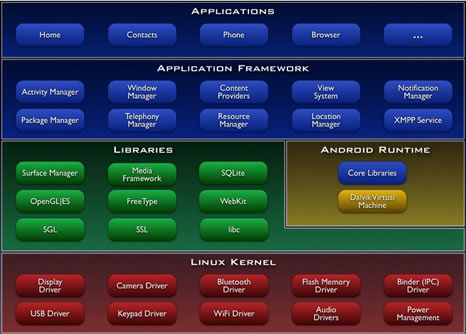
    android

  • Electric Rain to Support Papervision 3D

    “Swift 3D will also be capable of converting existing models in the .3DS and .DXF file format into Papervision3D projects, creating all the necessary ActionScript 3.0, FLA, and 3D files needed to run the project without doing any hand coding.” Canon’s got a good site that uses papervision 3D and so does Sony
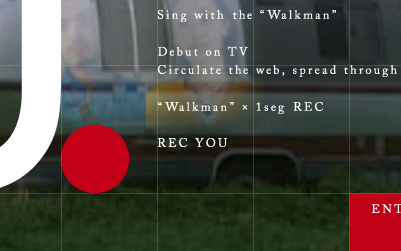
    sony rec you

    a note about this video: what happens when a designer decides to whip up the audio too.

    and i’m not sure exactly how they did this Ikea site?
    ikea
  • on ajax, antisammy, and songbird.

    Songbird

    Songbird is a desktop media player mashed-up with the Web.
    ..take a close look at that favicon? what is that?
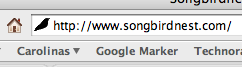
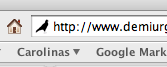

    favicons - songbirdfavicon - demiurgic

    Here’s some other tests and tools: Dojo – clean, Mootools – Compact, clean unique widgets.., and check out these test that show the speed of the frameworks, Prototype , Scriptaculous – easing, JQuery – write less, do more.. – google uses it?, Adobe Spry – underrated – overused. And you might start seeing more of these with xml – XHR and AntiSammy

    GWT Google Webtoolkit – API’s..gotta have em

  • FCC Spectrum Auction and paid links…

    Who’s going to win the spectrum auction?
    11/30/2007 06:08:00 AM
    Posted by by Chris Sacca, Head of Special Initiatives

    Here at Google, we see the upcoming 700 megahertz spectrum auction at the Federal Communications Commission as one of the best opportunities consumers will have to enjoy more choices in the world of wireless devices. That’s why we announced today that we are applying to participate in the auction.
    As part of the nationally mandated transition to digital television, the 700 MHz spectrum auction — which begins January 24, 2008 — will free up spectrum airwaves for more efficient wireless Internet service for consumers. Advocacy by public interest groups and Google earlier this year helped ensure that regardless of which bidders win a key portion of the spectrum up for auction (the so-called “C Block”), they will be required to allow their users to download any software application they want on their mobile device, and to use any mobile devices they would like on that wireless network. The winner must ensure these rights for consumers if the reserve price of $4.6 billion for the C Block is met at auction.

    and.. don’t pay for links ever.. that’s my rule..
    Information about buying and selling links that pass PageRank from Google