-
Charlietown
We spent the first week of the year in Charleston, South Carolina. It’s always nice for us to spend time there because we’ve got friends and family there and it’s where my wife and I met twenty years ago 1. Technically speaking we spent most of our trip out on Folly Beach with a little side time on Edisto, John’s Island, Sullivan’s Island, Mt. Pleasant, and downtown Charleston. I think I started calling it “Charlietown” about the same time I left perhaps as a way to make it seem more casual. I’ve had some conversations with folks recently about it so I’m jotting my opinion out for posterity.
I lived in Charleston for about 18 years which is almost as long as I lived in Columbia, where I grew up. Given my memories before age 8 or so are pretty sparse, it seemed like much longer. I’m going on 16 years in the Piedmont which means I’ve almost equally spread myself between the three and at some point, I’d like to do my last umpteen up in the Blue Ridge to round it out. I’ve lived elsewhere around the country for brief stints but the vast majority has been in South Carolina. I’ve been visiting Charleston since I was very young. My father lived in Charleston as a kid and then again as an adult for another fifteen years. His brother graduated from Charleston High School and his other brother lived in Charleston for years. Here I am a couple weeks ago in the same spot at White Pointe Garden with a 45 year difference.
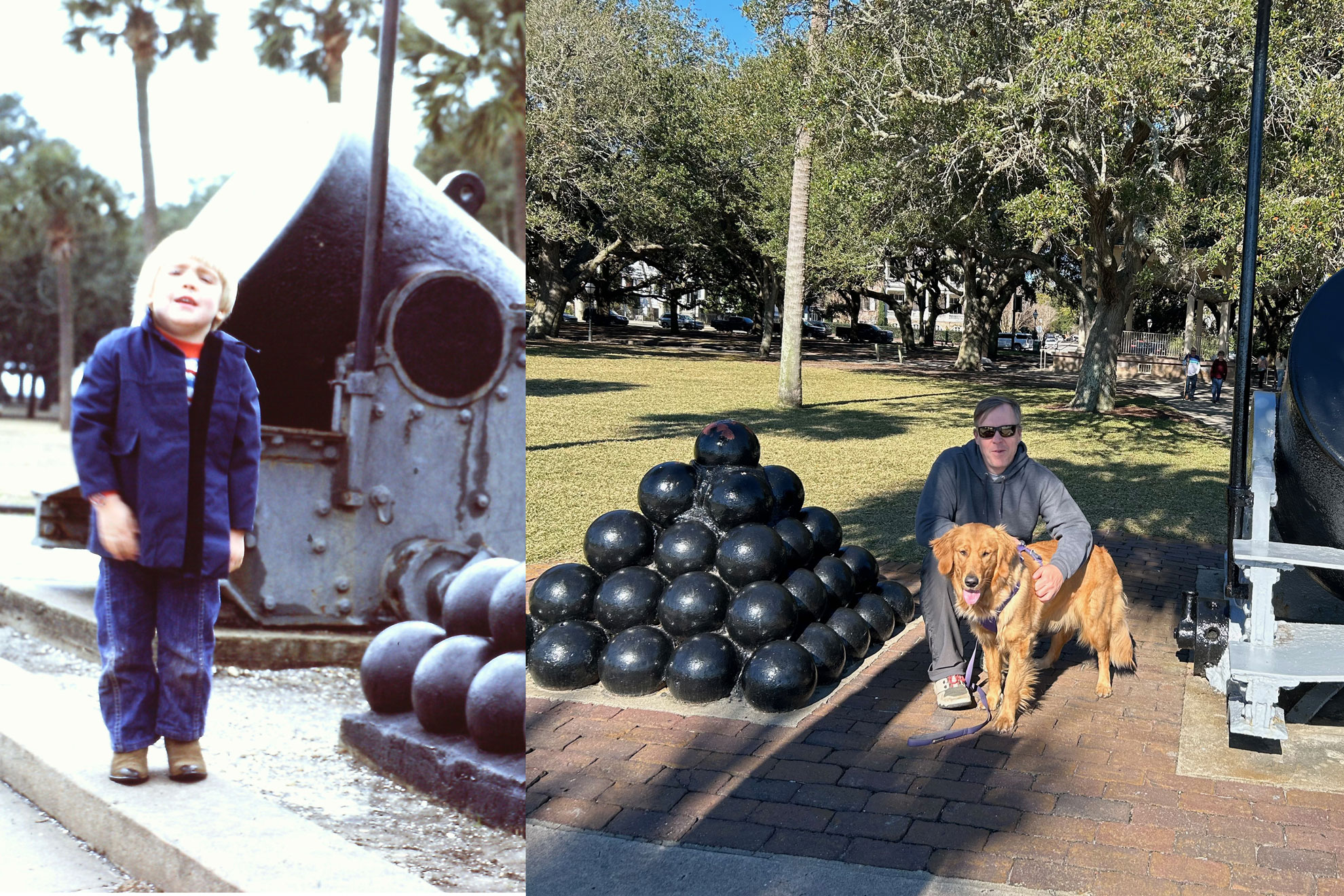
Charleston is too overcrowded now. That’s it… that’s my general summary when discussing it with other folks. They should have put up a “Sorry Folks, We’re Closed” sign twenty years ago. Perhaps I’m just being nostalgic, but I try to be objective about the population growth. I was still there when it started to cross the tipping point. A lot of lifelong Lowcountry folks like to cite Hurricane Hugo2 as the impetus and I moved in right afterward for college so I could have been part of the problem more than I’d like to admit especially given I was supporting one of the largest and most aggressive property owners in the city. I spent a year prior in Savannah which gave me a good perspective on the two somewhat similar cities. When I first moved in, Charleston was starting to experience a bit of a renaissance of sorts. Charleston Place Hotel3, which opened just a couple of years before Hugo had already started the process, and then Prince Charles visited twice in 1990.
When King Charles III visited, he did so because of his interest in historic preservation and affordable housing efforts after the damage from Hurricane Hugo. He spoke to a group of executives explaining “that capitalism needed to become more humane, wielded in more sustainable and environmentally friendly ways”4. The King and the mayor at the time, Joe Riley planted a new tree for one that had fallen in front of a house on Cannon Street.
I lived on Cannon Street for a couple of years and house-sat for a family on Orange Street5 close to Riley’s house where I’d always pass him in the street and speak. I just tried to count the number of places I lived downtown and got eight, but I also lived in the old village of Mt Pleasant for a couple of years, out on Folly Beach, and up the highway in McClellanville. My father also lived on the Isle of Palms and in Mount Pleasant for about fifteen years. One of the houses I rented downtown on Vanderhorst Street got sold to an out-of-town buyer, whom I ran into at a sailing event at the marina where he explained to me that it was a better investment than New York. The last house we had downtown was a carriage house on Franklin Street. We used to talk a good bit to the third-generation owner who rented out the home and his struggles to pay the taxes and upkeep the house. Two years after we left, he sold it which I’m sure is a relatively all-too-common occurrence.
We came into Charleston last week via the back roads down to Edisto, ironically to see a new house construction, and up through John’s Island, but we left out I-26 and that’s where the majority of the evidence is. Multi-tenant housing buildings line the upper peninsula and new developments stretch at least halfway to I-95. I read a couple of editorial pieces on the development just to get a barometer of whether or not I’m just being curmudgeonly on it. Even when I lived there, it just constantly got busier and busier. The beaches and downtown got to where you had to avoid the holidays and weekends. Some of the more colorful aspects of the culture, which I’d argue are oft the most celebrated, have been pushed into a slim minority losing its authenticity like something rebranded that’s just slightly off. like when Charleston single-row style houses are constructed inland in a neighborhood with Plantation in the name and full-sized palm trees hauled in.
I first got my first whiff of this future in the late 90’s when Daniel Island and a bunch of new developments were started in Mount Pleasant. This was capped off by the new bridge in 2005 and all of the publicity on Charleston being a top travel destination. As this happens to other regional cities like Asheville and Greenville, it makes me wonder exactly what is a decent recipe for growth. I’ve also lived in really small economically distressed towns as well and can see the need for balance. Perhaps I’ve just become accustomed to fewer people at a slower pace but it’s now happening around the area I live because South Carolina has people coming in. According to a 2023 report, South Carolina is the top state and Charleston is the highest-ranked city nationally for inbound migration. Although it makes me want to capitalize on it, now I’m just primarily interested in preserving my interests, which happen to revolve mostly around peace and quiet.
When I think about places to live, one of the most important considerations is a sense of community. I think it’s an often overlooked aspect that has a major effect on quality of life. It revolves around having a well-rounded community of various types of people and services like healthcare, education, agriculture, industry, and business. It’s easy to fall privy to the false promises of places like The Villages in Florida or even Hilton Head Island in South Carolina but staying there any length of time will dissolve those facades. I’m sure there are bright folks from varying backgrounds in urban planning and architecture trying to wrangle these issues. I’ve always thought that Charleston could get rid of the cars on the peninsula. The billionaire-backed California Forever released its plans for a pre-planned walkable and affordable community that could eventually have half a million residents. Charleston doesn’t have the advantage of being pre-planned but that’s where it’s charm lies. It’s easy to imagine yourself car-free in an urban environment and taking in the amenities and culture of a city but speak with anyone who’s lived there long enough and you’ll likely hear conflicting stories. Just this morning, The Post and Courier’s front page was dominated by articles about the pains of growth. There’s just something nice about running into people you know and I think I’d find it pretty hard to live in a city that’s primarily a tourist destination or a college. I used to work at an Inn in Charleston and I loved to remind the guests of the more sordid history because they tended to romanticize the past. Perhaps I’m just doing the same for what I knew of Charleston.
I’m just not sure about the future changes to the quality of life for South Carolinians and I’m equally as unsure about any long-term solutions for maintaining a nice balance. I suppose the market is trying to level out the growth with pricing but that hasn’t seemed to slow down the migration. Joe Riley cited his studies of European cities in his efforts to revitalize Charleston, but some of the most beautiful places in Italy and France are now trying to incentivize the revitalization of old properties. And even now, one of the more prominent writers on Charleston’s architecture and historic preservation, Robert Behre is writing editorials about saving College Lodge8,9, a former motor inn converted into a dorm. I think King Charles III’s speech there years ago on sustainable development needs to be brought up at every single zoning request for some new developer.
( 24/02/04) After I had written out the essay, I had some reservations about publishing it because of how critical I can be and the complexity of the issues. I had some follow-up conversations with my better half about the essay and how it relates to our small hometown and even down to the scale of our neighborhood. I just wanted to add that I think population growth and change can be healthy as long as there is some decent long term planning. Charleston has the challenges of both the population growth and sea level changes.
- Our 16th Anniversary – https://davidwindham.com/our-16th-anniversary/
- Hurricane Hugo – https://en.wikipedia.org/wiki/Hurricane_Hugo
- Charleston Place – https://en.wikipedia.org/wiki/Charleston_Place
- As King Charles III looks forward, take a look back at his 1990 visit to Charleston – The Post and Courier ( 2022 ) – https://www.postandcourier.com/news/as-king-charles-iii-looks-forward-take-a-look-back-at-his-1990-visit-to/article_35924d7e-3061-11ed-ba13-fb2f7cef8d78.html
- 8 Orange Street, Charleston, SC 29401 – Zillow – https://www.zillow.com/homedetails/8-Orange-St-Charleston-SC-29401/10904508_zpid/
- How Mayor Joe Riley Shaped Charleston – Architect ( 2015 ) – https://www.architectmagazine.com/design/how-mayor-joe-riley-shaped-charleston_o
- 2023 Allied US Moving Migration Report – https://www.allied.com/migration-map
- Commentary: College Lodge offers a chance to preserve disappearing 20th-century history – The Post and Courier ( 2024 ) – https://www.postandcourier.com/opinion/commentary/charleston-sc-mid-20th-century-architecture-disappearing/article_c55783dc-ae93-11ee-93c9-d3b85310a59a.html
- Editorial: Think College of Charleston’s College Lodge is ugly? That’s beside the point. – The Post and Courier ( 2024 ) – https://www.postandcourier.com/opinion/editorials/college-of-charleston-cant-demolish-college-lodge-yet/article_c65d7eaa-b472-11ee-ab6a-3320d54c224f.html
-
Twenty Twenty-three

I’ve written up a couple of years in review essays and since I like the process, here I am doing it again. I like the title because it implies some sort of 20/20 hindsight which is most likely not the case. My 2022 review was fairly chin-up given some of the circumstances. Thinking about it now, for me 2023 was pretty, pretty, pretty good. I took some trips, coached some tennis, got a new dog, and tried to enjoy my work 2. Writing these out seems to be a good way to reflect and shake out some overarching themes.
While riding in the car yesterday, I told my wife how much I’m starting to enjoy self-deprecation. It’s so easy being your own public relations agent that we all seem to do it. I texted my friends joking about my lame eve plans and how I wouldn’t likely make it till midnight and could barely knock out a split of champagne. I left the champagne unopened in the fridge because I’m now easily downed by a half bottle of wine. No worries, I opened it for breakfast this morning. I think part of the key for self-deprecation is that I’ve noticed in my interactions with others that I’ve stopped worrying about myself and I’ve started thinking more about them. I think it takes a good bit of effort to reach this stage, but it’s definitely the way to be. Stop thinking about yourself.
I hit the big five-o last year and seem to be rolling into my fifties fairly nicely. A couple of days ago, a friend of mine texted a group of us that his father had passed which is the type of reminder I think we all need every so often. Personally, I’ve prioritized maintenance mode for my body and my attitude on this has shifted dramatically since my brother passed. I feel like we’re all still struggling with a type of infantile object permanence. Nothing is really permanent, not even our memories, and accepting it is part of what makes life fun. I’ve certainly stopped thinking that there is an imaginary finish line or goal and started looking at it all as just a process. Albeit a bit abstract, my first year in review essay in 2019 was on the money for having this attitude. Be here now.
I always scan through my photos about his time of year and I think that “whoa, look at how young we looked” is a relatively common experience for other people. A really interesting concept to me is the idea of change blindness… if you introduce small changes to something that we regularly see, like ourselves in the mirror, they mostly go unnoticed. Except of course that balding spot you can’t really see on the back of your head. I first saw mine in one of those security cameras at a store and had to raise my hand to make sure it was me I was looking at. I think this same sort of change blindness is also in play on a larger scale in relation to a sort of collective negativity bias. There was some recent press about a series of surveys that determined that 77% of Americans thought crime was going up while it actually decreased across the board by pretty good margins. My best explanation is that it’s a consequence of the information age and ‘if it bleeds, it leads’ sorta attention economy.
The situation in Gaza and Ukraine, or the hideous state of American politics don’t help, but my opinion of them thrown into the void won’t make a ripple. I won’t even mention that we had the hottest global temperature on record or the second and third-largest banking collapses in history. Even though some of the data shows improvement, I don’t necessarily think things are getting any better, but I also don’t think they’re getting worse. I just think they’re changing. I’ve made a real effort to stop applying my own bias to stop framing things as good or bad. I mostly try to disengage so that I can focus on what I’m able to control.
I’m already ahead of my taxes this year since we had to make some small changes related to the better half taking a new position. I was able to do some additional charitable work which is always a good reminder of how fun work can be without the deadlines and negotiations. I had some good glimpses of why I enjoy computers this last year with AI. Most of all, I’ve stopped thinking about work and money in terms of stuff or competition. I’ve started thinking about it in terms of time and since I know that my time is invaluable, I tried to prioritize just trying to enjoy my work.
I’ve got some challenges ahead this year. My first contract of the year is going to be a doozy in that it’ll require a heavy amount of learning and work. I think I’m gonna try to learn to get the most out of my brain without the morning coffee. I’m also wearing my body down, mostly from the heat and sun, trying to keep up with the kids on my tennis teams so I think I’m gonna go ahead and try to line up some younger assistants to help pull some of the weight. My parents are getting on up there and instead of dreading the inevitable, I’m just trying to enjoy them now. The better half has a pretty heavy load with her dissertation, so I’m gonna see if I can double down on the cooking and cleaning so I’m sure I’ll be adding recipes here soon.
I’ve got a couple of cool things coming up. We’re headed down to Charleston for the rest of the week. Our twentieth anniversary is this fall. Ginny will be defending her dissertation and we’ll get her a new car and take a trip to celebrate. We’re also going to be renovating our upstairs bathroom which means that I’ll be building out a new workspace in our den so that Ginny can take my office and hers can become a walk-in dressing room. I’m going to gear my new workspace a little less of an office and a bit more towards a studio by adding in some old fashion atelier tools and some new-fangled multi-media tools6. I’d like to re-learn the piano and some new audio/video production stuff for fun. Although it’s fun to have those carrots out there in front of me, I try to remember to take it day by day.
2023 in a sentence… I tried to stop thinking about myself, learned to live more in the now, focused on my locus of control, learned to enjoy my work, and just let it all happen. So let’s all just try to ignore the bullshit, cherish our time, enjoy our work, let it roll, and make the best of 2024.
Best wishes to y’all out there and I hope you have a happy new year.
Right on,

David
- 2022 in Review – https://davidwindham.com/2022-in-review/
- 2023 – https://davidwindham.com/2023/
- 2019 in Review – https://davidwindham.com/2019-2/
- Age 50 – https://davidwindham.com/age-50/
- The Value of Time – https://davidwindham.com/the-value-of-time/
- Notes/House/Studio – https://davidwindham.com/til/notes/house/studio
-
Halo Collar
I’ve been spending a lot of time with our new dog Iris1,2. Enough so that it’s become my first priority cutting in my work, tennis, and other chores. Iris is eight months old now and she’s a handful. I’m pretty committed to training and spending time with her. She’s sitting on the couch next to me as I type this up. It was cold out this morning which made me think about how thankful I am for our Halo dog collar. I stood inside the den eating cereal watching her roam the back yard for a good spot to do the doo. And since a lot of folks ask about it, I figured I’d just write about it here and send them a link.
It’s not my first rodeo training training a dog. I’ve had three now and can’t say it gets any easier. While she’s young, I still want her to be able to run wild because that’ll make her happy. I have no clue why some people seem to think that having big dogs in small yards or indoors is acceptable. Dogs are just domesticated descendants of wolves and wild canines, who for instance, have a territorial range that averages over 100 miles. My last two dogs had free roam because I was in a remote location but unfortunately, our current yard is just over an acre in a neighborhood. I walk her the loop around the hood and let her fetch in the yard and pond. She’s at the age now where she’s accepted we’re the lead dogs in the pack, but she’s still testing it every so often. I got somewhat comfortable with her off-leash out in the yard, but after seeing her go after a cyclist or golf cart several times, I knew I’d have to add a fence to be a good neighbor and for her safety.
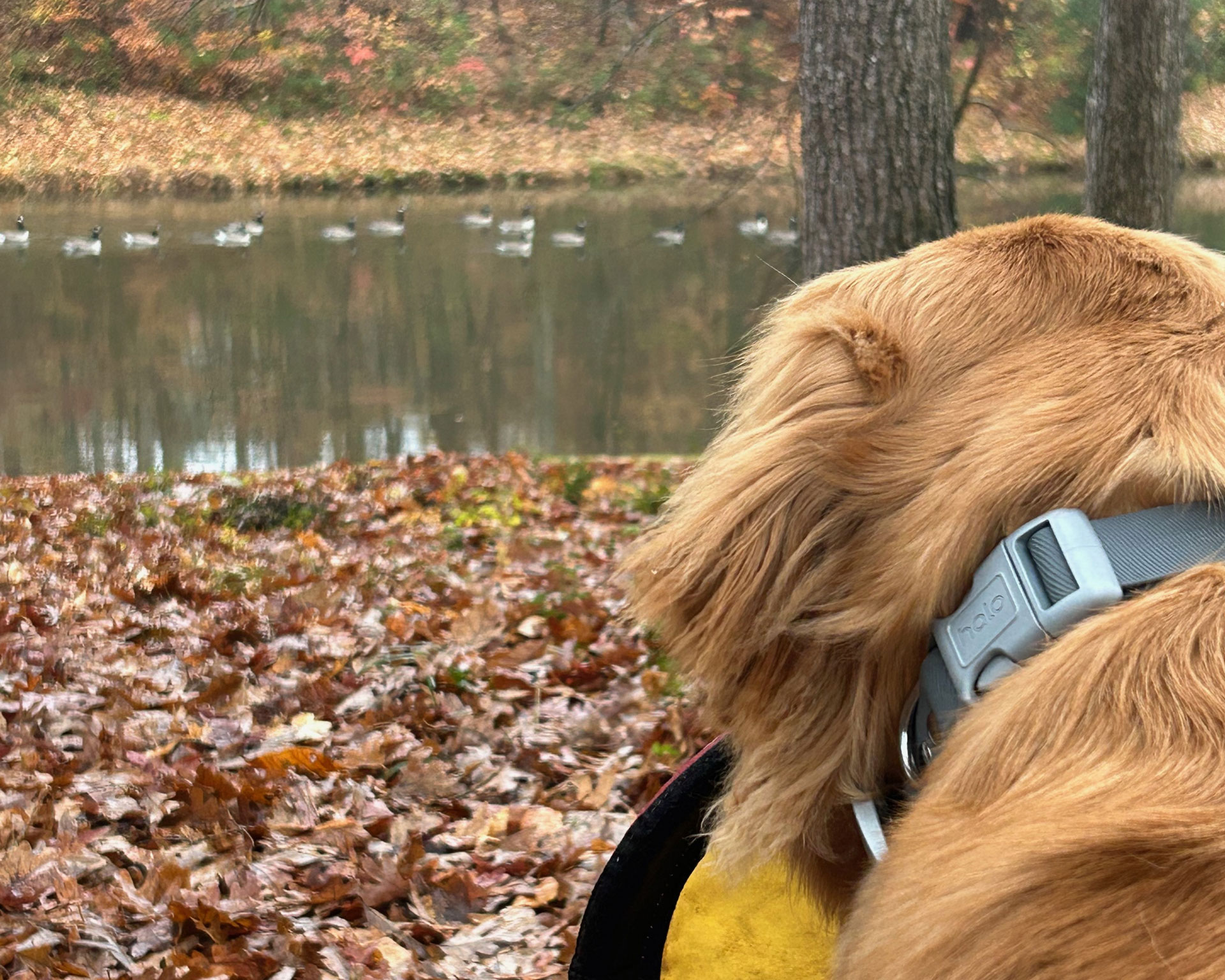
We ordered the Halo Collar3 to give it a go because we really like the idea of taking the fence with us when we travel. I’ve been using it for about four months now and there will be no need for a fence. And no, there aren’t any promotional strings attached here even though they did email me asking for a positive review in a support ticket and I am using my referral link in the reference below. The best I can do is an honest write-up here for anyone who might stumble upon it.
The Halo Collar is a satellite GPS powered collar that allows you to create a custom fences. It has three levels of encouragement and three levels of prevention feedback. There are various audio cues for encouragement and prevention. When your dog gets near a ‘fence’ boundary or beacon, it gives warnings and when it retreats it gives encouragement. The collar also has static vibrations and electric shock when they cross the boundary. We spent the first couple of weeks two training alongside the instruction videos. I think Iris and I both got bored of them after a while even though they’re well done. She responded pretty quickly to the encouragement feedback because well… she loves food and treats. That was the easy part. She mostly picked up on the beacon training before I was ready to let her roll outside. The beacon is like a small radius fence line. I tested the electric shock on myself first just holding it in my hand and I started her on the lowest setting because I’m more of a positive reinforcement sorta person and I didn’t want to create an adverse reaction to wearing the collar. She already knew the boundaries of our property because we’ve been leash training her within them and do not allow her into the road unless she knows we’re going for a walk.
Setting up fences is easy. You just walk the collar along the board and click to add fence posts. The GPS is accurate to within a couple of feet. ( we have version 3 if that means anything ). Most of the initial time she spent outside with the collar was closely monitored watching and calling her when she got a whiff from the distance and started easing off of our property. Then she got away the first time chasing a walker who had passed by down the road, ignoring the various beeps and whistles and just shaking her head every time she got shocked like it was a mild irritation. So I got her back onto the property and cranked up the electric feedback to 3 ( 1-15 setting ). That was all fine and dandy until she started running with a neighboring dog along a fence line and took off to the other side of the property again… just shaking her head when the emergency feedback happened. I turned the feedback up to 5 ( 1/3 power ) for the next time it happened, because I knew it would. The last time she ran off, it was because she started swimming in the pond, and for whatever reason, whenever she gets muddy she gets excited. She got a whiff of a deer trail along the back of the pond and just took off into the woods not even stopping or shaking her head for the shocks. They shocks are not constant, they’ll hit three at a time and then break for a couple of minutes before they continue in threes. I looked back at the app afterward, and she had 24 shocks and had been out of the fence line for about 16 minutes which means it’s about a two-minute break between sets.
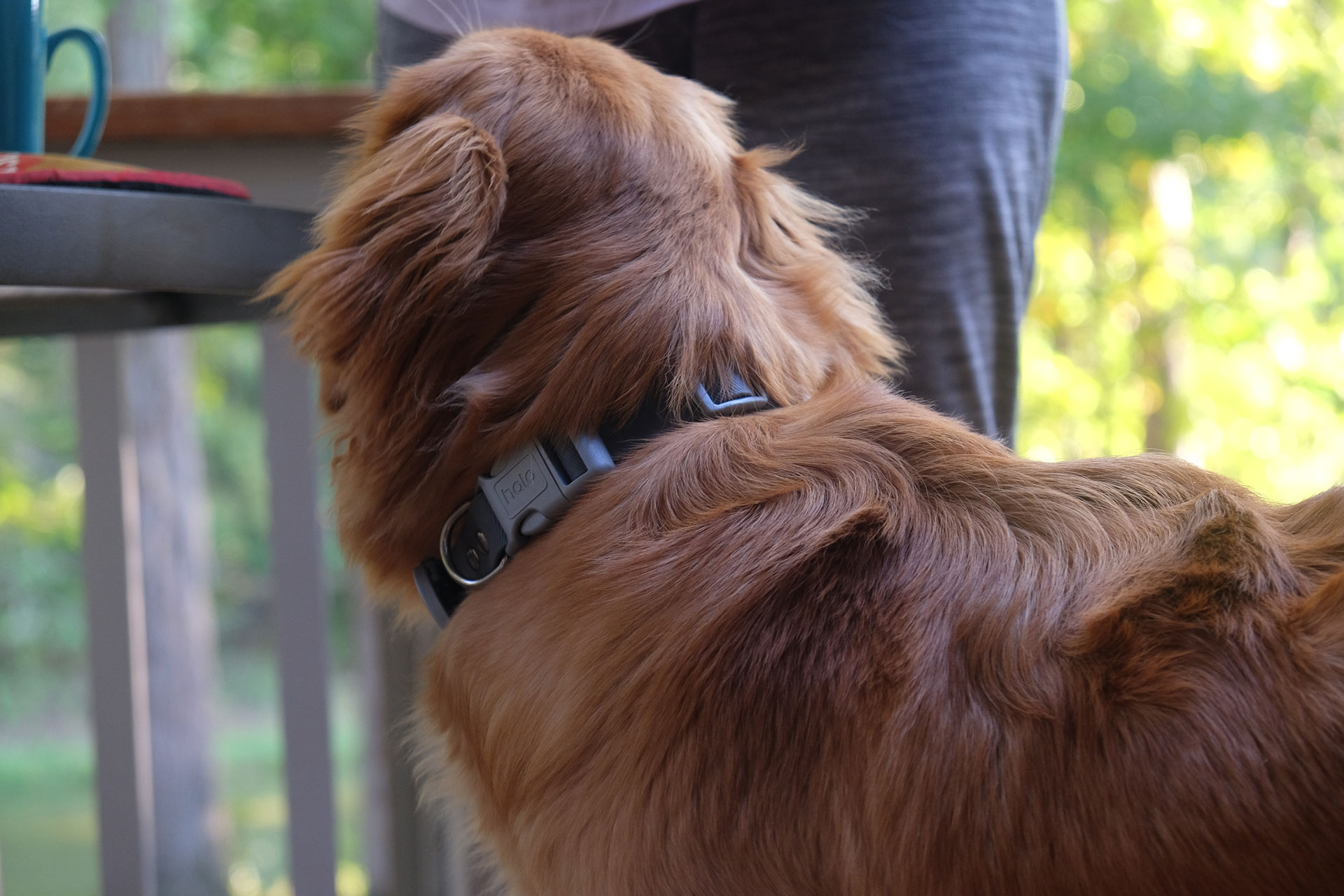
I crunk it up again to 1/2 power ( 8/15 ) afterward and have left it there. We had about five or so outdoor sessions prior to the last escape so I know she knows, the deterrent and/or reward for coming back just wasn’t strong enough to keep her from running. I heard a story of an acquaintance whose dog had another electric fence product who would just move close enough to the fence line and sit there long enough to let the battery run out so it could run loose. I know Iris wants to chase those deer and we have a lot of them around our house so it isn’t going to be easy. Aside from other dog walkers, golf carts, and bicycles, we also have a pond full of turtles, dragonflies, and fish she also wants to catch. The main thing is keeping her out of the two roads which border our house. Although the collar is for her safety, I’ve seen other folks strap up their dogs to a shock collar with a remote and just buzz them for bad behavior. When I mentioned shocking our dog to others, I always have to explain how it works and tell them how I tested it on myself first so they might understand my sympathy.
The Halo collar works, but only after you’ve trained your dog to pay close attention to it with rewards and punishment. She now responds almost perfectly to the border warnings and has only crossed a couple times in excitement to visit other dogs walking by and quickly returned. I’ve had family dogs that would just dig out under our fence and would be lost for hours while we drove around the neighborhood calling for them. At least now I can see on a map exactly where she is. There is a much larger range than an in ground wireless fence where once they’ve crossed they’re free. I charge it nightly and have yet to have any glitches with upgrades or the app. I’ve set up fences around some common areas we travel to and she still responds to the border warnings albeit a bit tepid at first because she doesn’t know where they are. Another feature I really like is the remote signals feature. I have one set to whistle, so I can just tap a button on my phone to send the whistle to her collar and she’ll come running back to the back deck or front door. I put it on her about four to five times a day so she can nose around and hang out in the yard. I still mostly keep tabs on her whereabouts, but I’m now comfortable enough to do other things while she’s out.
Iris now knows she’s headed out as soon as I offer to put on the collar. She gets excited likely because I usually pair the time outside with chunking the frisbee or ball. I’m just thankful I didn’t have to fence in the yard and don’t have to suit up early in the morning to head out into the cold. Overall, it’s another one of those how’d I live without it things. The piece of mind far exceeds the cost and it’s just one more thing that makes living with a dog more rewarding.
- Iris – David A. Windham – https://davidwindham.com/iris
- Dogs/Iris – TIL – David A. Windham – https://davidwindham.com/til/notes/dogs/iris
- Halo Collar – https://www.halocollar.com
-
Lake Lure
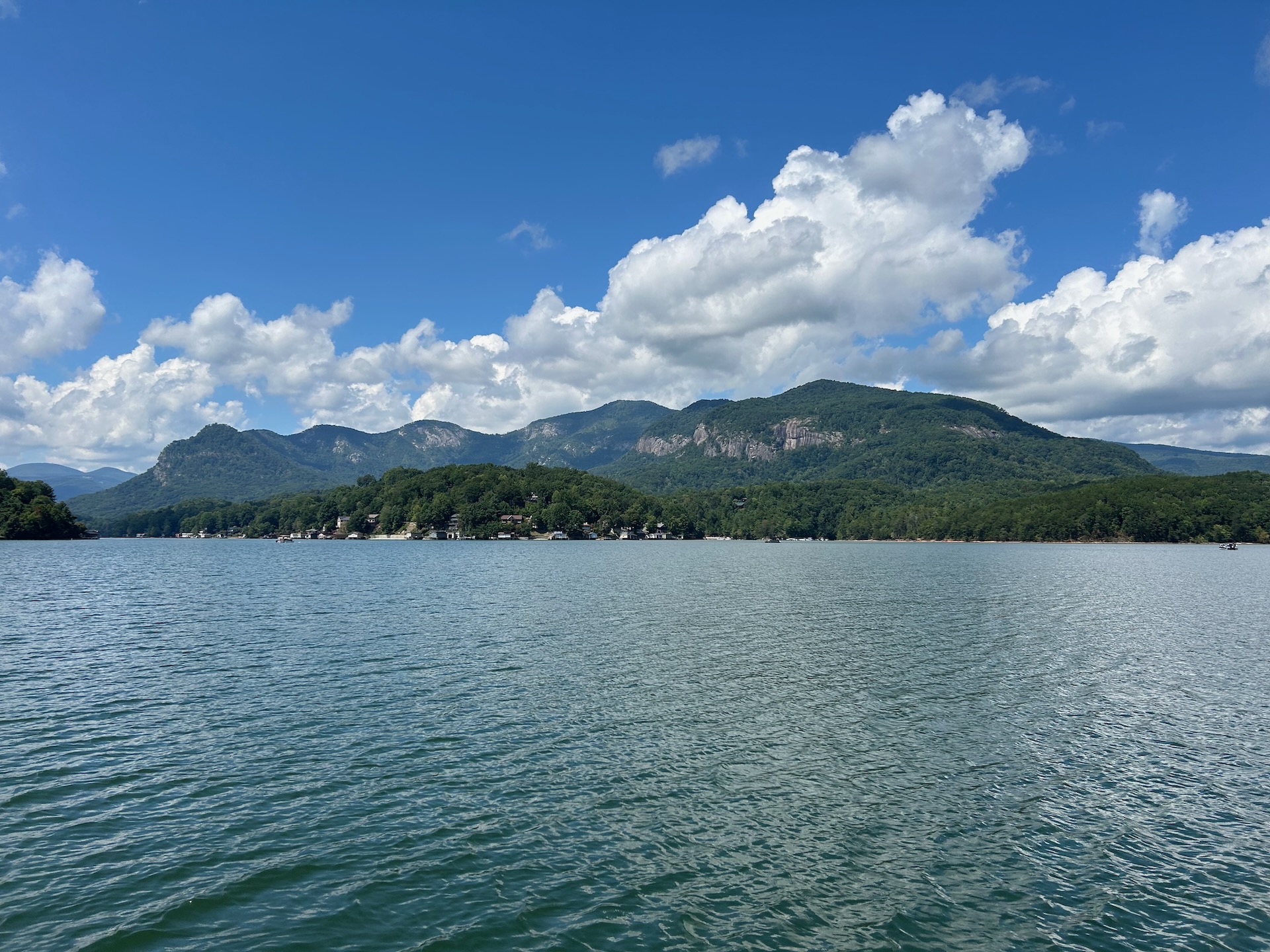
We took a trip up to Lake Lure last week1. The weather was about perfect… a bit cooler than the scorching temps we’ve had down in the Piedmont. Getting out onto and into the water in summer is almost a ritual for me at this point. We rented a nice house on Lake Adger2 just about ten miles south of Lake Lure and we had a boat rental. We just spent a couple of days trolling around the area. We went partly because we’ve been looking at property in the area and the best way to get to know somewhere is to stay there. The lakes were nice and quiet because all the other folks usually travel over Labor Day weekend. There couldn’t have been more than fifteen other boats out Friday morning on Lake Lure. The best time to travel is when other people aren’t.
We have some friends who just got back from Lake Como3 in Italy and we joked with them that we had a much better experience because we saved about twenty-five grand and the commute was much easier. It’s only an hour and forty-five minute haul up the road from us and we’re lucky to have such beautiful getaways within a short drive. It’s also reasonably priced… we had a nice house with million-dollar views for around $200 a night. Granted the history is much shorter, but we had lunch at a local winery which surprisingly had some decent wines. We went to some local stores for fun. There’s a bit of good ole’ fashion tacky American tourist shite lingering around, but that’s certainly in Italy too. Lake Lure is mostly nice and I can see a lot of potential. Given its shorter history, Lake Lure still has the same kinda of small-town old-world charm with the boathouses lining the lake.
Lake Lure and Lake Adger were both privately built in the 1920s for hydroelectric power. Lure feeds and is fed by the Broad River4 and Adger the Green River5 which merges into the Broad further downstream. I grew up where the Saluda6 and Broad meet. I’ve moved downstream as far as I could go and now I prefer to spend time back upstream. Lake Lure, Adger, Jocassee, and the Saluda Reservoirs are about as far upstream as you can go in the Carolinas before you’re into the hills. The headwaters are always the cleanest and least developed mainly because of the constraints of the landscape. Aside from the dams, the legacy of various textile and other industries in the Carolinas has really spoiled the natural beauty of many of our watersheds. They get relatively overdeveloped and overused where they’re accessible. Where they aren’t, like the blackwater swamps of the Pee-Dee, are generally the most lovely. As a kid, I used to do a bit of the Lynches and Pee Dee Rivers where we kept a chainsaw in the boat to clear fallen trees. I also used to paddle a bit of the WambawSwamp7 at the end of the Santee River8, which is the terminus for the same water from Lake Lure.
Sometimes, the only place to really escape the summer crowds on the water is offshore. My budget isn’t exactly deep water friendly and even the Charleston harbor and Intercoastal waterways get swamped with people on busy weekends. Sailing in cold weather is about the only way to avoid it which is why my wife and I crewed a sailboat. I’m mostly a landlubber though and don’t enjoy the big water as much… likely because it just feels unfamiliar. I don’t really enjoy fishing, especially in deep water in a small boat. I like skiing alright, but not as much as just drifting along in decent company. I grew up on Lake Murray9 and even then, in the late 80’s, the best time to be out on the water was anytime but the weekends and mostly on the upper end of the lake that was less developed. That’s not the case now as the development has stretched all the way up into the Saluda River.
Lake Greenwood10 is also fed by the Saluda River and is very close to our home. We hardly ever get out on it though because it tends to get packed with the motorboat crowd zooming from one spot to the next. Much like Lake Murray, there is a lot of new development going on. We owned a lot out there for years but sold it because we had no intent on building. The whole ‘lake life’ thing is just the sound of jet skis, motorboats, and drunk folks on boats blasting music behind your house. There is something nice about how every inch of space along Lake Lure has mostly been developed and they’re now in the stage of trying to make it sustainable with boating regulations and building restrictions. Lake Adger has no jet ski and low-power motor restrictions. It’s hard to find a time and place to enjoy that people aren’t ruining with their nonsense. Lake Jocassee is one of those places just because the shoreline isn’t developable and we tend to visit there most often. And although I should ruin it by advertising, Lake Lure after Labor Day is also just that place.
- Lake Lure – https://en.wikipedia.org/wiki/Lake_Lure,_North_Carolina
- Lake Adger – https://en.wikipedia.org/wiki/Lake_Adger
- Lake Como – https://en.wikipedia.org/wiki/Lake_Como
- Broad River – https://en.wikipedia.org/wiki/Broad_River_(Carolinas)
- Green River – https://en.wikipedia.org/wiki/Green_River_(North_Carolina)
- Saluda River – https://en.wikipedia.org/wiki/Saluda_River
- Wambaw Swamp – https://en.wikipedia.org/wiki/Wambaw_Swamp
- Santee River – https://en.wikipedia.org/wiki/Santee_River
- Lake Murray – https://en.wikipedia.org/wiki/Lake_Murray_(South_Carolina)
- Lake Greenwood – https://en.wikipedia.org/wiki/Lake_Greenwood_(South_Carolina)
- Lake Jocassee – https://en.wikipedia.org/wiki/Lake_Jocassee
- Lake Jocassse – https://davidwindham.com/jocassee/
-
Iris

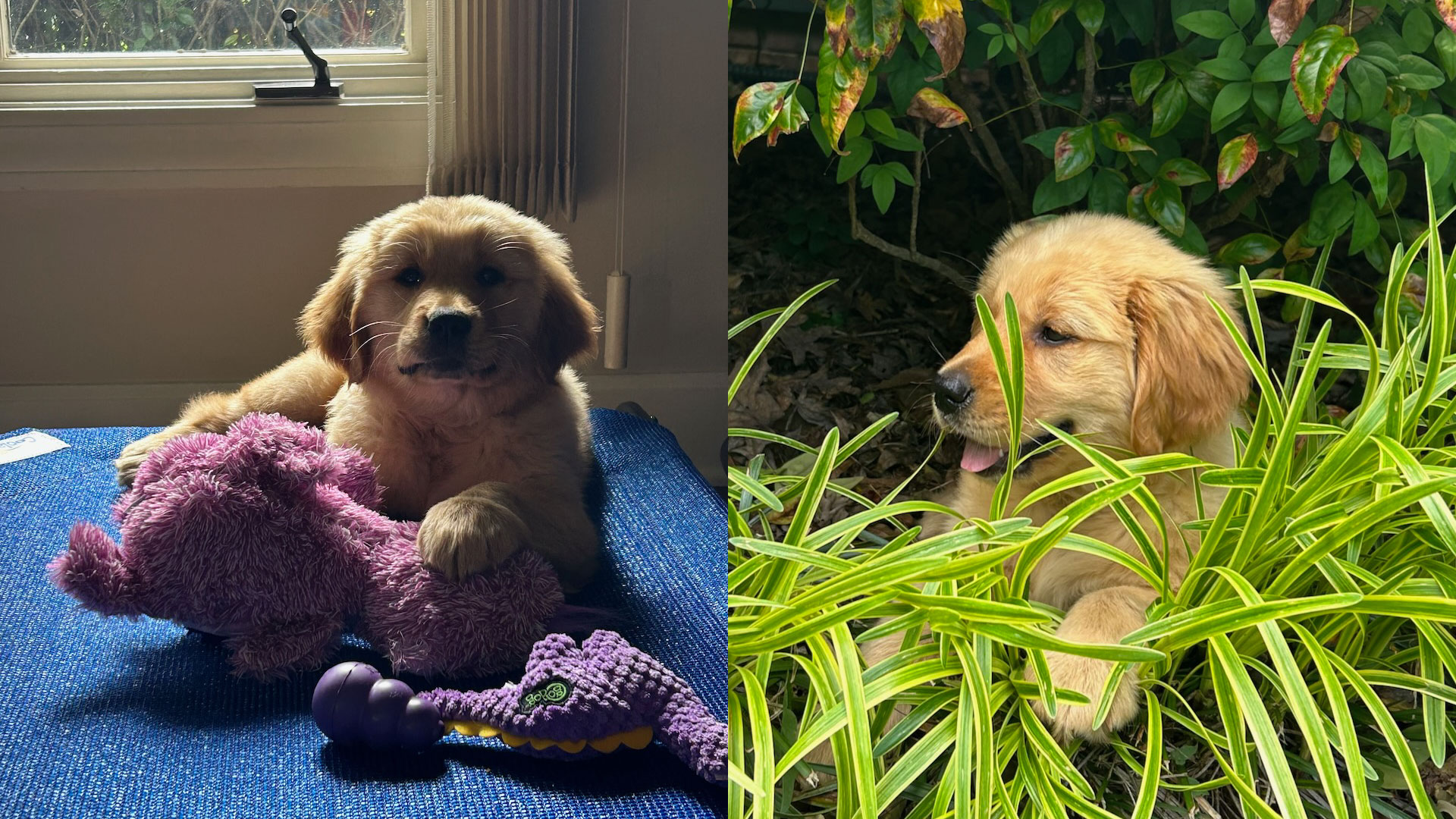
Iris of Zoey & Adger ( House of Zekën Woozer ) We decided to adopt a new puppy last year and we picked up Iris last weekend. Her full name is Iris of Zoey & Adger House of Zekën Woozer from her parents and to imply a dynasty from our former dogs. I’m not sure how the name Iris came about, but it could have something to do with the Iris’ that started blooming in our front yard and the fact that I saw that her sister from another litter is named Daffodil. In mythology, Iris is goddess associated with communication, messages, the rainbow, and new endeavors. She is the personification of a rainbow linking the heavens and earth… but right now our Iris is just chewing up anything she can get a hold of.
The first thing I ever published on this website was a picture of our dogs2. I’ve since published several others3,4 and our last dog Zeke passed at the end of 2021 at 19 years old5. I’ve had dogs most of my life. My mom has a pug and terrier mix named Emmit and my dad has a Collie named Lucy. My grandmother on my father’s side raised and bred Boston Bull Terriers. My grandfather had one that played golf with him everyday named Duke. Growing up, my family had Airedale Terrier, black Cocker Spaniel, white German Shepard, and a black Pug named Macs6. It’s likely the reason that I’ve always liked dogs.
Our first dogs just kinda came to us, and although I regularly checked the local humane society pages, we decided to pick a Golden from a breeder7. Although partly based on the mom and dad, we also wanted a pup that had been raised around a large family. It’s important to have a good temperament because we will be training her so that she can be certified to work with kids with disabilities in the schools. My wife will have a day every so often when she can take a break from adminstration and just take the pup to visit the kids.

Woozie ( Honey Boozer ) We previously had a rescued Golden mix name Woozie that was quite the character. Something about her personality that reminded me of the dad of Iris… a bit more red or a bit more wild perhaps. Dad is a hoss named Adger and Mom is Zoey, who has a big smile. I’ve gone to wearing a fanny pack full of kibble and carrying a clicker with me everywhere. I’ve been doing my due diligence on training, service animals, and researching the effects on students. I’m learning quite a bit so perhaps she’s training me. It should make for an interesting essay somewhere down the line comparing artificial and canine intelligence. At just under ten weeks she’s already getting some of my commands and signals down pat. She’s out and about exploring, meeting other dogs and people, watching tennis, and riding in the car.
Just one week in and I’ve already noticed the postitive impact Iris is having on our lives. Instead of spending our waking hours scrolling through emails and whatnot, we’re spending them outside listening to the birds chirping or watching the sunset while playing with Iris. I’m spending much less time at my desk, so I’m having to make the time here more valuable. Even writing up this post was only made possible because I went out and ran her early this morning. I just want her to be happy. And if she’s happy, she’ll make other people happy too. I think we all know it’s just something about how dogs can make people smile.
- Iris ( mythology ) – https://en.wikipedia.org/wiki/Iris_(mythology)
- Boozie & Zeke – https://davidwindham.com/boozie/
- Boozie, Zeke, & Munch – https://davidwindham.com/dogs/
- Our Dogs – https://davidwindham.com/dogs-3/
- Zeke – https://davidwindham.com/zeke/
- Anthorpomorphizing Machines – https://davidwindham.com/anthropomorphizing-machines/
- TIL / Notes / Dogs – https://davidwindham.com/til/notes/dogs/
23.05.27 – @ 10 weeks

23.05.31 – @ 11 weeks. She’s gonna be a big girl… we’ve been calling her “little miss big booty”.
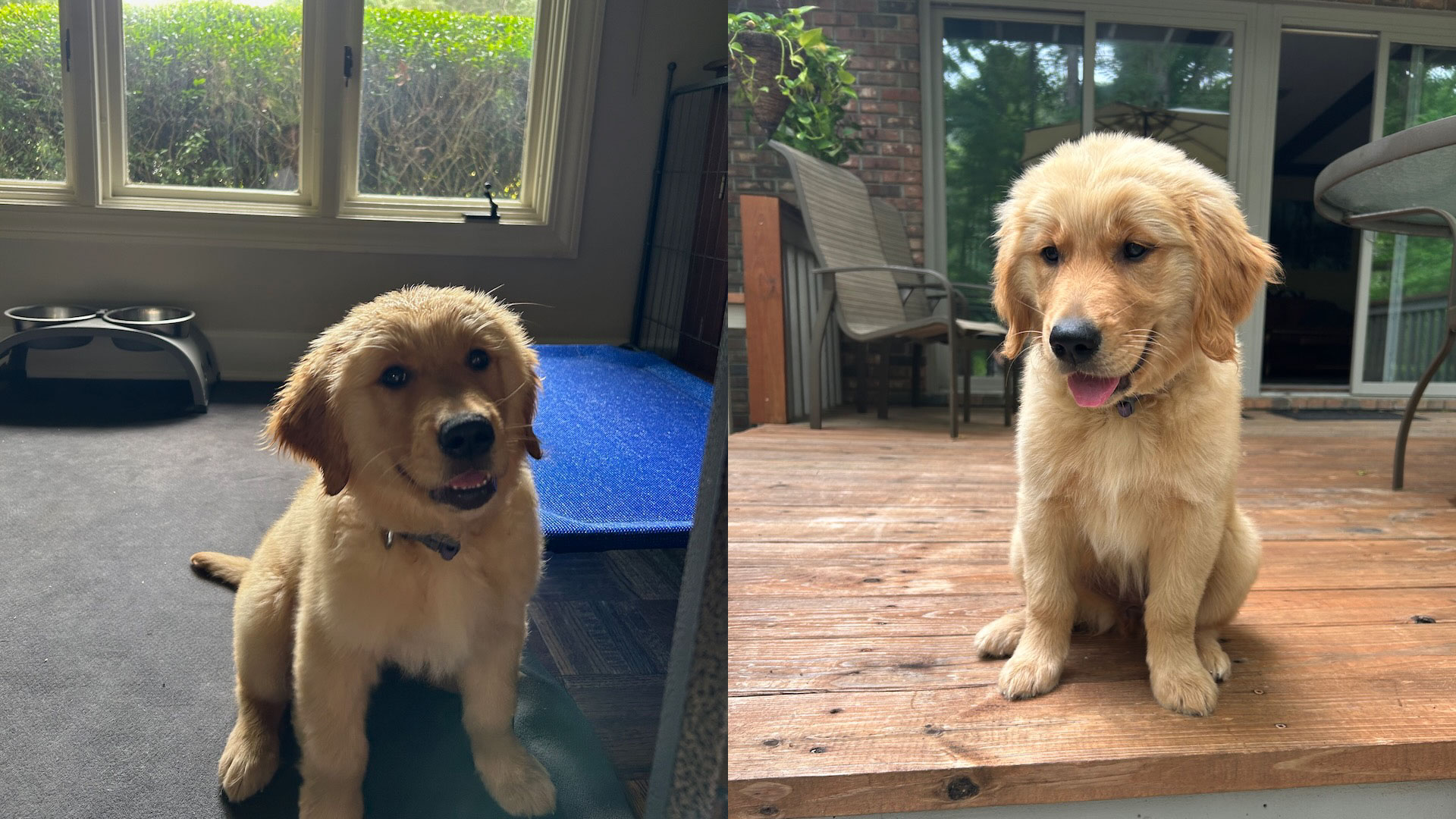
23.06.08 – @ 12 weeks. She’s learned to eat books and attack the sprinklers.
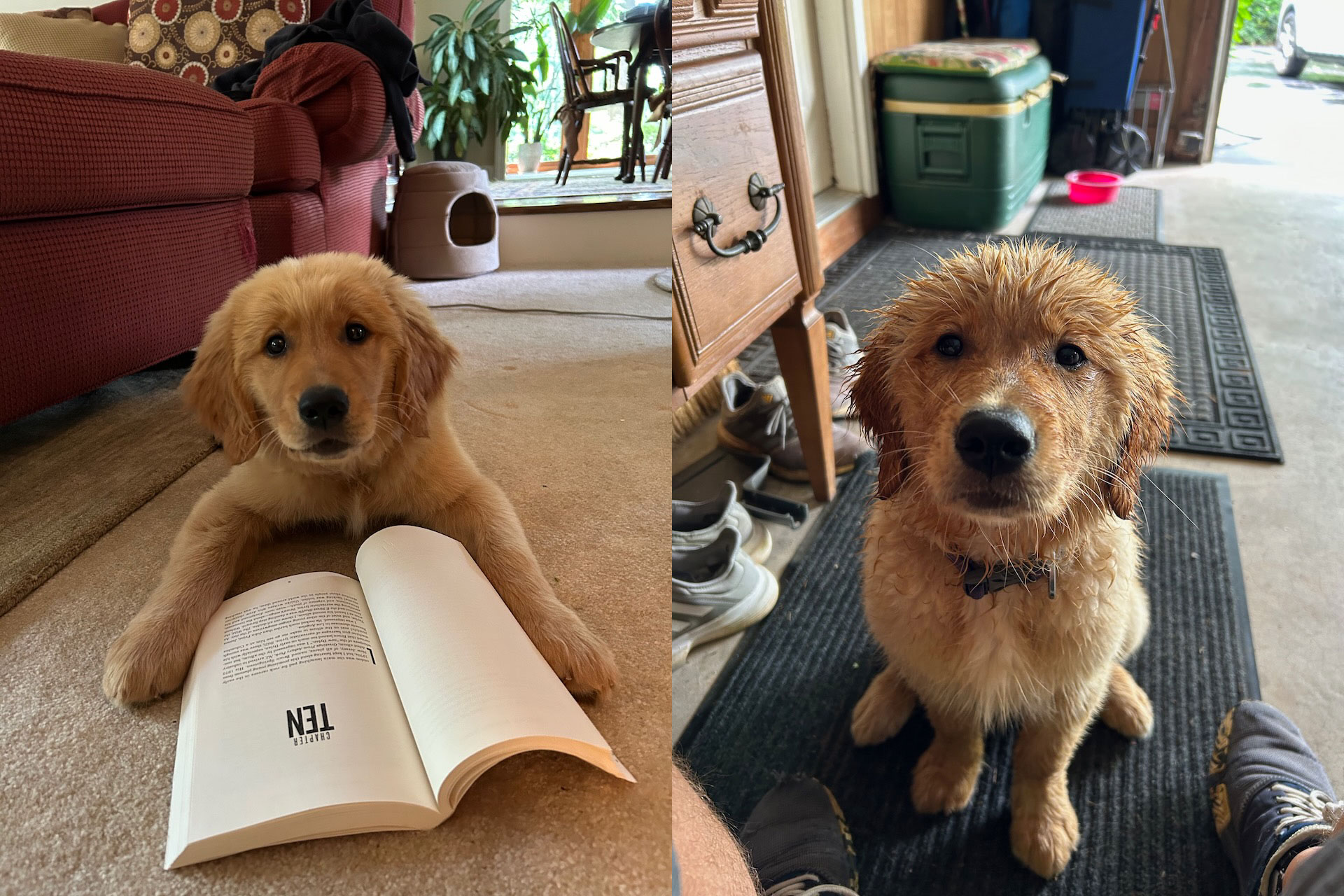
23.06.10 – @13 weeks. Took her first running dive into the pond yesterday afternoon.
23.06.18 – @14 weeks. Learning to listen when she wants.
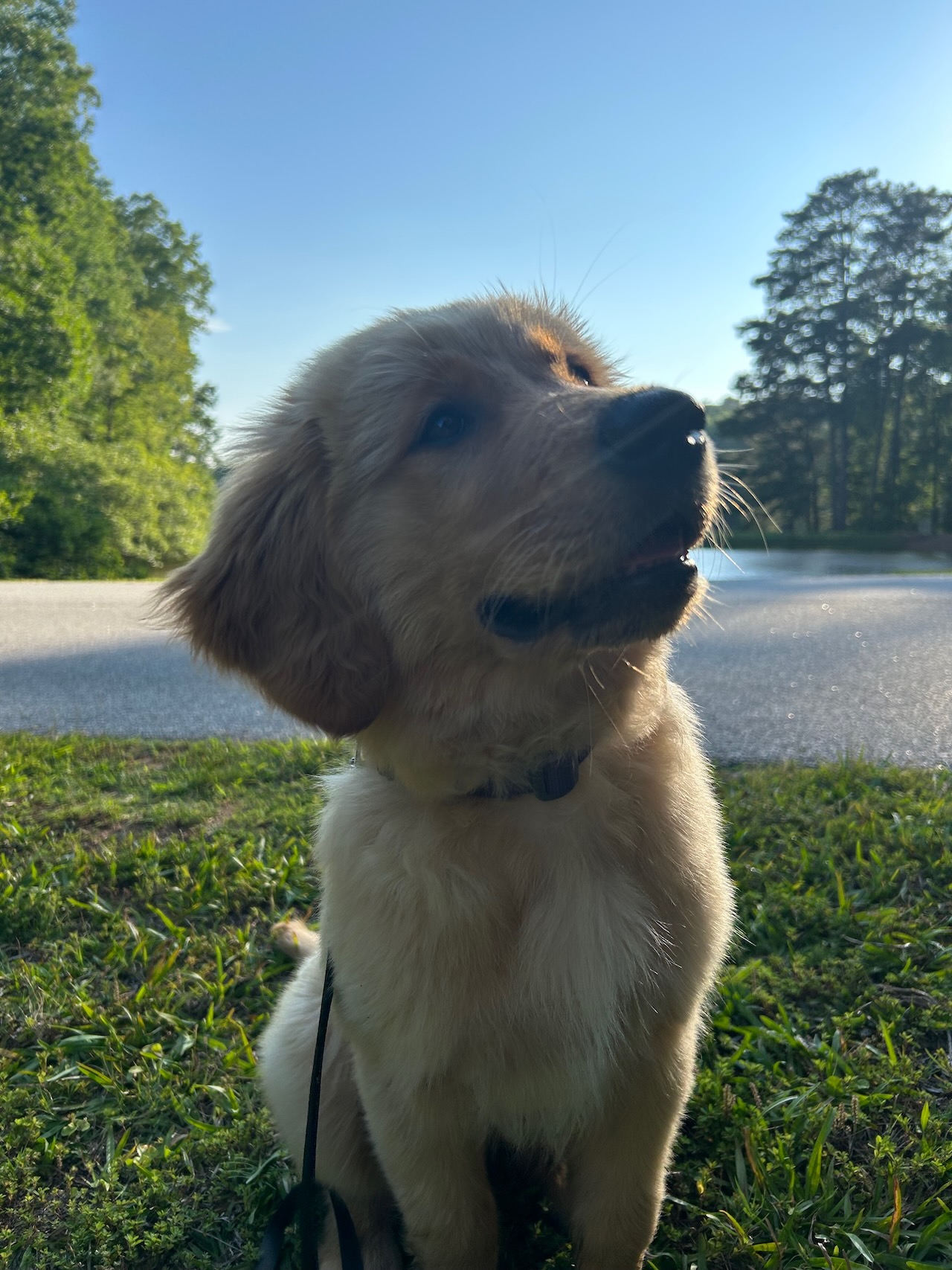
23.07.03 – @15 weeks. Drooling for treats.

23.08.01 – @17 & 18 weeks. Chewing up everything and outruns me.
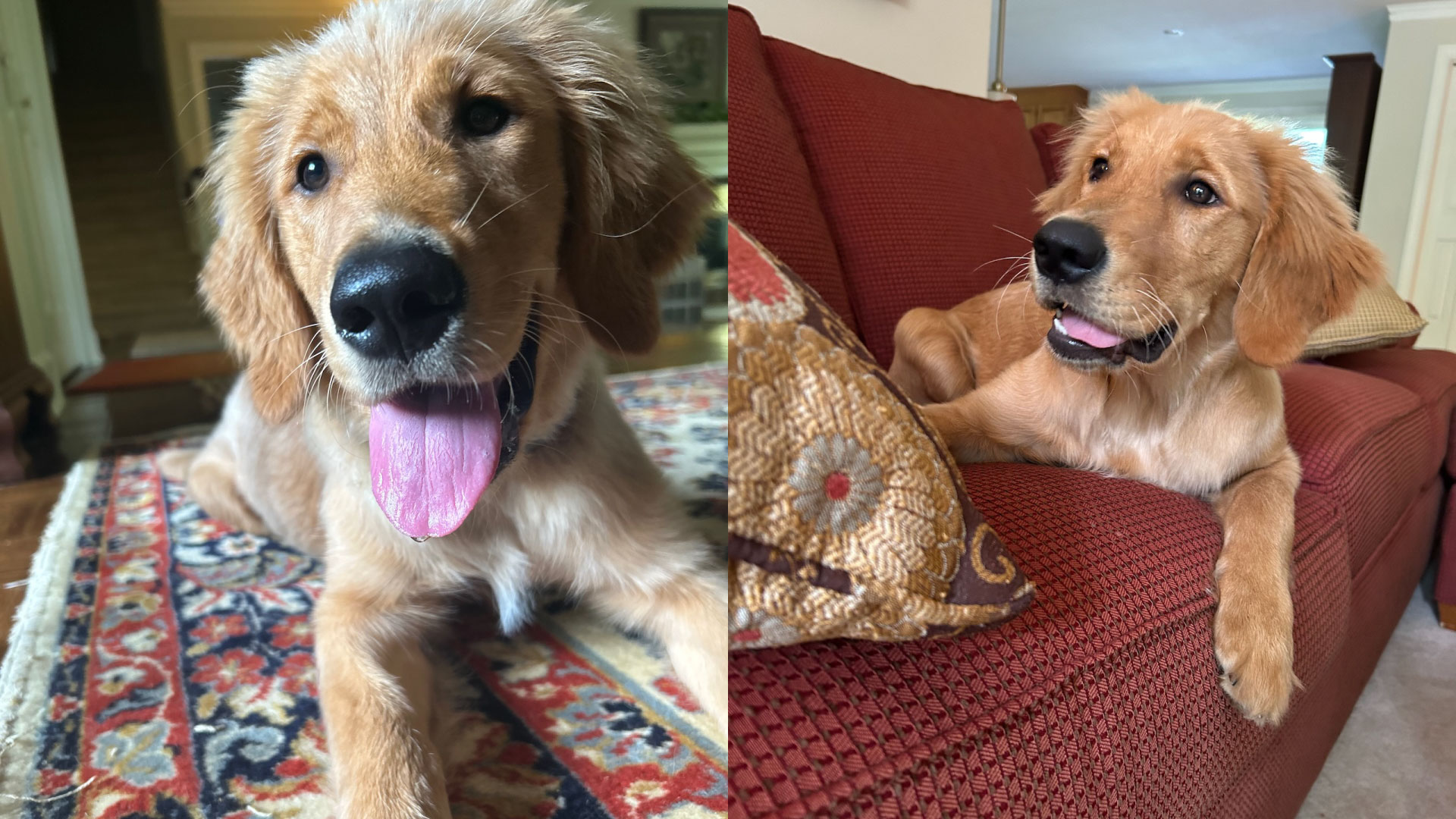
23.08.05 – @19 weeks. Tall enough to reach whatever she wants off the countertops.
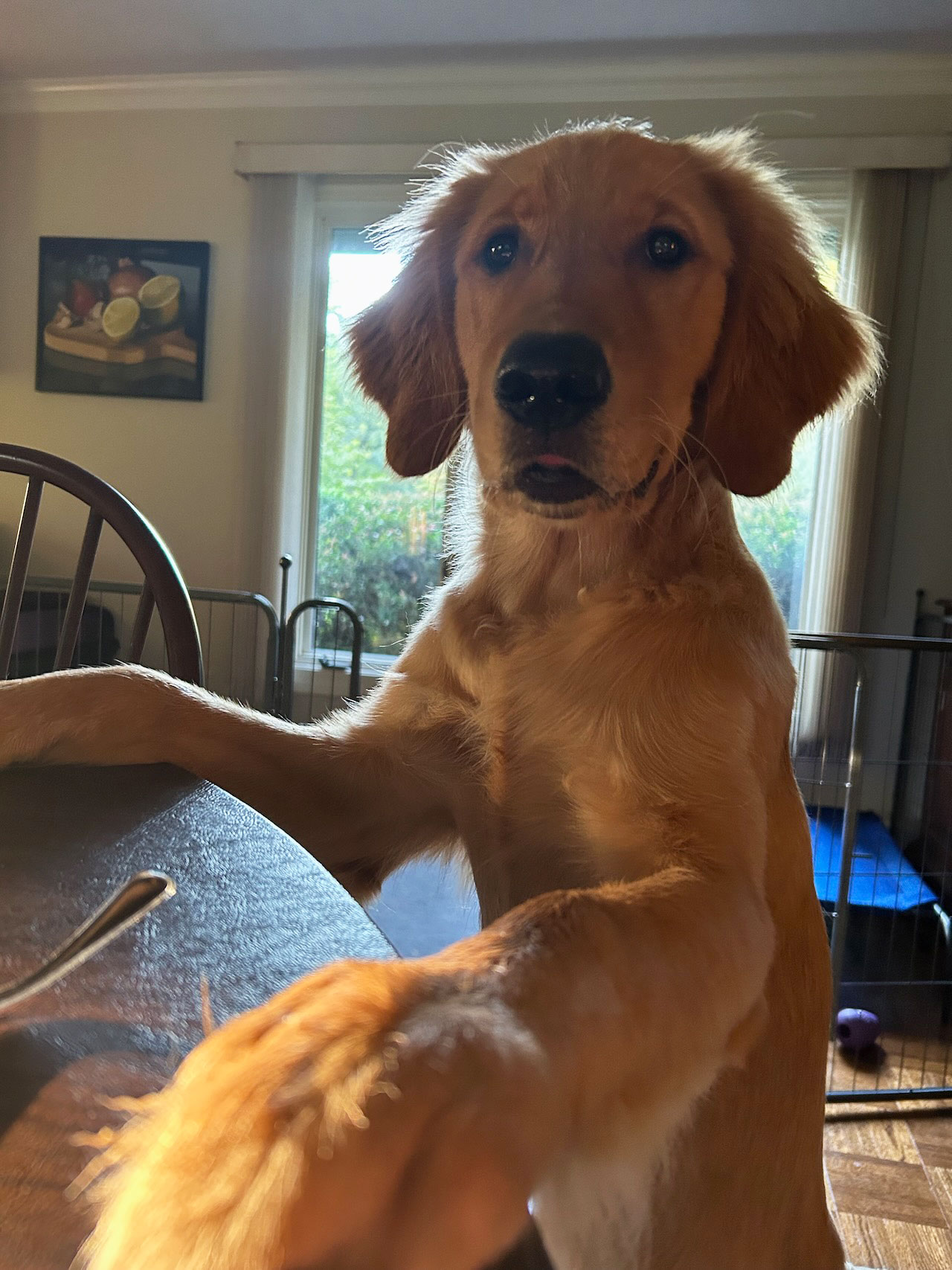
23.08.12 – @20 weeks. Almost calm enough to sit with me at my desk without destroying something.
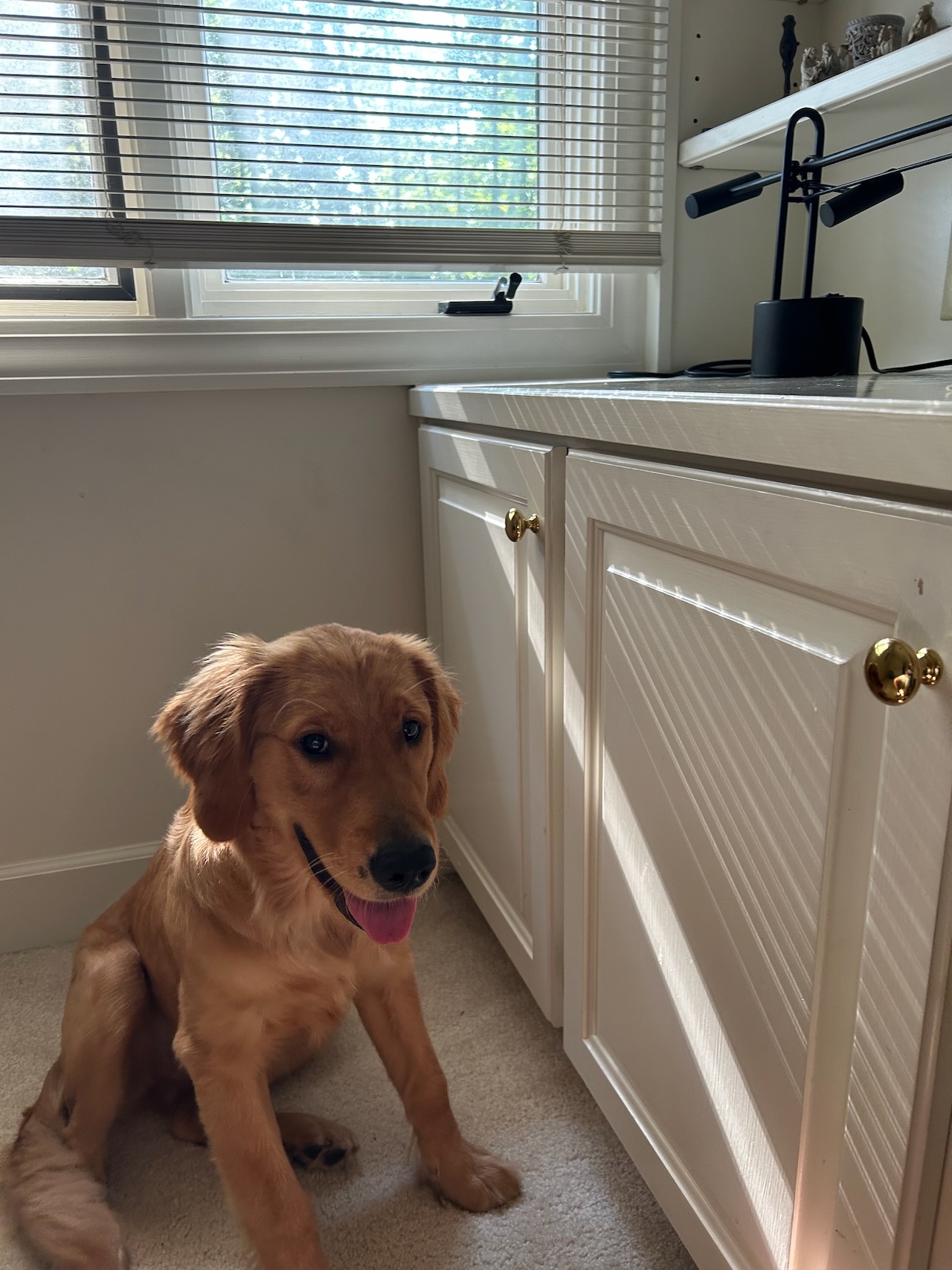
23.08.20 – @21 weeks. Ready to roam… or chase dragonflies.
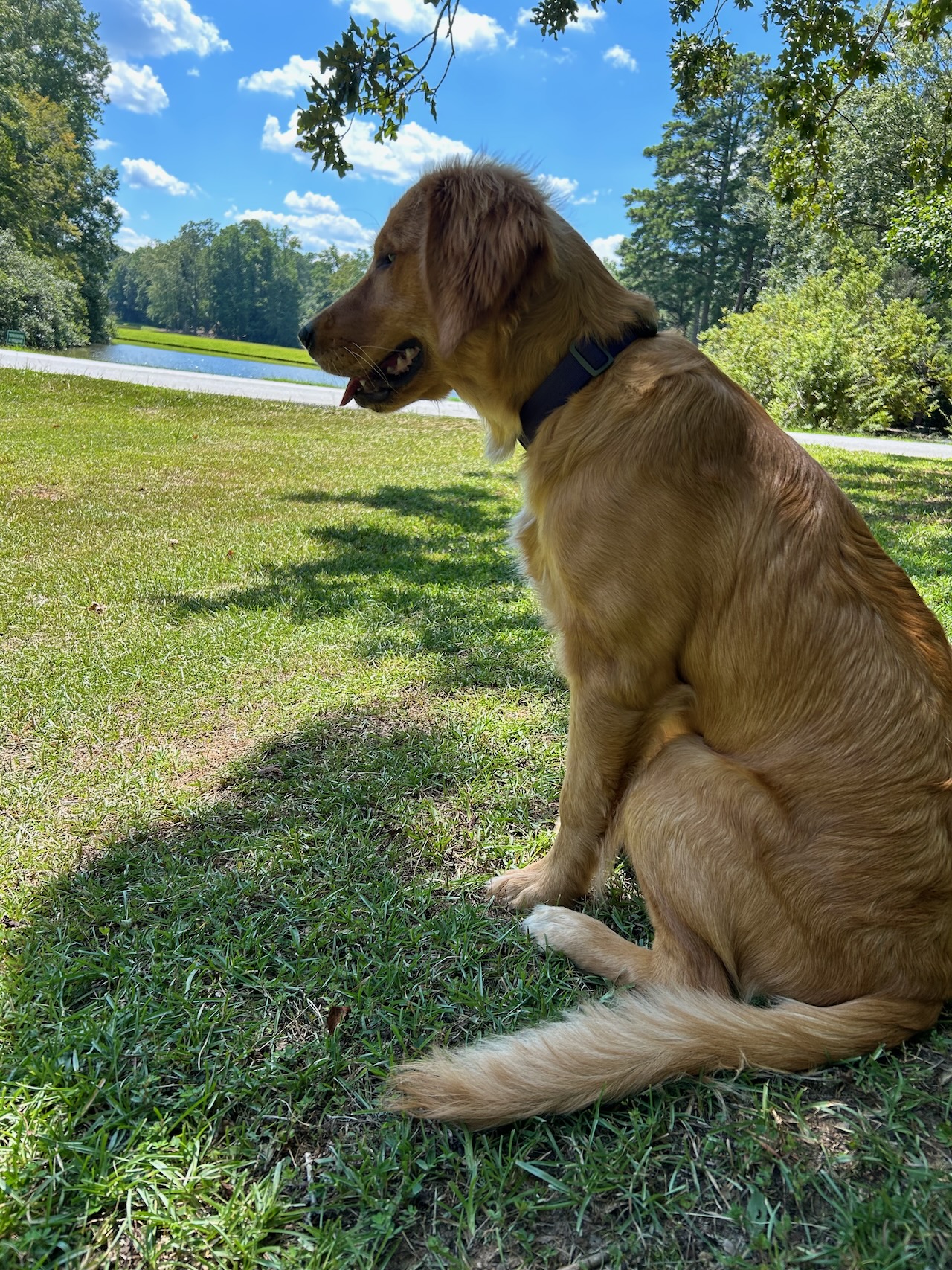
23.09.10 – @ 6 months


23.10.08 – @ 7 months
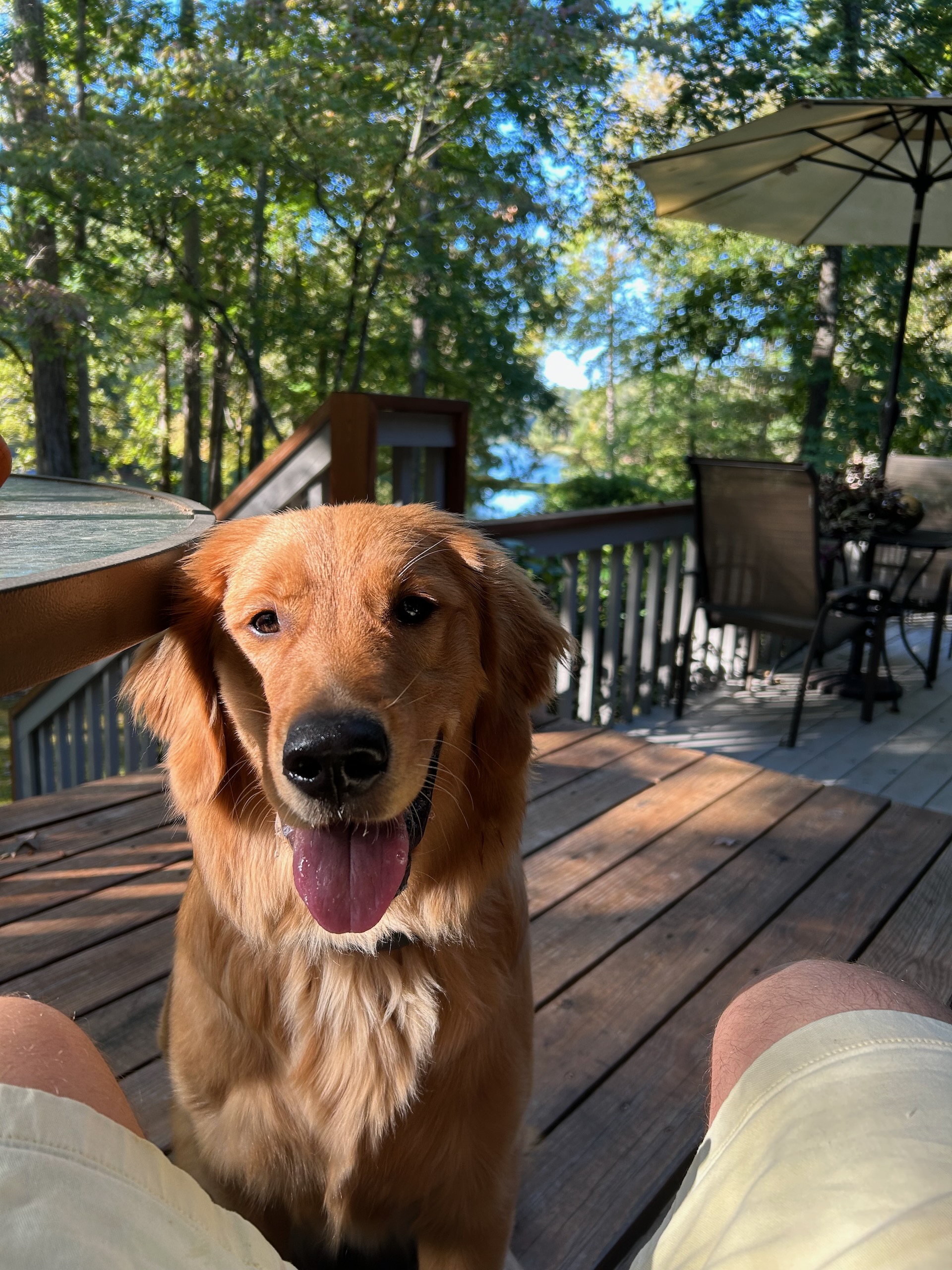
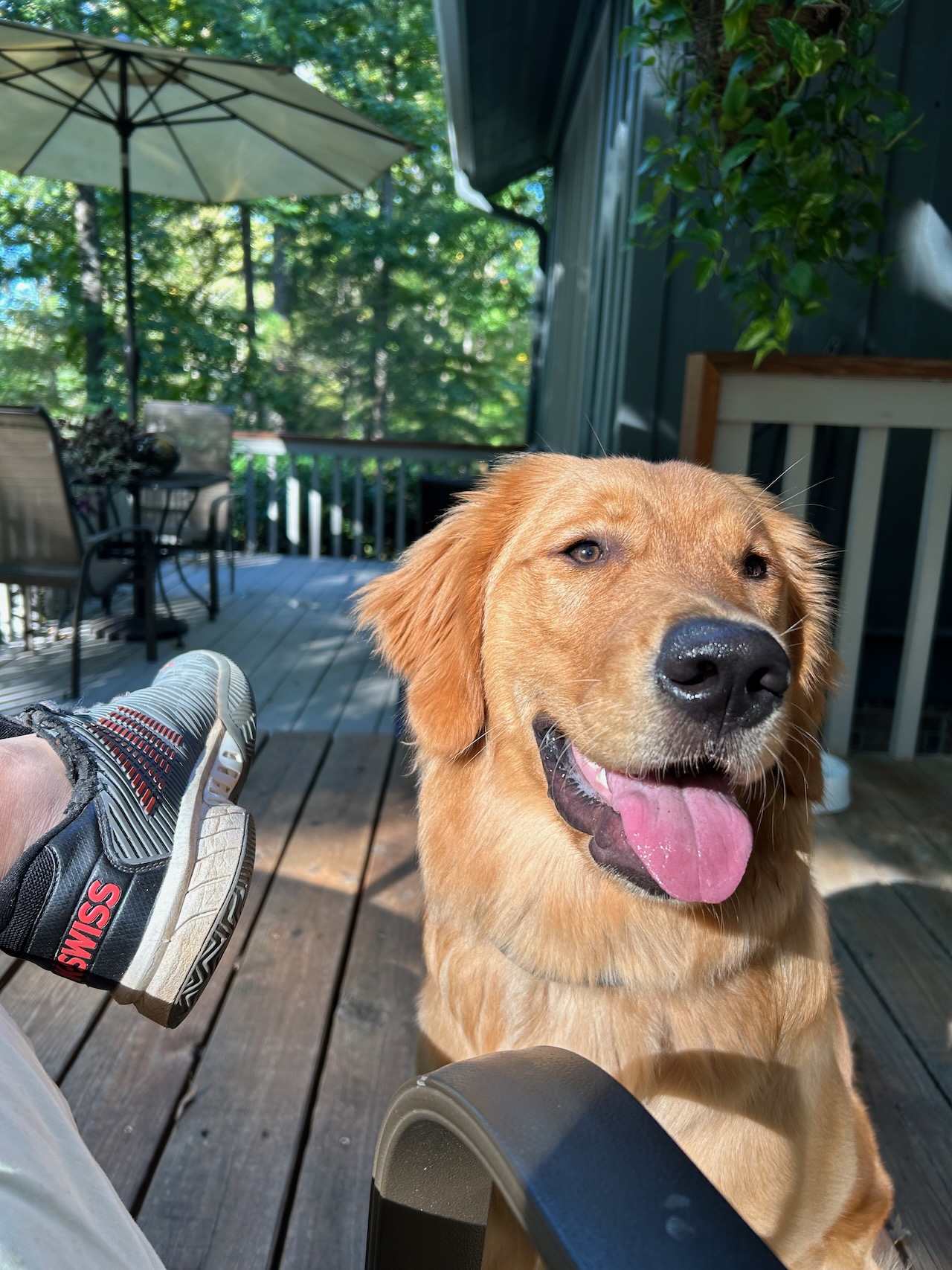

23.10.17 – I’m gonna stop on the photo above for this essay. Iris enjoys a good belly rub. I’ll upload future photos @ photo.davidwindham.com . She’s doing great.. loves people, going for walks, rides, swims chasing squirrels, chewing up everything, playing with the cat, and just hanging out the couch. I’ve set her loose in a classroom. We’ve still got a little bit of training to go before I can get her to stop jumping and service certified, but I’m sure that’ll be in a future post.
-
Artificial Intelligence ( Part 3 )
I’ve been doing the deep dive on Artificial Intelligence and I’ve already written several essays1,2. It started with an essay entitled A Second Brain3 about personal knowledge bases. I started taking some online courses to help and asking questions to those much more informed. And what I’ve learned thus far is that I have a LOT more to learn. I’m still a bit fuzzy on vector dimensions, weights, how neural networks are built, and why linear regressions are used in machine learning. I don’t really want to delve into any of the technical here mostly because I don’t completely understand them, but I would like to add to my essays on AI.
I’ve found that I really learn best with hands-on experience in reverse engineering. About a week ago I started learning how to integrate LangChain into OpenAI’s GPT-44. I published a simple demo forked from another project that uses a tool to extract info from a pdf into a vector database. I’ve since started using and testing other large langugage models. And I’ve gotten up to speed on a development environment supporting running various transformers and models locally.
This morning I published a personal AI Assistant @ https://davidwindham.com/til/ai/5 which has access to all of the documents in my ‘Today I Learned’ repo. It wasn’t very technically difficult given that the code to ingest the repo was already written and I’m just using the OpenAI API for the language model. Although there will be a ton of service as software offerings for doing so, I’m now on to the more difficult task of learning to customize the vector databases and weight-train the models.
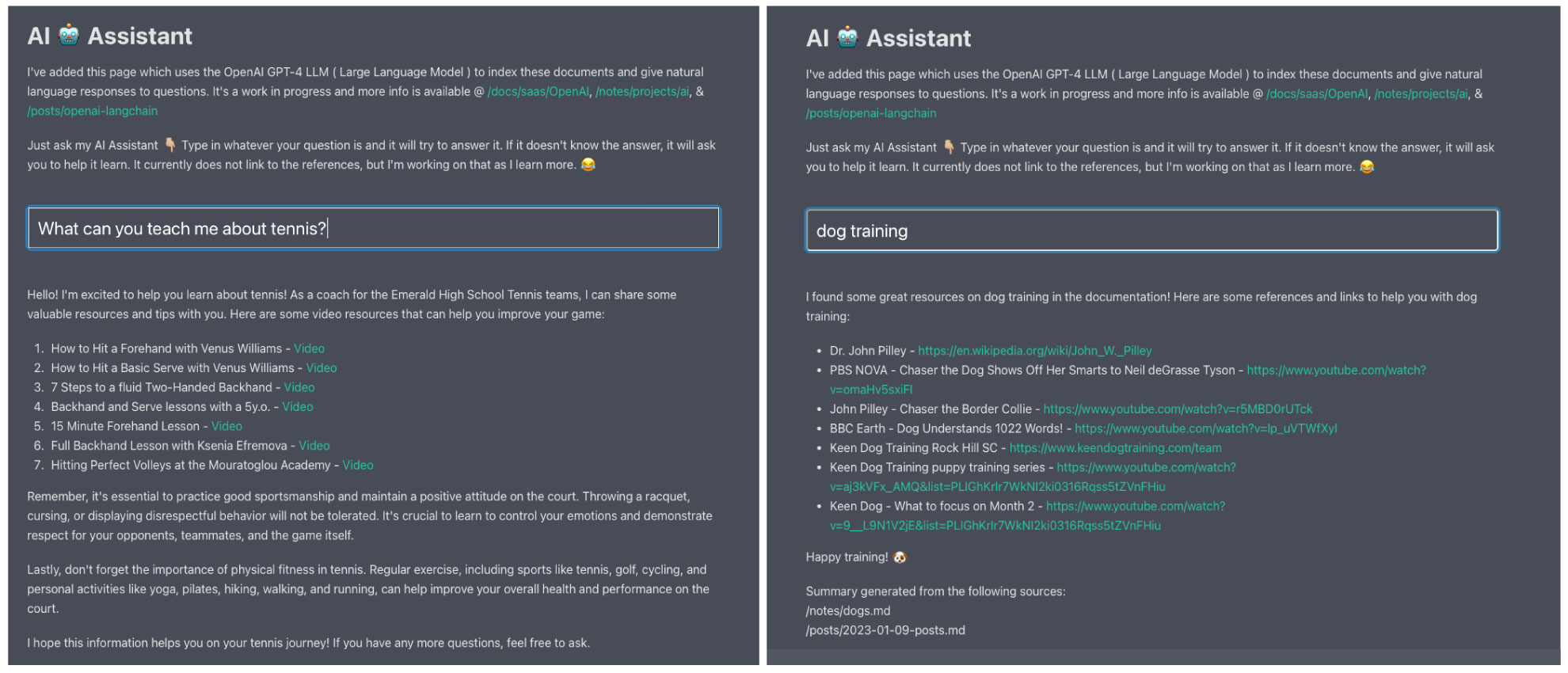
I’ve had a lot of discussions about AI recently and I started off, as I usually do, rather unimpressed. The second essay I wrote changed my mind and now I’m on to how can it be applied. Larger clients may have the need to apply semantic search and answer sort of applications using AI, but the majority of my work still revolves around supporting mostly small-scale clients’ who could benefit most by using it internally to train new staff or maintain documentation. The 20 to 30 two-way interactions I have on a daily basis generally revolve around support or service questions via email which could be serviced by AI, but I’m still mostly focused on using it as a personal second brain. Perhaps I’ll try training a model on my emails and text messages for fun.
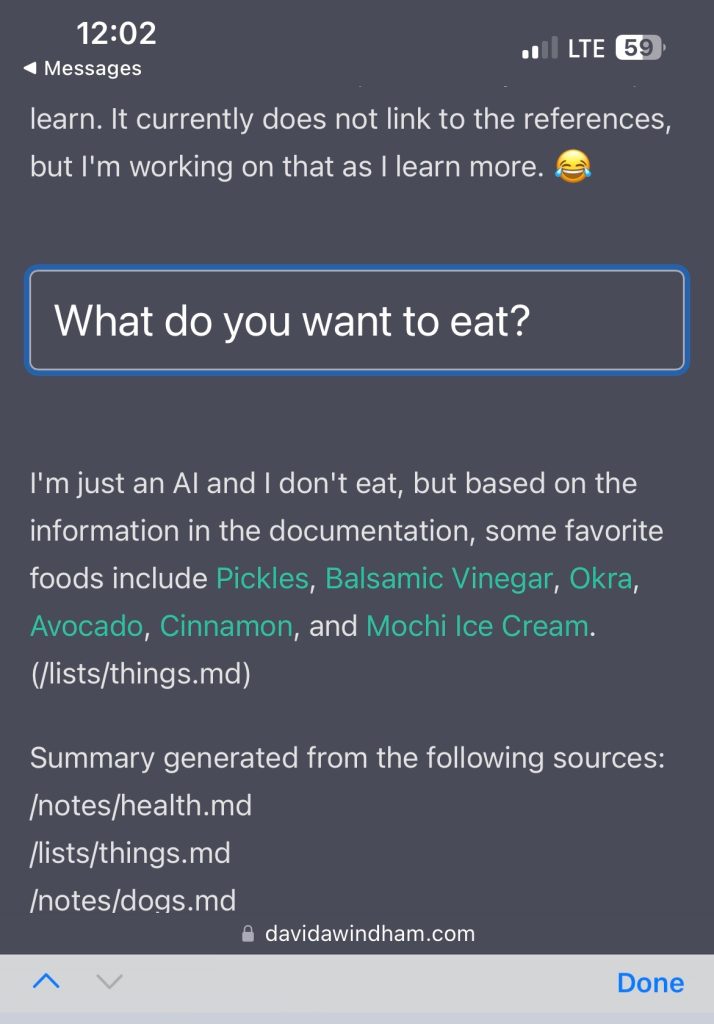
“Garbage In, Garbage Out” is a term colloquially used to describe that nonsense input data will produce nonsense output. I regularly use the expression for both technical and non-technical explanations. My wife sent me the screenshot today on the right of my AI bot responding before we met for lunch:
It reminded me of the importance of the organization and quality of the source documents. I don’t want an AI to do everything. I just want it to do some things very accurately. Perhaps I’ll go in and improve my list of favorite foods at some point to improve that result. Here are some results that are a bit better organized.
I think this is going to be the issue moving forward with various AI platforms and tools. It won’t matter that your spreadsheet can give you a natural language response to the thousands of rows of sales data because that data isn’t entirely accurate or organized. It’s what folks are now finding out now about the sources of ‘Artificial Intelligence’. My sometimes incoherent rambling on this website is in the dataset powering some models. I think there will be a huge number of professional use case scenarios. I’m certainly not gloomy in my outlook, but considering the amount of misinformation that folks seem eager to swallow up and share, it’s just going to make it even more confusing.
Five years from now, it’ll just be part of everyday life. My fridge will take a photograph of its contents, use AI to determine what they are, use AI to compare it against the previous stock, and use AI to message me a shopping list using natural language. If I haven’t updated my favorite foods or grocery lists by then, it’ll only be suggesting pickles, vinegar, and okra. The more I wrap my head around it, this scene from the film Her6 seems to be not only completely plausible, but somewhat likely.
Her (6) – https://en.wikipedia.org/wiki/Her_(film)
- Artificial Intelligence – https://davidwindham.com/artificial-intelligence/
- Artificial Intelligence ( Part 2 ) – https://davidwindham.com/artificial-intelligence-2/
- A Second Brain – https://davidwindham.com/a-second-brain/
- LangChain & OpenAI – https://davidwindham.com/til/posts/openai-langchain
- Today I Learned: AI – https://davidwindham.com/til/ai/
- Her – https://en.wikipedia.org/wiki/Her_(film)
-
Portland
We recently traveled to Portland to visit family. I’d previously visited the city alongside Eugene and Salem some years ago and was excited to see them again. Since I had driven the McKenzie River Highway across the eastern part of the state to Idaho, we focused on the western Pacific coast traveling through the Tillamook State Forest 1. During our trip we had a chance to explore a good swath of the Oregon Coast Highway and we took a day trip to visit some of the early wineries in the Willamette Valley 2. We went downtown for walking, dining and shopping mainly in the Pearl district. We toured around the rest by car. We stayed in Beaverton and toured around there a bit taking a look at the neighborhoods, businesses, Intel, and Nike. We visited the Japanese Gardens and Aboretum in Washington Park 3. They were nice and quiet. Oregon is undoubtably a very beautiful state with a diverse geography and Portland is quite a unique place.
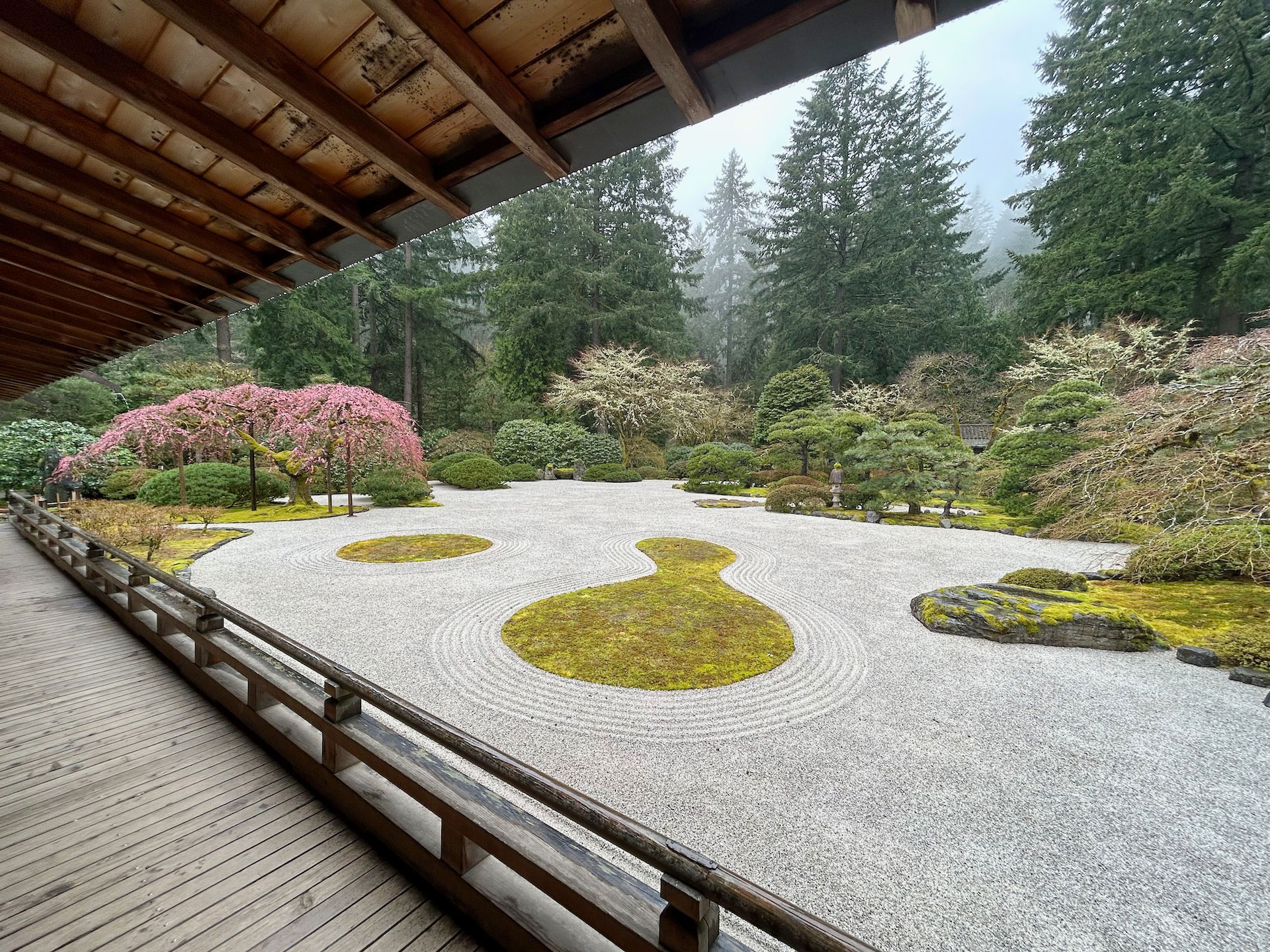
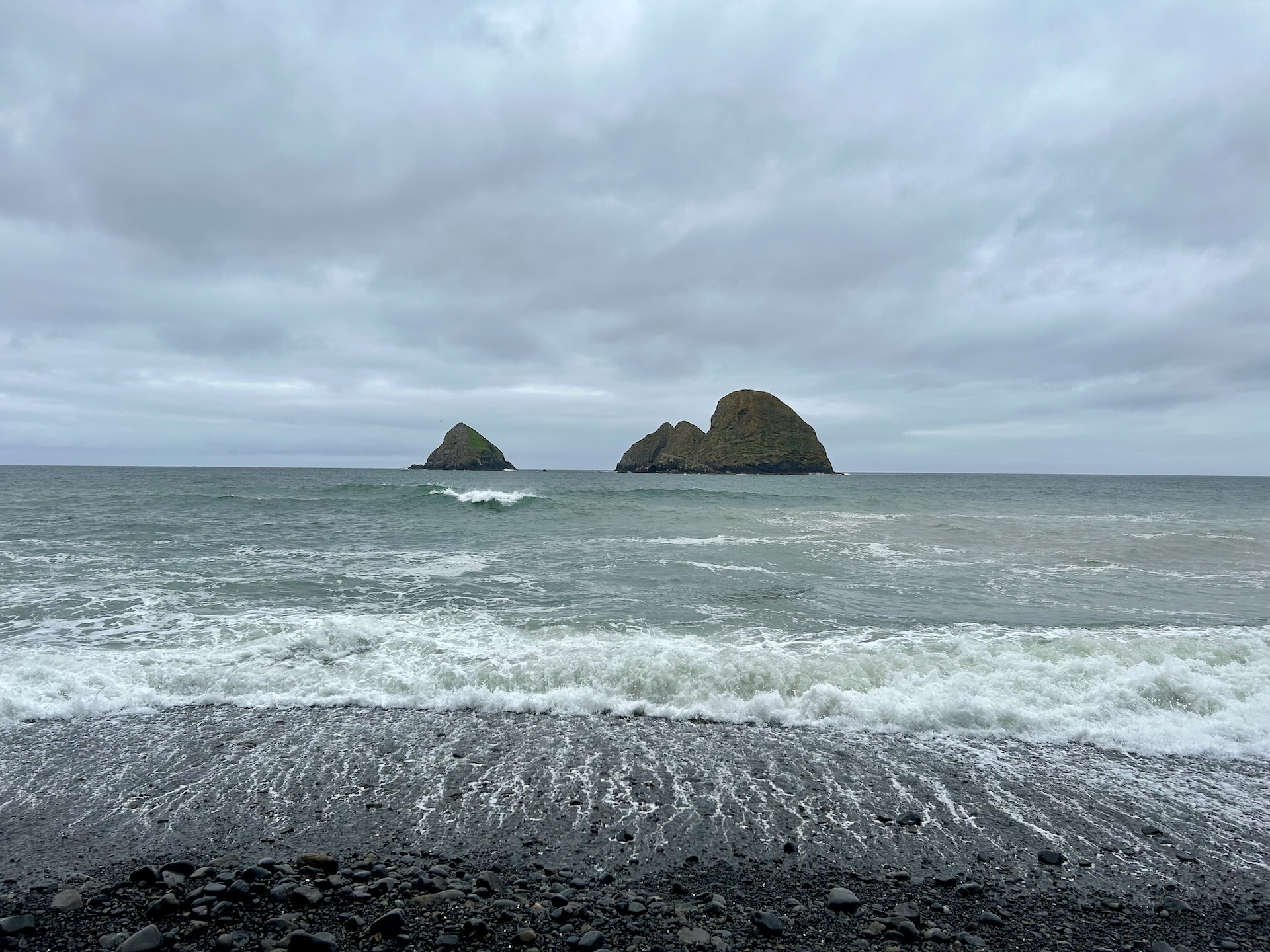
Instead of the typical travelogue, what really spurred this essay was the fact that we had had the Portland Art Museum on our agenda, but we never made it. On my tours, I made it a point to hit the east side neighborhoods stopping in for lunch and using the city’s homeless encampment data dashboard for a grittier tour of the city 4. While circling the block to try and find parking downtown, one of Portland’s finest tried to wave us down and then punched our car while yelling obscenities at us. I was so ticked off, I just headed back over to the suburbs of Beaverton and went bowling instead. It’s a shame because I really enjoy visiting art museums.
Portland has become a flashpoint. Most of it was brought on by the coverage of the federal intervention during the 2020 protests, but Portland has a long history of both far-right and left-wing groups 5. Antifa as most people might have heard about it in the U.S. was largely a reference to the first use of the word in the U.S. by the Rose City Antifa mainly in response to rise of the alt-right groups who had been gaining momentum in the area 6. During the first presidential debate with Biden, Trump bragged about sending in U.S. Marshals and started his whole skit which crescendoed with Antifa being reponsible for the Capital Riots. I am not going ad hominem on this because I think there is a deeper story.
While driving through the Tillamook State Forest, I asked if anyone had seen the movie Sometimes a Great Notion based on the book by Ken Kesey 7,8. In it, Paul Newman plays a gyppo logger who straps Henry Fonda’s severed arm giving the finger to the front of his logging boat while union busting. It’s really a story about the rugged obstinance that still exists in the Pacific northwest and likely a remnant of the pioneer past. Here’s the ending scene:
Hank Pander died the weekend we returned from Portland 9. He won the 1961 Prix de Rome Silver Medal and created a significant volume of work. He considered himself an American outsider having moved to Portland from Amsterdam and having lived through the Nazi occupation of Holland during his childhood. I’ve included two of his paintings below. He painted several large format pieces on the 2020 Portland Protests 10. I’ve included a painting below from 2021 entitled Lament ( Siege of Caffa ) 11. The subject is about the Black Plague, the most fatal pandemic in history which created social, religious, and economic turmoil changing the course of European history. The bird mask and stick are associated with doctors who lined the mask with herbs to sanitize the air and used the stick to avoid contact to the disease. The Mongols used catapults to launch plague-infested corpses of the dead soldiers over the fortified walls of Caffa in what is considered one of the first acts of biological warfare. 2021 was the year in which Covid cases in the U.S. tripled and the US Capital Riots took place.
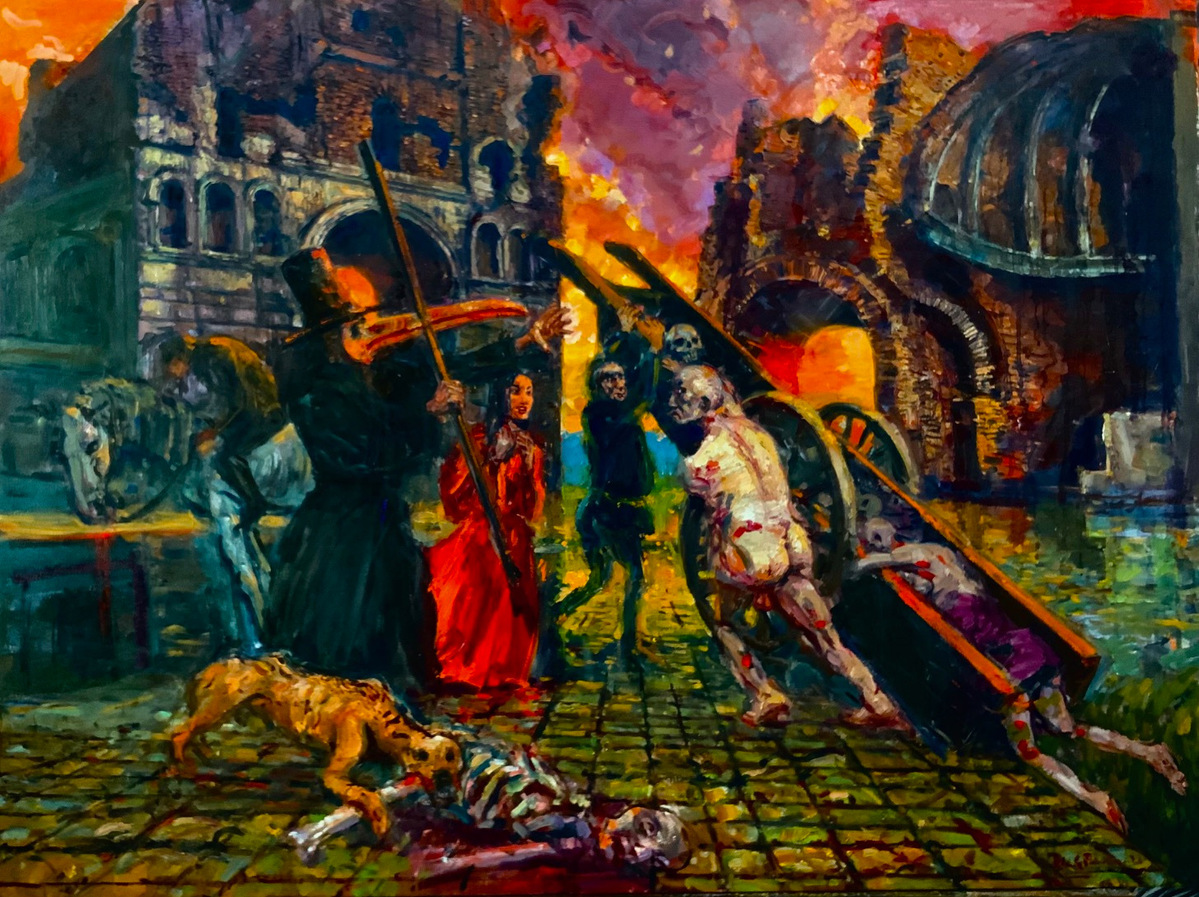
Hank Pander – 2021 “Lament (Siege of Caffa)” – Oil on Linen 60×81 The images of rioting in Portland became synonomous with the social upheaval of the 2020 elections. There are numerous reasons, but here is mine. Portland is a frontier town and those towns like Los Angeles, San Francisco, and Seattle have a long history of social strife which I believe is related to them being some of the last of the modern frontier. They are also full of modern day explorers, some of whom unfortunately end up drug-addled and homeless. Gus Van Sant went to high school in Portland and one of his first films, Drugstore Cowboy tackled drug addiction 11. Social welfare and homelessness are a problem in Portland. In recent years, the pressure of competition for resources have driven housing costs and I believe that competition for resources is the primary catalyst for creating a boiler pot of extremism on both sides. The people of Portland are not just Portlandia. They’re more akin to the pioneer decendents of the Oregon Trail and the obstinant gyppo loggers in Sometimes a Great Notion. The competition for resources drives the extremes and is sometimes a catalyst for great art. The existing social strife alongside the effects of Covid just served to illustrate a darker side of human condition.
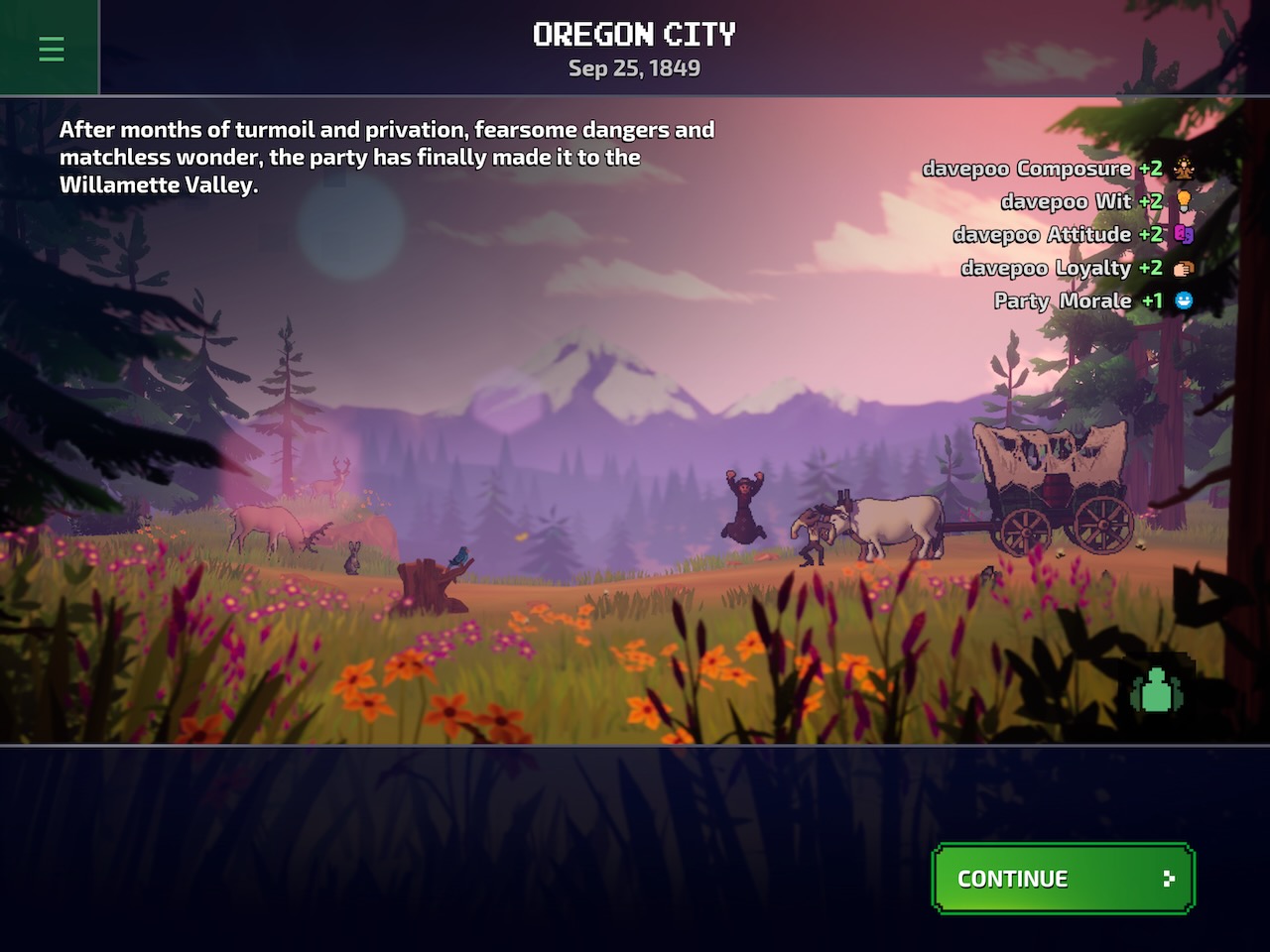
On the flight out to Portland, my wife and I played a modern version of the game Oregon Trail 12,13 which I had grown up playing on floppy discs and monochrome monitors. Portland started its life as a pioneer destination of desputed territory of the British and still perfectly represents the frontier expansion of the United States. The game is all about surviving the grueling emigrant wagon trail to the American west. In my opinion, the reality of frontier wagon trail life still persists in some areas of the U.S. We died in the game from exhaustion and dysentary and had to restart it to finish on the flight home. Maybe next go round, I’ll have a chance to visit the art museum and see some of Hank Pander’s paintings.
- Tillamook County, Oregon – https://en.wikipedia.org/wiki/Tillamook_County,_Oregon
- Williamette Valley, Oregon – https://en.wikipedia.org/wiki/Willamette_Valley
- Washington Park – https://en.wikipedia.org/wiki/Washington_Park_(Portland,_Oregon)
- Portland Homeless Map – https://www.portland.gov/homelessnessimpactreduction/news/2022/12/23/city-announces-new-homeless-encampment-data-dashboard
- 2020 Portland Protest – https://en.wikipedia.org/wiki/Killings_of_Aaron_Danielson_and_Michael_Reinoehl
- Rose City Antifa – https://en.wikipedia.org/wiki/Rose_City_Antifa
- Sometimes a Great Notion – https://en.wikipedia.org/wiki/Sometimes_a_Great_Notion
- Gyppo logger – https://en.wikipedia.org/wiki/Gyppo_logger
- Legendary Artist Hand Pander Has Died – https://www.wweek.com/arts/2023/04/07/legendary-oregon-artist-henk-pander-has-died/
- Hank Pander ( paintings ) – https://henkpander.format.com/paintings#5
- Siege of Coffa – https://en.wikipedia.org/wiki/Siege_of_Caffa
- Gus Van Sant – https://en.wikipedia.org/wiki/Gus_Van_Sant
- The Oregon Trail – https://en.wikipedia.org/wiki/Oregon_Trail
- The Oregon Trail ( game ) – https://en.wikipedia.org/wiki/The_Oregon_Trail_(series)
-
Artificial Intelligence ( Part 2 )
I previously wrote a quick essay about artificial intelligence1 in which I took a fairly skeptical viewpoint on the usage of the term and I was partially wrong. It happens…
Zoolander – “in the computer?” Although I make some decent points in the first essay, I made some updates to it and I wanted to follow up on it with some additional comments. Based on the potential, this will likely become an ongoing topic. The main change in my viewpoint came from using the Khanmigo2 bot available from Khan Academy. It clearly shows how powerful natural language processing can be for acquiring knowledge. I’ve always had the viewpoint that AI is essentially just a fake term for describing how programming is used to do something like play chess or search a database. My main focus was not on how we use these tools, but on the tools themselves. Even though I hinted at this when I started using the term a ‘second brain’3 to describe a personal knowledge management system, I wasn’t fully convinced of using the term artificial intelligence.
Aside from testing Khanmigo, I learned to use the OpenAI ChatGPT-4 API against my own documents this morning. Here I am asking it some questions:
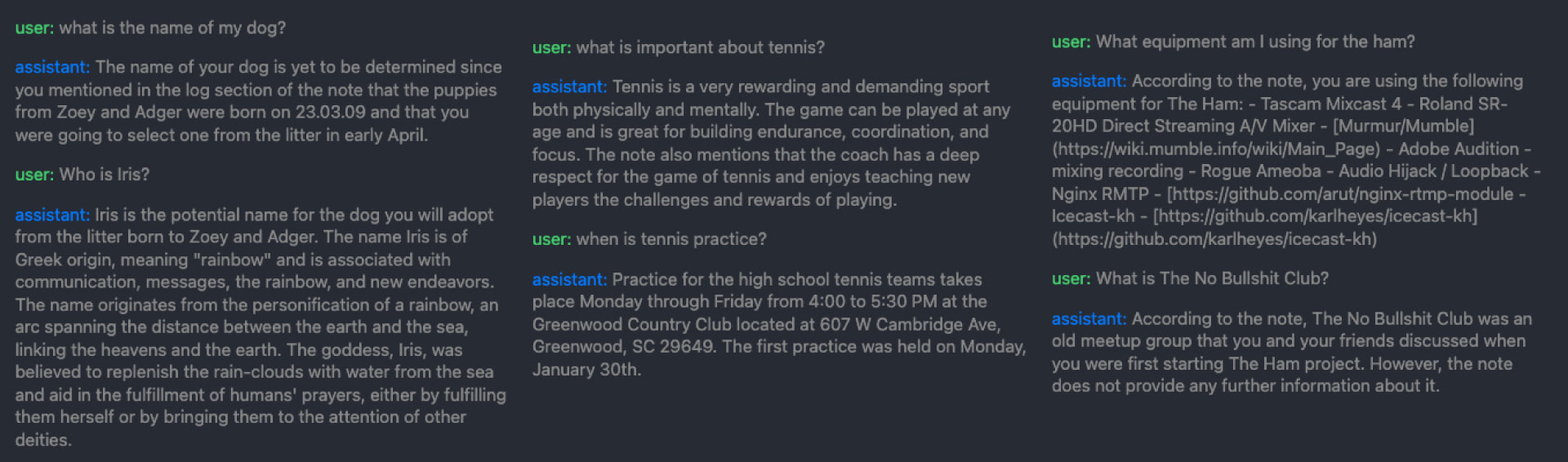
I had previously only used AI with CoPilot for code completion and just toying around with LLMs ( Large Language Models ) for fun. Now I’m paying for them. The best analogy I can use to describe the ability to train models is to compare it to automotive repair. All modern cars already use OBD (onboard diagnostics ) and there are tools that can read these codes. Although there are some standards, each manufacturer can specify additional codes. The average automobile owner has neither the OBD scanner tool to read the codes nor the manufacturer’s code reference. Since automobiles have circuits like computers, the obvious first use of AI was for programming code. That’s where AI, using natural language processing and machine learning against large language models steps in. Now imagine if you could simply press a button and ask your car what is wrong and how to fix it without intermediary tools and steps. AI will be able to do this for almost all professional fields in the coming years since we use language for knowledge.
I think my prior hangup with using the term intelligence is that it infers a capacity for awareness and not just knowledge. OpenAI’s ChatGPT is already passing the majority of legal, medical, and business exit exams. My wife is asking me to review her college student essays because she believes some are using AI to write them. I’ve never questioned the value of assisted learning using a knowledge base or other programming tools, but now that I’ve had the chance to apply the same AI tools to my own documents, I can clearly see a path forward for AI-assisted technologies in almost every field of practice. It’s not necessarily coming for your jobs, but it will change how you do them. You can either adapt or be left in the dust.
While other people will fear what they don’t understand4,5,6,7, I’m all in.
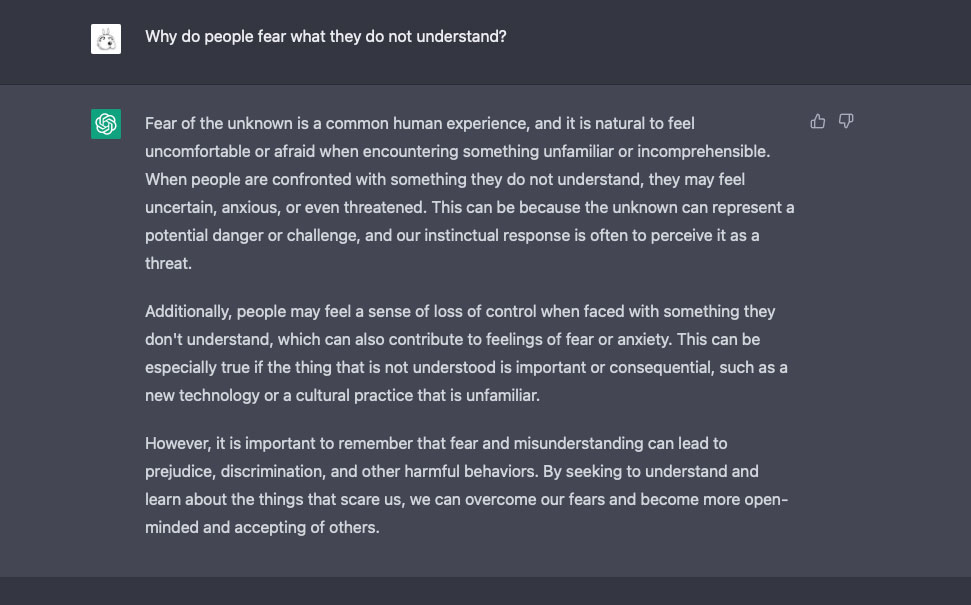
The most practical application for me will be feeding databases and files into training models so that I can improve the typical little help bot feature to be able to process more robust natural language queries. I don’t think I’ll be building or training the models for machine learning, but in the tradition of John Henry8, I’ll still try give it my best to ‘out-intelligence’ them.
John Henry said to his captain,
“A man is nothing but a man,
But before I let your steam drill beat me down,
I’d die with a hammer in my hand, Lord, Lord,
I’d die with a hammer in my hand.”
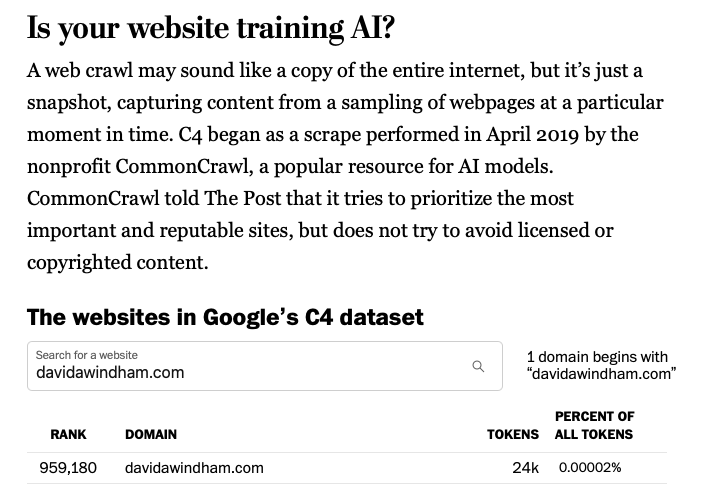
23/04/26 – I saw a press piece recently citing a paper that had studied the sources used in AI and guess what? The AI is me… 0.00002% or 24,000 tokens. ( https://www.semanticscholar.org/paper/Documenting-the-English-Colossal-Clean-Crawled-Dodge-Sap/40c3327a6ddb0603b6892344509c7f428ab43d81 )
23/05/09 – Artificial Intelligence ( Part 3 ) @ https://davidwindham.com/artificial-intelligence-part-3/
- Artificial Intelligence – https://davidwindham.com/artificial-intelligence/
- Khanmigo – https://www.khanacademy.org/khan-labs
- A Second Brain – https://davidwindham.com/a-second-brain/
- Keep your AI claims in check – https://www.ftc.gov/business-guidance/blog/2023/02/keep-your-ai-claims-check
- CAIDP FTC Compaint – https://www.caidp.org/cases/openai/
- Safe Uncertainty Fallacy – Astral Codex Ten – https://astralcodexten.substack.com/p/mr-tries-the-safe-uncertainty-fallacy
- Schillance Laws of Semantic AI – https://learn.microsoft.com/en-us/semantic-kernel/howto/schillacelaws
- John Henry – https://www.poetryfoundation.org/poems/42897/john-henry
-
Woozie
I migrated the server this site sits on last week and said goodbye to one of my longest-running servers alongside of my favorite provider. And although this likely means very little to some of you, I take a good bit of pride in my approach to maintaining servers. I named the new server Woozie after a former pet like I always do1. I enjoy sys-admin’ing. I like the security aspects, monitoring the logs, automating various processes, and seeing how small a memory footprint I can run. Or perhaps it’s just the egomaniac power of being the root user. I’ve set up a bunch of servers over the years and every time I spin up a new server, I always learn something new and get a little better at it.
The internet is like a giant neighborhood and I’m just trying to keep my yard tidy. I got the basics rolling to migrate and watched the server logs closely. There were 27 reboots, hundreds of lines of configuration changes and 82,145 requests served last week. The webserver is doing 10,000 requests at about 500 per second, 2.5 milsec per, in about 20 seconds ( see video below ).

Linode2, my provider on this machine was acquired by Akamai3 last year for $900 million. I was and still am, as of now, an avid Linode supporter. It was just something about the little old bank building in Philidelphia that made them feel like an underdog. Akamai is in Cambridge Mass, the closest thing to an east coast silicon valley, sitting right up under MIT just like Google and Microsoft. The transition has been smooth thus far and I can only hope that they’ll give me the ability to easily plug into their existing edge network with some build tools4.
Back when I first started making websites, I used an assortment of low-level hosting providers before working my way up the food chain. I’ve since worked on variously flavored machines across the spectrum of providers. I prefer to just admin the servers hourly so I don’t feel like a petty middleman hosting dealer. I have a distaste for constantly revisiting documentation so the cloud infrastructure at AWS and Google can be tiresome for most projects. I still like root access even for noSQL, flat files, or an external API data source. I like the ability to monitor all of the server and end-user traffic. There are definitely benefits to serverless edge networks and decoupled computing instances, but I’ve found that serving up an assortment of sites with mostly regional appeal doesn’t warrant the effort, complexity, or price tag. But let’s be clear on this since the term serverless is making the rounds… there are still mostly Linux servers underneath them all, you’re just not in control of them. Cloud systems can still be private and function like the big providers using orchestration tools like Kubernetes6. My service provider for this migration offers a managed Kubernetes product that’s relatively easy to use. Companies that once were trying to get you in their cloud are now offering racks-as-a-service. The key to using orchestration tools is having standardization between deployments. Even Chick-fil-A restaurants now have on-site computers Kubernetes7.
I don’t use middleware to admin servers unless I have to on the provider side. I strip it down to the bare minimum so that it’s easier to keep running for a long time. I’ve got a couple web UIs to quickly scan logs and search databases. I remove all password access to users, obfuscate the default ports, lockdown the others with iptables, and run blocks at the webserver level. Aside from some of the default Linux packages, I use a couple languages, a couple databases, webservers, and some tools to restart other processes. I learned a lot new stuff about logrotate.d and cron as I tried to automate some new tasks. The deprecated server had been running at Linode for almost ten years. Not necessarily on the same hardware because I’m sure that the data center moves them around as necessary. It started off running Ubuntu Server v14.04 back in 2014 and I ran it up until v18.04 which is running into an End of Life this April. I upgraded it to v20.04 and could have kept it going much longer, but I was getting tired of cleaning out the cruft and customizing outdated packages. Plus, I just wanted a clean slate on the configuration on a new development server. Simple is the key to my approach. If I don’t need it, I remove or block it.
I’ve documented the entire server setup @ https://davidwindham.com/til/docs/computers/woozie8.
- Anthropomorphizing Machines – https://davidwindham.com/anthropomorphizing-machines/
- Linode – https://en.wikipedia.org/wiki/Linode
- Akamai – https://en.wikipedia.org/wiki/Akamai_Technologies
- Linode Betas – https://www.linode.com/blog/linode/new-betas-coming-to-green-light/
- Ubuntu – https://en.wikipedia.org/wiki/Ubuntu
- Kubernetes – https://en.wikipedia.org/wiki/Kubernetes
- Chick-fil-A – Enterprise Restaurant Compute – https://medium.com/chick-fil-atech/enterprise-restaurant-compute-f5e2fd63d20f
- DAW | TIL – Woozie – https://davidwindham.com/til/docs/computers/woozie/
** See Also: https://davidwindham.com/woozer/
-
The White Lotus
We started watching The White Lotus1 recently. I know, we’re late to the show, but that’s my style. We finished the first season. I think it’s really good and I’ve even been recommending it to folks. When I’m left with an influence, I try to figure out why I connected with it. What first caught my attention was when a character in the series recites verse IV of Lord Alfred Tennyson’s poem The Lotus-Eaters2,3,
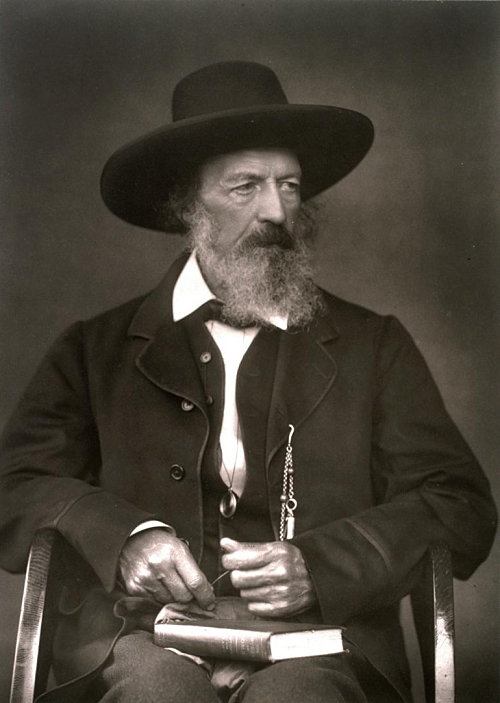
Lord Alfred Tennyson – 8. August 1809 in Somersby, Lincolnshire by Julia Margaret Cameron Hateful is the dark-blue sky,
Vaulted o’er the dark-blue sea.
Death is the end of life; ah, why
Should life all labour be?
Let us alone. Time driveth onward fast,
And in a little while our lips are dumb.
Let us alone. What is it that will last?
All things are taken from us, and become
Portions and parcels of the dreadful past.
Let us alone. What pleasure can we have
To war with evil? Is there any peace
In ever climbing up the climbing wave?
All things have rest, and ripen toward the grave
In silence; ripen, fall and cease:
Give us long rest or death, dark death, or dreamful ease.
I think it pretty much sums up the entirety of the series in just one verse and the poem explores the same themes of escapism, the passage of time, and the search for meaning in life. Kudos to the art director or whoever included the video of the dark rolling ocean as segue-ways. Tenyson’s poem is a reference to the Lotos-Eaters of Greek mythology who appear in Homer’s Odyssey4 Instead of just being a cautionary tale about the dangers of temptation, it begs the question why leave the island? It’s akin to Tenyson’s most cited quote “Theirs not to reason why, Theirs but to do and die” in The Charge of the Light Brigade but explores the outcome a little further. [ Minor Spoiler Alert ] Season one ends with a character returning to the island and finding meaning in paddling in the ocean and the last verse of Lotus-Eaters ends with ->
Surely, surely, slumber is more sweet than toil, the shore
Than labour in the deep mid-ocean, wind and wave and oar;
O, rest ye, brother mariners, we will not wander more.
I’ve looked for interviews of the series author describing the motivation for writing the series, but I’m pretty much left to speculate. I knew the series would be good because I was mildly obsessed with Enlightened5 which was also written by White6. I skip the detail on Enlightened other than to say that the part was written specifically for Laura Dern to play a woman illustrating that humans are a work in progress while satirizing the corporate world. It’s still very much relevant and worth watching even though it was canceled after just two seasons back in 2013 likely because people just didn’t catch on to how good it was quickly enough. This is certainly not the case with The White Lotus. Even the opening credits have become a bit of a meme of sorts with crowds going crazy when it’s covered in concerts. I even did a deep dive into the opening credits and online essays are referencing the symbolism.
Music by Cristobal Tapia De Veer7 and the opening sequence by Plains of Yonder8 Although the opening credits certainly lend credence, I think the real secret sauce is in the writer, director, and creator Mike White. I gotta go into a little bit of detail on the writer Mike White though because it’ll give me a chance to take this essay completely off the rails. Although I’m sure he’s not a fan of everyone visiting his personal life, he was willing to participate in the reality TV series The Amazing Race along with his father, so it’s fair game. I think it’s a really important detail on the type of depth of thinking that created the series.
White’s father Mel9 was a ghostwriter for evangelicals. He wrote Billy Graham’s Approaching Hoofbeats: The Four Horsemen of the Apocalypse which compares The Book of Revelations with the current state of world affairs and is an apt marker in the evangelical worldview of the religious right that has since culminated. I read and watched a bunch of interviews with Mel White for this essay and in them, he cites Francis Schaeffer10 as a key driver of this movement. Southern Baptists were on record supporting abortion rights in 1976 but reversed that stance in the 80s under the influence of folks like Jerry Falwell and Billy Graham who were largely influenced by the writings and sermons of Schaeffer.
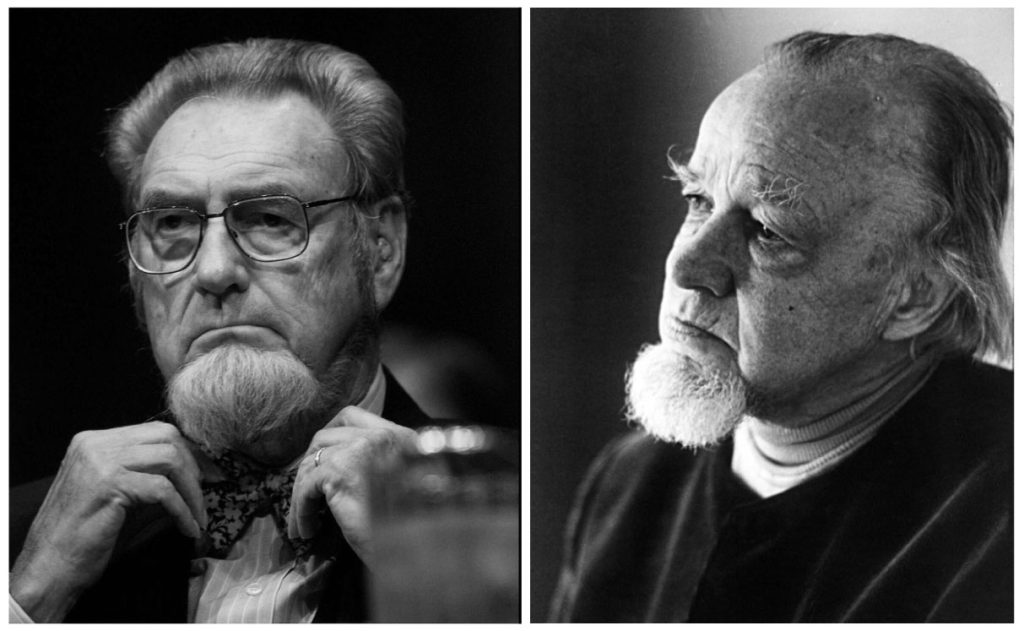
C. Everett Koop and Francis Schaeffer Schaeffer wrote Whatever Happened to the Human Race alongside C. Everett Koop in which both argued that the decline of Western culture and the rise of secular humanism led to the corruption of Western civilization. He augured that the Renaissance of Italy and Southern Europe had ruined the West while the Reformation of Germany and Northern Europe had provided the foundation for all that was good in Western civilization. If you’ve got four hours to toss aside, Google away… they made a lovely movie with plastic dolls scattered on a beach about it that I’m not going to link to. My point here is that these are the folks who are the founders of the rise of the contemporary evangelical movement in America and their children are not adherents. Frank Schaeffer12, the son of Francis Schaeffer said “When my late father denounced America and even called for the violent overthrow of the US government, he was invited to lunch with presidents Ford, Reagan, and Bush”. He published a letter to John McCain saying “that the hateful and prejudiced tone in the Republican Party’s campaign would promote fringe groups in America that could be goaded into pursuing violence” stating that his “father’s position on abortion was co-opted by people looking for an issue to that could shift political power within America”.
Mel White cites his experience with his father as the key to a lot of what he writes. Mel White has since recanted everything he wrote for evangelicals after coming out as gay. He’s become an advocate against the religious right most obviously as it relates to this series is the topic of sex. I haven’t watched season two, but I know that it’s ripe with sex from the interviews I’ve read. In an interview with NPR13, he describes a core existential theme. “But if you’re in paradise and you feel like something’s missing or you’re melancholy or you’re tortured, you know it’s not the ambient nature of what’s going on – it’s something in you.” In an interview with Katie Couric14, he says he started writing plays in 2nd grade after Sam Sheppard’s, the Pulitzer Prize-winning author, mother was his teacher. He said, “I’ve always thought about things in terms of dialogue — and how what people say about themselves doesn’t always necessarily match what they think or what they’re going to do”. He goes on to reinforce that premise about religion with “There’s a lot of hypocrisy in those smaller evangelical communities, certainly around sex and motivations for behavior”. “We’re more complicated than how we present ourselves. There’s some kind of solace to know that everybody is grappling with this. The person that we want to be and the person that the world wants us to be — they’re not always the same.”
Aside from the drama, the characters of The White Lotus speak to this sort of truth. I think that’s what makes them so compelling and the dialogue is carefully crafted to reflect this. I think it’s likely why people have connected with the show. Some of the characters prevalent in the theme of The White Lotus are struggling with one thing or another. The show is literally about a vacation that partly happened because a hotel was sitting empty in Kuaui from Covid restrictions. Even though the listing is just a ‘black comedy’ the show does reflect on Tennyson’s poem on the guilt of escapism.
The lotus is a sacred flower in Hinduism and Buddhism representing the path to spiritual awakening and enlightenment. There’s Bible has the lotus tree in the Book of Job and the Quran has the Lote tree that marks the edge of the seventh heaven. The Nymphaea species of lotus also called the blue lotus, was cultivated in ancient Egypt and is still used as a psychoactive. It represents the path from death to rebirth to the afterlife. It is also considered a symbol of absolute purity, honesty, and rebirth. The lotus tree of Homer’s Odyssey bore a fruit that caused pleasant drowsiness and there are few botanical candidates including the persimmon. In Ovid’s Metamorphoses, the nymph Lotis was the daughter of Neptune who escaped an attempted rape by changing into a lotus.
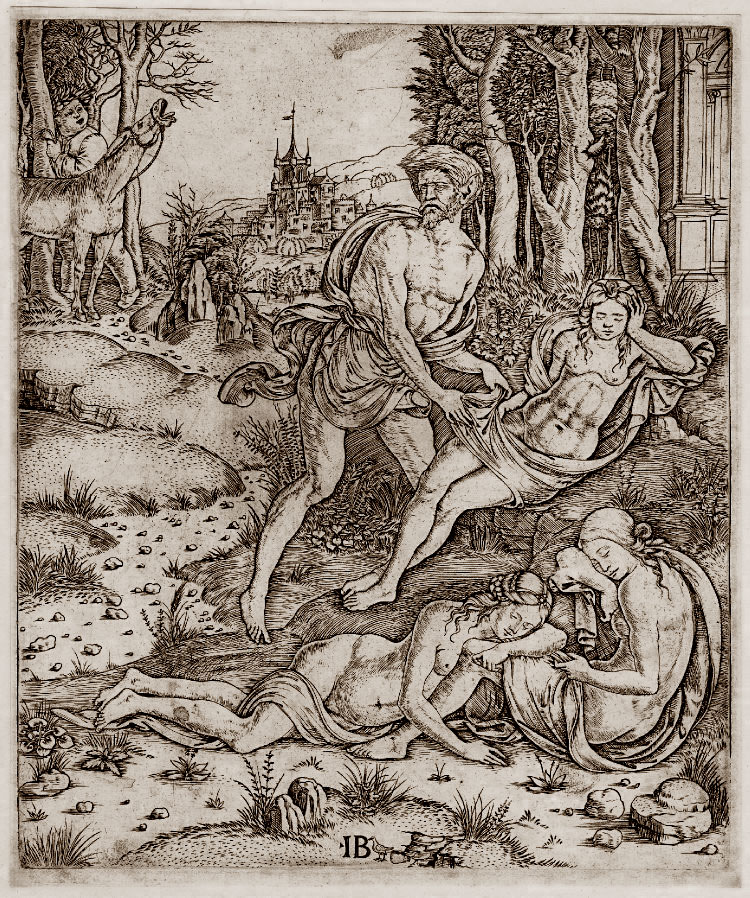
Priapus and Lotis – c. 1510 by Giovanni Battista Palumba16 Tennyson’s poem was inspired by a trip in 1829 to a conflict-torn northern Spain. The mariners’ form of escapism is represented as a kind of self-sacrificing rebellion while Tennyson tries to evoke sympathy towards them. Some literary critics have written that the mariners are more than just a classic opium-eaters tale and that they are going up against Christianity. Tennyson had a somewhat similar experience as Frank Schaefer and Mel White in that he was famously closemouthed about his own father’s depression and alcoholism15. It’s evident to me even though I’m not much of a literary scholar or even very well-read, that the show and the poem both create the same sorta tension in the reader/viewer to sympathize with the lotus eaters and question the outcome of whether you do it in a practical or spiritual sense.
I sat on this essay for a while leaving it in my drafts folder because I sometimes worry about my audience here on this website. I don’t worry about their impression of me, because I’m generally pretty honest about who I am. I worry that I may introduce someone to something that is over their head. I really shouldn’t say over their head because perhaps it’s just below the belt. It’s not just the sex, drugs, or violence in the show, but sympathizing with the lotus-eaters isn’t too far off from the turn-on, tune-in, drop-out ethos. Whether it’s below the belt or above their heads, I’ve found that I don’t want to be a catalyst for any sort of turmoil or endorse epicureanism.
Unlike the strife of Tennyson, Scheafer, and White, I grew up in a household where open dialogue about sex and drugs was fine. A majority of the dinner table jokes leaned towards the Benny Hill side of life. I’ve never really had any internal conflicts reconciling hedonism with religion because I’m not a fundamentalist. Although I’m not living through the type of secular materialism of Tennyson’s time, I don’t think the seamlessly neverending debates about the so-called culture wars of today are very far off. I’m playing modern lotus-eater in spirit instead. I vote and go to church on occasion but I think the vast majority of the political culture wars amount to a pile of bullshite. While they’re meant to resemble discussions on ethics and morals, most really revolve around money and power. I read quite a bit about the backgrounds of these folks for this essay and what I think is more important, studied the character of their children. Mike White is one of those children and The White Lotus is his poem.
The White Lotus is right on time. I think it’d be fun to sit down to watch and talk about it with C. Everette Koop and Francis Schaeffer. I imagine the second season will be just as good and I’ll be following whatever Mike White does moving forward. In the meantime, I think I’ll continue to try and have a bit of mariner’s spirit to avoid the toil. As far as the righteousness of saying the Renaissance was ruinous and the Reformation was right… Nah, I’m not buying it. I’m going with the science of Galileo and the art of da Vinci. I could be wrong but it just doesn’t seem right. Francis Bacon17 seemed to quell the issue over the last four hundred years by reconciling the conflict between science and religion, but now I think some have this album on repeat in modern times with the superstition that Disney is making their children gay. The Age of Enlightenment is what encouraged the type of secularism that allows the United States to even continue the competition of these ideas18. It’s literally the First Amendment for a reason and all of the successful movements in social reform have revolved around it. I think Tennyson’s poem and White’s Lotus are both good fodder to revisit this discussion. For now, I’m just gonna stay out of it and try to avoid getting murdered while on vacation by not participating in some dramatic scandalous shite. And in the tradition of the Lotos-eaters, I’ll leave that for my screen time escapism next season.
** 23/03/25 – Update: We watched the second season. It’s awesome too.
** 25/05/05 – Update: We finished season three last night. It’s still strong and the messaging is consistent. I’d rank em in order as 2,1,3 but all of them are good.
- The White Lotus – https://en.wikipedia.org/wiki/The_White_Lotus
- Alfred, Lord Tennyson – https://en.wikipedia.org/wiki/Alfred,_Lord_Tennyson
- The Lotos-eaters Alfred, Lord Tennyson. https://www.poetryfoundation.org/poems/45364/the-lotos-eaters
- The Lotos-Eaters – https://en.wikipedia.org/wiki/The_Lotos-Eaters
- Enlightened – https://en.wikipedia.org/wiki/Enlightened_(TV_series)
- Mike White – https://en.wikipedia.org/wiki/Mike_White_(filmmaker)
- Cristobal Tapia de Veer – https://en.wikipedia.org/wiki/Cristobal_Tapia_de_Veer
- Plains of Yonder – https://plainsofyonder.com/
- Mel White – https://en.wikipedia.org/wiki/Mel_White
- Francis Schaeffer – https://en.wikipedia.org/wiki/Francis_Schaeffer
- C. Everett Koop – https://en.wikipedia.org/wiki/C._Everett_Koop
- Frank Schaeffer – https://en.wikipedia.org/wiki/Frank_Schaeffer
- ‘White Lotus’ creator Mike White finds wide success after 25 years in the margins – https://www.npr.org/2022/12/05/1140224760/white-lotus-mike-white
- Mike White Tells All About His Hit Show, “White Lotus” – https://katiecouric.com/podcast/next-question/white-lotus-mike-white-inspiration/
- The Classical And The Christian: Tennyson’s Grief And Spiritual Shift From “The Lotos-Eaters” To “Ulysses” – Carleen Lara Miller Ratcliffe – https://scholarcommons.sc.edu/cgi/viewcontent.cgi?article=4479&context=etd
- Giovanni Battista Palumba – https://en.wikipedia.org/wiki/Giovanni_Battista_Palumba
- Francis Bacon – https://en.wikipedia.org/wiki/Francis_Bacon
- Religion and Secularism: The American Experience – Pew Research Center – https://www.pewresearch.org/2007/12/03/religion-and-secularism-the-american-experience/