-
Laravel
I like to dabble with new development frameworks for fun. I’ll just check out whatever is the trending and run through a basic setup. Projects like https://github.com/gothinkster/realworld are like a toy for me. I’ve worked with a limited group of frameworks more extensively because I’ve built or worked on projects with theses: Drupal, Django, Rails. Sinatra, Meteor, and Express. I know I’m a bit late on Laravel, but it’s still new to me. I think I started seeing some We Work Remotely gigs rolling through my reader and those sent me down the Laravel1 rabbit hole.
Something about Laravel gelled with me. I wasn’t exactly sure at first… in fact, I was a bit skeptical ( I think I’m getting that way in my old age ) and I didn’t think that a PHP project could grab my attention. I mean I figured I’d be digging into Elixer and Pheonix and I was recently digging on GoLang and Revel. Although most of what I do is simple content and file management running on WordPress. It’s seems like for most of the other projects it’s the exact the same stuff different framework… authentication, permissions, routing, some models, and nowadays.. maybe consuming or producing an API. I don’t think it was just me falling back on old trusty PHP. I thought maybe I just like Laracast2 like I liked Railscasts. One afternoon after a session of Laracasts, I decided that I’d figure out who the host is since I’d been watching and listening to his instruction. I found an interview3 with him about how he started with Laravel and he mentioned the comments. That’s it. That’s what gelled with me. It’s the comments… and the formatting, spacing and overall attention to detail in the structure. Here is the Routing/RouteAction.php file.
namespace Illuminate\Routing;

use LogicException;
use Illuminate\Support\Arr;
use Illuminate\Support\Str;
use UnexpectedValueException;

class RouteAction
{
    /**
     * Parse the given action into an array.
     *
     * @param  string  $uri
     * @param  mixed  $action
     * @return array
     */
    public static function parse($uri, $action)
    {
        // If no action is passed in right away, we assume the user will make use of
        // fluent routing. In that case, we set a default closure, to be executed
        // if the user never explicitly sets an action to handle the given uri.
        if (is_null($action)) {
            return static::missingAction($uri);
        }

        // If the action is already a Closure instance, we will just set that instance
        // as the "uses" property, because there is nothing else we need to do when
        // it is available. Otherwise we will need to find it in the action list.
        if (is_callable($action)) {
            return ! is_array($action) ? ['uses' => $action] : [
                'uses' => $action[0].'@'.$action[1],
                'controller' => $action[0].'@'.$action[1],
            ];
        }

        // If no "uses" property has been set, we will dig through the array to find a
        // Closure instance within this list. We will set the first Closure we come
        // across into the "uses" property that will get fired off by this route.
        elseif (! isset($action['uses'])) {
            $action['uses'] = static::findCallable($action);
        }

        if (is_string($action['uses']) && ! Str::contains($action['uses'], '@')) {
            $action['uses'] = static::makeInvokable($action['uses']);
        }

        return $action;
    }

    /**
     * Get an action for a route that has no action.
     *
     * @param  string  $uri
     * @return array
     */
    protected static function missingAction($uri)
    {
        return ['uses' => function () use ($uri) {
            throw new LogicException("Route for [{$uri}] has no action.");
        }];
    }

    /**
     * Find the callable in an action array.
     *
     * @param  array  $action
     * @return callable
     */
    protected static function findCallable(array $action)
    {
        return Arr::first($action, function ($value, $key) {
            return is_callable($value) && is_numeric($key);
        });
    }

    /**
     * Make an action for an invokable controller.
     *
     * @param  string $action
     * @return string
     *
     * @throws \UnexpectedValueException
     */
    protected static function makeInvokable($action)
    {
        if (! method_exists($action, '__invoke')) {
            throw new UnexpectedValueException("Invalid route action: [{$action}].");
        }

        return $action.'@__invoke';
    }
}
Simple as that. No benchmarks, no language preference, no new-fangled features. It’s just the aesthetics of the code. I think that’s part of the reason why everyone fell on Rails too. I’m the same way. If I’m really into something, I’ll take care to make sure that I’m systematically tabbing, formatting, and commenting the code. Yes, I know… it’s easy to run some post processing for any sort of formatting preferences, but I like to do it manually. And it’s that the sorta detail in Laravel that grabbed my attention. I try not to force a project onto a framework and I generally try pick the best framework for each project. Most of the time, it’s generally the framework that makes it the quickest and easiest. Although I’m a bit late on this one, I’m sure I’ll do a follow up on Laravel when I’ve got a decent project under my belt. In the meantime, I’ll be looking to make someone’s project fit into Laravel relatively soon.
1. Laravel – https://en.wikipedia.org/wiki/Laravel
2. Laracasts – https://laracasts.com/
2. Jeffrey Way – PHP Sydney – https://www.youtube.com/watch?v=kHoVE0kCnZg
-
Privacy and Cookies
I had a chance this weekend to dabble with this personal site. One of the things I’ve been meaning to do is address the European Commissions General Data Protection Regulation, and in particular the European Commission’s Cookie Policies. So I’ve built out a privacy policy and cookie policy for this website even though I don’t use any third party APIs or share data with any third parties. When I advise clients on the use of privacy policies on their websites, I generally express my ineptitude with legal matters and refer them to a set of standard privacy policies and/or their own counsel. Aside from this new privacy policy, the only other legal document on this site is my Independent Contractors Agreement.
Honestly, I glad the EU has addressed privacy concerns on the web. It’s a mess out there and I’m particularly fond of maintaining my privacy. For the uneducated, many websites use a litany of methodologies for tracking your every move. The most disturbing to me are the numerous ‘social media’ plugins that, while appearing to be useful to a website operator, serve a dual purpose of tracking their users. And although this is not likely ‘news’ to many of you, those companies will track your every move online and compile that data into a product they sell. You and your data are the product. I’m not a fan, and I don’t allow any third party access to any data from this website. Although, let me be more clear on that… the data that travels to and from the data center in which the server that this website is hosted is not in my control. It’s more than likely that data is being tracked by the NSA and whomever they contract or partner with. I’m also unsure of the protections you have from you service providers to eavesdrop on your data transmissions.
Regardless of your lack of privacy and my efforts here to stave off those intrusions, I’m being as compliant and protective as I can of my own personal liability by including privacy policies within this website. Because this website uses a combination of custom cookies made to interact with returning users on the homepage and cookies provided by the content management system, I’ve got to display a notice to new users within the European Union informing them of the privacy policy and use of cookies. There are plenty of pre-built EU Cookie law scripts and plugins for websites. As is usually the case, I like to build my own solutions to these types of problems.
I’ve used a pretty simple method to implement the notice. I’m already setting a custom cookie to anyone who visits the homepage. I store the users name in that cookie if they respond to the terminal question “What is your name?” I do this so that when they return, the site will say “Welcome back [whomever]”. However, many users arrive at this site through various other pages and I need to implicitly have the user to agree to my policy on every page. I’m going to use the most common solutions of providing a small pop-up asking for permission. I’m doing this by checking for the cookie using javascript. I’m using https://github.com/js-cookie to check for the cookie and the script below to set and notify the user.
/*============================================
       EU GDPR cookie notification
==============================================*/

$( document ).ready( function() {
    cookieNotification();
});
var hideCookieNotification = function() {
    $( '.js-cookie-notification' ).delay(5000).fadeOut( "slow" );
    Cookies.set('EU-GDPR-Cookie', 'true', { expires: 365 });
};
var cookieNotification = function() {
    var setCookieNotification = function() {
        $( '.js-cookie-notification' ).fadeOut( "slow" );
        Cookies.set('EU-GDPR-Cookie', 'true', { expires: 365 });
    return false;
};
if ( Cookies.get('EU-GDPR-Cookie') === 'true' ) {
    console.log('EU GDPR cookie notification set');
    } else {
    console.log('EU GDPR cookie notification not set');
    $('.js-cookie-notification').css({ 'display' : 'block'});
    $('.js-cookie-notification').find('.js-cookie-notification-hide').click( setCookieNotification );
    };
}
Once the site has confirmed that you haven’t previously visited, the javascript will then initialize a pop-up asking permission to use the cookie. Here’s the HTML and CSS:
.cookie-notification {
	display: none;
	padding:30px;
	position: fixed;
	bottom: 10px;
	left: 10px;
	background-color: #fff;
	opacity: 0.8;
	border-radius: 15px;
}
If you’re trying to do this at home, you’ll need a tool to edit your cookies because clearing them out every time you want to test is a pain in the arse. I recommend http://www.editthiscookie.com/ for managing cookies. You can see how I’ve added all of this to my site in my git code repo commit. I don’t think my efforts here are really going to help anyone out there protect their privacy, especially considering this website is about as private as any on the open web. The little pop-up box is really just another little annoying part of the using the web, albeit with less consequences than the invasion of your privacy. Really this little project was just a way for me to waste some time on a chilly morning even though I know I have other work and laundry to do.
-
Data Mining Our Viewing Habits
I’ve often thought and talked about this over the years and my better half and I were talking about it last night in bed while searching the idiot box for something to watch. In case you’re wondering, we decided to finish off Blandings1 because we like snarky British comedy. We were debating how good the recommendations were from Netflix and more importantly what kind of conclusions could you draw form our television viewing habits. I’ve often said that if you’ll give me access to your bank statements and your Netflix account I can tell more about you than from any other sources. I think I’ve got a pretty firm grasp on how much data mining for personality traits is happening online. It’s one of the primary reasons I dropped social media years ago. I try to be forthright and upfront about who I am… or do I? Does anyone? Is that just another layer of the ‘ego onion’ so to speak.
I pull in, publish, and store all of my music listening habits. I document my ideas about life on this website. I publish my work history and projects. I know most of it is relatively polished public relations in a sense. Not exactly bullshit, but close. I know that social media is full of it. I know first hand because I had family involved in the ‘old media’ before everyone became their own PR agents online. I mean, the concepts of ‘reality’ television, the hyper-personal online publishing outfits, the fear mongering of the ‘going out of business’ journalism. All of it really plays to some vulnerabilities of the psyche. Yeah yeah, so what does this have to do ‘data mining video viewing habits’. Back when I still thought very idealistically about the future of internet, I didn’t understand how we turn this sort of data into weapons designed to make us feel certain ways as a call to action, where most often the action is either buy this or pay attention to that. As a kid, I vaguely understood how companies gathered data on what television viewers or radio listeners are doing. As an adult, I think I understand exactly what data is being passed around and why. I use the word ‘think’ because I thought I knew everything as a kid, and I’m expecting that as I grow older, I’ll reflect back on everything I didn’t know as a middle-aged adult.
The question is… would I publish my entire viewing habits. Every article I read, every video I watch, every image I see? I’m not talking about a curated sorta, look at my bookmarks or try to trace my interest based on my upbeat social media posts sorta data. I’m talking about all the other stuff… the odd medical searches about popping some sort of growth on your ear, the curious pornography related search because I didn’t know what a ‘fleshlight’2 is, the queries into the intra-webs about the crazy belief systems of others, the cyber stalking of folks I work with. You know… that sorta stuff. Anytime someone ask me to look at their computer, I always tell them “you know, I’ll be able to see every-thing you do” to which I almost always get a bit of hushed reaction. It’s only the very defensive sorta ‘I got nothing to hide’ folks who never drop the laptop off or follow up on my fixing their phone or computer. I had one not too long ago where I did an extra swipe I wished I’d never seen on the phone while syncing a bunch of email addresses for an associate. So, last night while we ran through our Netflix list we pondered really digging into creating a system for defining video qualities as they relate to personality. My wife, a psychologist, starts suggesting some ideas that relate almost entirely to previous behavioral and personality studies. Meanwhile the art school flunky in me starts in or trying to categorize filmmaker styles. As we were discussing it, and as I have known, it’s very easy to determine personality type and other personal information based on artistic preferences. So maybe companies like Arbitron3 having been doing it all along. Maybe the rise of ‘talk’ radio was just a precursor to the modern publishing landscape of political journalism. Maybe?
Will I be publishing all of my television or web viewing habits? It’s doubtful. I pride myself on a bit of mystique. Sometimes, because I track my music listening habits, I’ll quickly flip past a song so it doesn’t log when I find myself engaged in something that might be considered unsophisticated or distasteful. At one time, I was pulling in viewing data from Netflix. They don’t offer a public facing API anymore so I’m sure I’d have to sign up and be vetted as some sort of content partner to even get close to pulling data4. I’ll stick with publishing a curated version of me. I’ll publish my list of favorite shows, I’ll give you a list of my bookmarks.. the public ones. I’ll share this or that on this website. As much as the informality of my amateurish writing style seems ‘off the hip’, it’s all somewhat carefully curated just like almost everything else. This is my point, while Netflix or Amazon’s ‘suggestions’ might seem to be there to help you. It’s really just a measure of how much data those companies are collecting on you. And while Facebook and others might give you an ‘export’ option, trust me… your data is not leaving that company.
So being the opportunist that I’ve grown into, I’ve added the ‘movie personality’ project into the grab bag of fun side projects I’d like to build. The entirety of every major studio film made can’t be more than a couple hundred thousand at this point. I could probably even get that in a dataset from somewhere like IMBD5. And then my wife and I could assign all kinds of hypothetical taxonomies to each film based loosely on our own personal understanding of the film. Then I could make all this data publicly available knowing how powerful a tool it would be. You could pipe in your own viewing habits to figure out your personality type, net worth, marital status, emotional stability, and intelligence quotient. Don’t worry. I’m pretty sure this project already exists. And I’m sure that when Netflix asks you tonight who’s watching… they already know. And at some point your YouTube viewing data is going to determine your health insurance rates. I’m pretty sure mine are going to remain low because the algorithm will misappropriate my interest in medicine due to that time I binged watched a bunch of surgeries6 intended to train medical students.
1. Blandings – https://en.wikipedia.org/wiki/Blandings_(TV_series)
2. Fleshlight – https://en.wikipedia.org/wiki/Fleshlight
3. Arbitron – https://en.wikipedia.org/wiki/Nielsen_Audio
4. Netflix Backlot – https://partnerhelp.netflixstudios.com
5. MovieDB API https://www.themoviedb.org/documentation/api
6. Mayo Clinic Surgical Technique – https://www.youtube.com/watch?v=osgndmRBjsM
-
Glenridge Circle
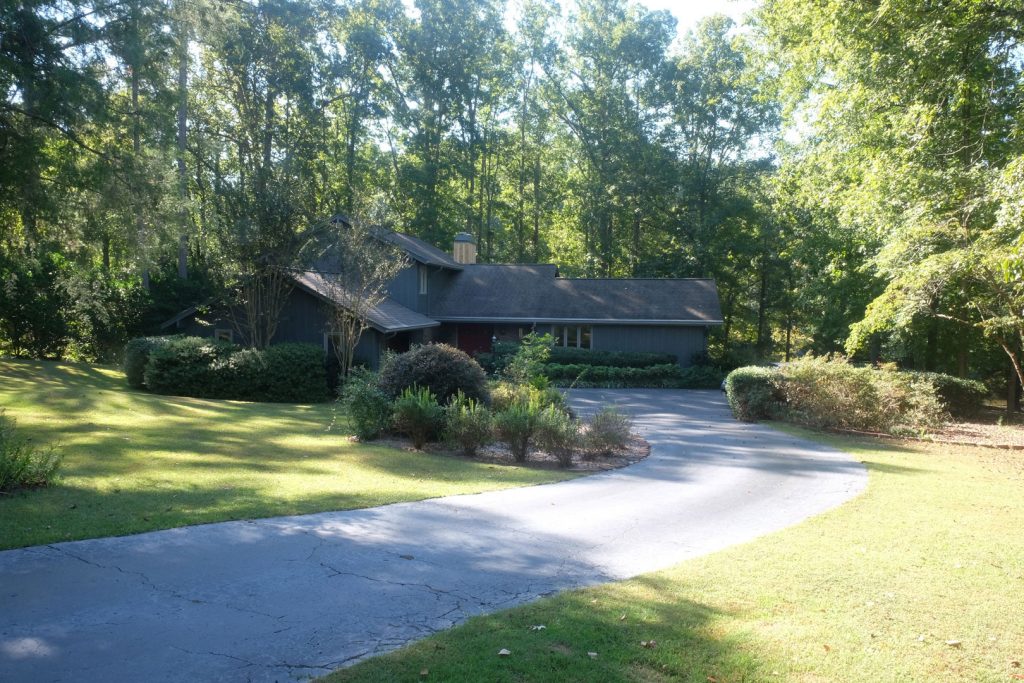
We bought this house almost three years ago. And I say bought in the most liberal sense of the word. The bank will give us the title as soon as they get their money. We knew before we bought it that we would be going through a series of renovations. You can see the chimney being renovated in the photo above that we had done last month. Our last three houses have all involved little improvement projects and I’m just now starting to get decent at handling these projects. I’ve told the better half that this is the year I start doing some of them myself and I’ve already begun to acquire the tools. Every man needs tools right? Regardless, the reason I’m thinking of this is because I also like to publish a list of home repairs and improvements to communicate with contractors so that, if the time comes, I have a record of everything that’s been done to the house. Here is the page I’m using for this house1.
We are about to begin one of larger renovations removing a wall from our kitchen and living room. I’ve worked up the specs and drafts for our quotes from contractors. It’s been a learning process for me. The process of dealing with contractors and bids can be a bit tricky to navigate and that’s an entirely separate post for another day. I’d like to focus on why we’ve focused our attention on renovating this home. We’ve been it a little over two years now and have made some minor improvements. We like the neighbors and hood. And although we considered other moves before we came here, we’ve been happy with this house.
I created a business built on real estate ten or so years ago now. I had a real estate license in three associations at one point, so that I could access the data for the multiple listing services. I still enjoy the real estate game. And I say game because, not unlike any business, there is a certain acumen needed for real estate. Homes, much like other major purchases tend to shed their value the moment they become occupied. It’s like driving a new car off the lot. In that respect, I’ve found that economic factors are the most important factor, but there are other more important issues I have when finding homes.
I remember buying my first house and my father was adamant in his “this is the best thing you can do”. That was 2006, they year before the market took at tumble and I was upside down within six months of purchasing the home. Live and learn… and what I’ve learned is that life is not a series of investments. You can’t calculate your life into net worth targets. You do however have to live with your circumstances everyday and I’ve found that the most important thing in a home is livability. Livability in the sense that it works for your life. And with that in regard, it’s the distance from work or the grocery store and your neighbors that matter more. So sure, you should always consider the resale value as an investment, but I don’t think it should be the single deciding factor.
This home works for us. And as of now, we have no plans to migrate anytime soon. With that in mind, we’re going to be putting a bit of effort, time, and money into it in coming years as a fun project. We’ll be overhauling the kitchen next and then the master bathroom. I’ve heard nightmarish stories of folks losing their marriages, minds, and finances over home remodeling projects. Let’s hope that isn’t the case with this one. I’ll keep the project page for the house updated for any of you who have nothing better to do than follow along.
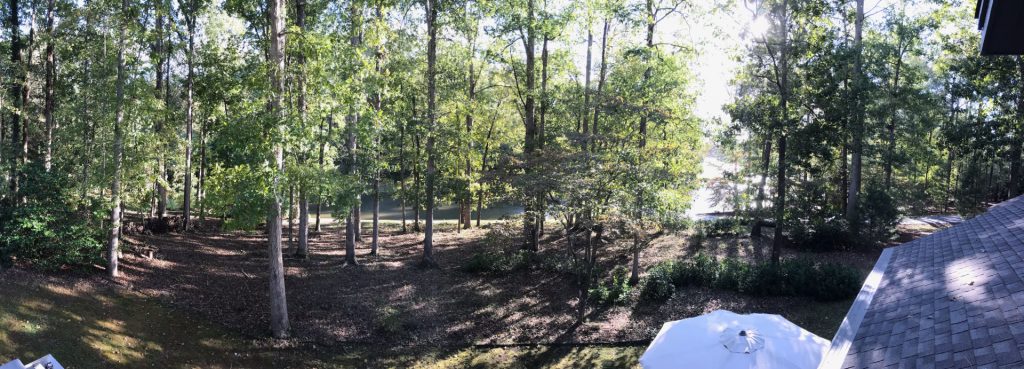
View from upper deck
- David A. Windham – Glenridge – https://davidwindham.com/wha/glenridge/
-
Education through Recreation
“A master in the art of living draws no sharp distinction between his work and his play; his labor and his leisure; his mind and his body; his education and his recreation. He hardly knows which is which. He simply pursues his vision of excellence through whatever he is doing, and leaves others to determine whether he is working or playing. To himself, he always appears to be doing both.”
~ L. P. ( Lawrence Pearsall ) Jacks
Education through Recreation, 19321
*hat tip – https://ma.tt/2018/06/work-and-play/
1. https://en.wikipedia.org/wiki/L._P._Jacks
-
The Selfish Ledger
An internal Google video is making the rounds on the internet over the last couple weeks. Although Google has disavowed it as simply a “thought-experiment from a design team”, it looks like an entirely probable solution of how user data is going to evolve online, in that it has inherent risks and rewards. The video has made from some decent fodder online and for my ongoing debates about social media, behavior, and connectivity.
-
The Writers Almanac
For the last ten years or so, I start almost every weekday morning with a cup of coffee and my feed reader. The first subscription I used to open every day was The Writers Almanac 1. I thought about it again this morning. I really enjoyed listening to it and I miss it. It was cancelled in December of last year.
The Writers Almanac webpage just says 2:
MPR has ended our contract with the company that owns the rights for production and public distribution of The Writers Almanac and MPR no longer has the rights to post the archives. MPR is proud of its 25 years of work, highlighting the art of poetry and the work of so many talented artists. Please check this page periodically on the chance we can direct you to the online archives. Thank you for enjoying the series. We appreciate your listening, reading and support.
I certainly don’t know Garrison Keillor 3 personally, but I feel like I do having listened to hundreds of episodes. I seem to believe the quote from the New York Times article 4:
“I put my hand on a woman’s bare back,” he wrote. “I meant to pat her back after she told me about her unhappiness and her shirt was open and my hand went up it about six inches. She recoiled. I apologized. I sent her an email of apology later and she replied that she had forgiven me and not to think about it.”Mr. Keillor claimed that they continued to be friends “right up until her lawyer called.” He insisted his discomfort with physical affection was common knowledge, adding, “If I had a dollar for every woman who asked to take a selfie with me and who slipped an arm around me and let it drift down below the beltline, I’d have at least a hundred dollars.”
Anyway, I hope the Poetry Foundation 5 can come up with a replacement. If anyone knows of any other sites that feature a daily audio reading of poetry, please let me know. It’s something about the short audio clip where I can generally surf through a couple other things as the birthdays and writer were being introduced before settling back for a small moment of mediation on the poem. I think I’ll leave the last three unread Writers Almanac items in my reader until I find a replacement.
7/14/18 – UPDATE: In April of this year Garrison started hosting his own version on his website6 and Minnesota Public Radio has reached an agreement with Garrison Keillor to restore free public access to the online archives of A Prairie Home Companion and The Writer’s Almanac. I’m unsure why it took me four months to catch on, but I’m happy to have it back.
1. https://en.wikipedia.org/wiki/The_Writer%27s_Almanac
2. https://www.mpr.org/archive-information
3. https://en.wikipedia.org/wiki/Garrison_Keillor
4. https://www.nytimes.com/2017/11/29/business/media/garrison-keillor-fired.html
5. https://en.wikipedia.org/wiki/Poetry_Foundation
6. http://www.garrisonkeillor.com/radio/
-
Keeping Machines Clean

Every year about this time, likely albeit unknowing in an effort to stave off doing taxes, I always seem to find myself doing a routine computer cleaning. I refuse to be a digital mess. I think my habits are pretty effective at preventing mechanical chaos. In this era of cloud connected data hoarding, I think I’m just like most folks in the sense that between my wife and I, we generate a generous heaping of data between work and personal documents, images, and other files. Between the two of us, we actively use four laptops, three desktops, two tablets, and two smartphones. That’s a lot of little machines I don’t necessarily want to take care of and I’ve got a couple tips for those of you trying to stay out of the digital rabbit hole.
I like to think of computers and files as two different things. Files are one thing and computers are the other thing. I look at computers like they’re just tools that will wear out over time, like a paintbrush or a chainsaw blade. I’m not insinuating that I’m not considerate of the computing part of the machine and I’ve already explained my Anthropomorphising tendencies. I can move from one machine to the next without skipping a beat, primarily because I take care of the files on that computer. I carefully quantify all of the configuration and software running on any computer as files. Because of it, I can move my servers from one machine to another rather quickly and I can move from phone to phone, laptop to laptop all the same. I wanted to share how I do it in case any of you out there are in the market to change your digital habits.
First off, I have a simple naming convention on all files. I give all of my files meaningful names that begin with the date. So for instance, when I write something on this site, it always begins as a text file. This one was named 18.01.07_post_machine_clean.txt. I’ve found that having the date out in front of any file name is an easy way to organize and find them. When I go looking for an old file, I’m always thinking… oh that was summer last year or something to that extent and it helps me find the files. I know that this is not necessarily common practice because half the time files are shared with me, they have meaningless file names. I also almost always do not include spaces in file names and I advise others to do the same. I think the reason I avoid them is just from network protocols and command line usage, but I’ve also seen where it’s cause other issue with cloud storage solutions.
I’ve also learned to organize my files with the same basic structure on every machine. Anytime I look at someone else’s machine, it’s always the first thing I notice… files all over the desktop and haphazard file folders everywhere. I really think that it’s just a basic misunderstanding of how the file system works for many users. I think with most operating systems, the use of shortcuts in an attempt to make it easier to use have actually further complicated the issue. With the phones and tablets, they’ve obscured these even further. For those, I use a cloud sync service to keep my files. I’m all for the ease of use when it comes to cloud based services for syncing data, but I prefer to always have a local backup of everything as well and regularly make local backups of any services I use. Everywhere else, I divide my files using a couple simple concepts and I always store them in one hierarchical folder on every machine. I divide them up into three top folders Documents, Projects, Media. Documents contain everything financial, medical, employment, insurance etc. Projects are everything else I do on the computers and Media is media duh. I run backups of these every so often where I reduce the amount of space and make duplicates on remote drives.
It seems like every January, I start looking for financial documents to file taxes and end up spending a day just syncing and moving files around between drives and computers. Luckily, I’ve gotten better at it and I’ve managed to develop a system for myself that’s served me well in the digital age. Don’t get me wrong, I have duplicate backups and folders of hoarded useless files too, but I’ve gotten those down to a bare minimum over the years. Every time someone asks me to help them find missing files or restore a crashed computer, I think to myself how easy operating systems and cloud services have made it for them to be completely unorganized in their digital file keeping habits.
1. The image is entitled ‘Single Atom in an Ion Trap’, by David Nadlinger, from the University of Oxford and retrieved from https://news.nationalgeographic.com/2018/02/trapped-atom-photograph-long-exposure-competition-spd/
-
2017 Monthly Playlists
Happy New Year. I think I’ll post more here this year (I say that every year). As I’ve done for the past three years, I’ve managed to make a music playlist for every month except January and July last year. I think January is usually filled up with me listening to the year end album reviews from other folks but I’m managing to make a January list this year. I generally try to only include new releases for each month. Sometimes this will include reissues and remastered releases from that month. I keep statistics on my listening habits at https://davidwindham.com/studio/music/ and I occasionally invite folks for some live sessions at http://radio.davidawindham.com/. If you see anything missing I might like, please let me know.
December
November
October
September
August
June
May
April
March
February
-
Faux Travel

Every now and again I find myself researching various travel options on a planned trip that never happens. Sometimes I put a lot of work into it, so I recently decided that when this happens, I’d start saving the details for later. I’m not exactly sure why I enjoy planning them almost as much as I do, but I think I’ve just made it another form of interactive online entertainment. As it happened this morning, I was reading something or another and viola I’m on Google flights searching around. I’ll look forward to a break in our calendars and start searching and plugging in dates. I’m pretty sure that as soon as it starts getting too cold or hot outside and we’re stuck inside, I start pecking around for travel options.
The way I travel now as a 44 year old is quite a bit different from my youth, when I’d just pack up a car and hit the road. I generally prefer creature comforts these days… a soft bed, a good meal, and a hot shower. Although I miss some of the ‘seat of your pants’ type adventure, I think I’ve had my share. I also don’t like to be away from home for more than a couple days. My wife say’s I have OMS: Old Man Syndrome. Regardless, I know how a lot of people like to glamorize traveling but I’ve found a lot of it tiring and boring. I’ve been quite a few places though. I think I’m only missing a couple major cities and states in the US and I’ve done about ten other countries. I do think it’s important to have a broad world view and I believe that traveling is key. I’m always encouraging other folks who’ve never left the country to hit up some third world locations.
Here’s the type of agenda I write up for these trips. I break it down daily so that I’ve already done my due diligence with dining and other entertainment options. The itinerary also serves a great little reference document when traveling. This time the trip was to Aspen, Colorado and San Antonio, Texas. I really just started out with San Antonio to visit family and then just threw in Aspen for a little fun since we’re already on that side of the country. I think I spend as much time planning as actually traveling and I’m pretty sure that I’ve only taken about a third of the trips I’ve planned. That’s why I call it ‘faux travel’. I think I’ll share more of my untaken trips a reminder to take them before I get too old.
Tuesday Dec 19
- 5:00am – Leave Home
- 6:15am – Greenville Spartanburg Airport [ 2000 GSP Dr, Greer, SC 29651 ]
- 7:05am – Greenville -> ( United 3484 GSP/IAH record loc# KZ2ZT5 17D/17C )
- 9:00am – Houston – 45min layover 9:45am – -> Houston ( United 1082 GSP/SAT record loc# KZ2ZT5 32A/32B )
- 10:50am – -> San Antonio 11:00am -Enterprise Rental ( confirmation #1253746261 – BMW 430 440i Convertible)
- 11:30am – Hyatt Regency Riverwalk ( confirmation #57871310 )[ 123 Losoya Street, San Antonio, Texas 78205 | 210-222-1234]
- 12:30pm – 5:00pm — Lunch – Kris & Jennifer
- 6:00pm – Dinner – Boudro’s Riverwalk [ 421 E. Commerce, San Antonio TX 78205 ]
- 8:00pm – Ray Wylie Hubbard – [1281 Gruene Rd, New Braunfels, TX 78130 ]
Wedesday Dec 20
- 8:00am – Breakfast Schilo’s [ 424 E Commerce St, San Antonio, TX 78205 ]
- 11:00am – Checkout San Antonio Hyatt Regency Riverwalk
- 12:00pm – 4:00pm — Lunch – Kris and Jennifer
- 5:00pm – San Antonio Airport [ 9800 Airport Blvd, San Antonio, TX 78216 ] 5:10pm – Enterprise Rental Return
- 6:10pm – San Antonio -> ( American 1524 SAT/DFW record loc# DTAVUF 23A/23B ) 7:24pm – -> Dallas
- 8:00pm – Grand Hyatt DFW ( reservation #57871455 ) 972-973-1234 [ 2337 South International Parkway, DFW Airport, Texas 75261 ]
Thursday Dec 21
- 7:00am – Breakfast – Grand Met – Dallas Fort Worth Grand Hyatt
- 8:50am – Dallas -> ( American 2940 DFW/ASE record loc# DTAVUF 9A/9B)
- 10:20am – -> Aspen ( Avis Rental Conf# 03175408US5 – Subaru Forester)
- 10:30am – Aspen Square #220709 970-923-3036 [ 671 East Cooper Ave Aspen 81611 ]
- 11:00am – Inline Ski [ 555 E. Durant Ave Aspen, CO 81611 800-992-2979 ]
- 11:30am – KitLender #KL12760 (888-473-3111) Lorenzo Semple – 970-920-0295
- 12:00pm – Lunch – The White House Tavern [ 302 East Hopkins Ave, Aspen CO 81611 ]
- 7:00pm – Dinner – Matsuhisa ( 970-544-6628 ) [ 303 E Main St, Aspen, CO 81611 ]
Friday Dec 22
- 7:00am – Breakfast – Poppycocks [ 665 E Cooper Ave ]
- 8:00am – Aspen Mountain Lifts Open
- 12:00pm – Lunch – Grey Lady (Lobster Roll) [ 305 S Mill St ]
- 4:00pm – Aspen Mountain Lifts Close
- 6:00pm – La Crêperie du Village [400 E Hopkins Ave]
Saturday Dec 23
- 8:00am – Breakfast – Victoria’s [ 510 E Durant Ave ]
- 9:00am – 12:00 Apsen Mountain
- 12:00 – Lunch – Spring Cafe Juice Bar [ 119 South Spring Street, Aspen CO 81611 ]
- 1:00pm – Aspen Pitken County Airport – Avis Rental Return
- 2:00pm – -> Aspen ( American 2945 ASE/DFW record loc#DTPUEN 14A/14B )
- 5:15pm – -> Dallas – Dinner – Layover 1:36 DFW Airport
- 6:51pm – -> Dallas ( American 2477 DFW/GSP record loc#DTPUEN 9A/9B ) 10:06pm -> Greenville
- 11:30 – Return Home for Christmas